
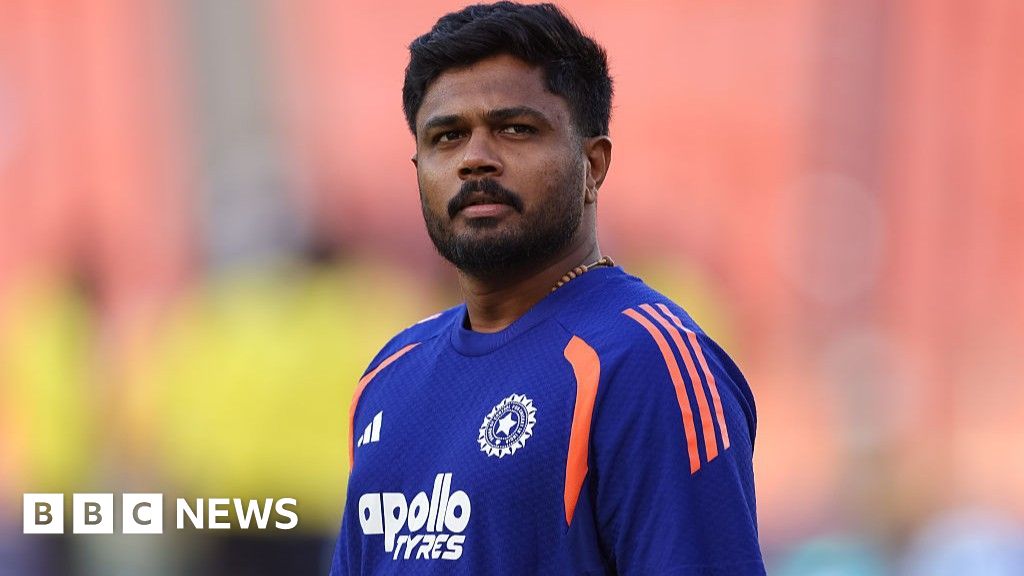
Sanju Samson’s journey to cricketing stardom reached a defining moment during the T20 World Cup final held in Ahmedabad, where India faced off against New Zealand. In a tournament where he was initially not expected to receive many opportunities, Samson emerged as the most valuable player, playing a pivotal role in India’s emphatic 96-run victory that secured their title defense. His extraordinary performances throughout the World Cup not only showcased his skill but also cemented his place as a key figure in Indian cricket.
Despite his remarkable innings of 89 runs in the final, Samson was not awarded the Player of the Match; that accolade went to the fast bowler Jasprit Bumrah. This wasn’t a surprise to Samson, who had previously shown humility and team spirit by deflecting similar honors in the semifinal against England. After scoring an identical 89 in that match, Samson insisted that Bumrah deserved the award, saying, “All credit goes to Bumrah. This should go to him, actually. If he didn’t bowl that way in the death overs, I would not be standing here.” This gesture highlighted not just modesty but also Samson’s mature understanding of the game and his acknowledgment of the crucial support from his teammates.
Samson’s contributions were vital to India’s progression in the tournament, particularly at a crucial juncture during the Super Eights stage. The match against West Indies in Kolkata was essentially a knockout, and Samson’s unbeaten 97 runs under pressure laid the foundation for India’s success. His innings was a throwback to classical cricketing technique, marked by precise footwork, balance, and impeccable timing rather than flashy power-hitting. Unlike many modern batsmen who rely on explosive sixes, Samson’s style is rooted in traditional cricketing principles, earning respect from purists for his “cricket shots” that are technically sound and aesthetically pleasing.
As a wicketkeeper-batsman, Samson carries a heavy workload, requiring him to maintain top-level fitness and focus. His physical conditioning is rigorous, though it stems from dedication and discipline rather than the flamboyant fitness regimes often showcased on social media. At 31, Samson is no longer the young prodigy he once was; he has matured through years of experience and perseverance. His career began when he was still a teenager, debuting for India in 2015. Originating as a standout player in the Indian Premier League (IPL), where he was a cornerstone for the Rajasthan Royals, Samson’s rise was gradual and hard-earned.
While the IPL spotlight brought his talents to national attention, it was India’s domestic cricket circuit—especially the Ranji Trophy and other less glamorous tournaments—that truly shaped Samson’s character and skills. He spent years honing his craft in conditions that lacked the glamour and fanfare of international cricket. Playing in empty stadiums and under less pressure, Samson developed the patience and technique that would eventually serve him well on the world stage. Sunday’s triumph was the culmination of a decade of dedication, resilience, and steady growth.
Samson’s international career has seen its share of struggles. Early on, despite the promise shown in the IPL, he struggled to consistently convert chances at the international level. In his first 23 T20 innings for India, he managed only a single half-century. Yet, he never wavered in his belief in his method and continued to refine his approach, trusting the process even when immediate results were elusive. This steadfast commitment to his style, rather than chasing quick success, set the foundation for his eventual breakthroughs.
Unlike many players who contribute with frequent but moderate scores, Samson’s batting is characterized by high-risk, high-reward impact. When he’s on form, his innings can turn games on their head, but when he’s not, he tends to falter early. This trait made his World Cup tally of 321 runs at an astonishing strike rate of over 199 all the more impressive. His explosive scoring ability and match-winning potential came to the fore precisely when India needed it most.
Samson’s path to the starting eleven in this World Cup was not straightforward. Prior to the tournament, his form in bilateral series was inconsistent, and he was at risk of being sidelined. However, an opening at the top of the order came when Rinku Singh had to leave the squad due to a family emergency. This twist of fate provided Samson with an unexpected chance to prove his mettle. Cricket is often described as a game of fine margins,