
Indian businesses are facing significant operational challenges as gas supplies are disrupted amid the ongoing conflict between the US, Israel, and Iran. The war, now in its 11th day, has severely impacted energy shipments passing through the Strait of Hormuz, a critical chokepoint for global oil and gas trade. This disruption is forcing industries across India—from restaurants to fertiliser manufacturers—to grapple with shortages that threaten to halt production and services.
India relies heavily on imported gas to meet its energy needs, with about half of its total gas consumption coming from overseas sources. Much of these imports transit through the Strait of Hormuz, a narrow waterway in the Gulf region that has become a flashpoint due to retaliatory strikes by Iran. As a result, millions of barrels of oil and gas shipments have been stuck near this chokepoint, leading to a bottleneck in supply.
For India, the stakes are particularly high because 40 to 50 percent of its crude oil imports pass through the Strait of Hormuz. Even more striking is the volume of liquefied natural gas (LNG) and liquefied petroleum gas (LPG) shipments—between 50 to 60 percent of LNG and an overwhelming 80 to 85 percent of LPG imports come through this route. Given India’s growing energy needs, this disruption has caused immediate concern among businesses and consumers alike.
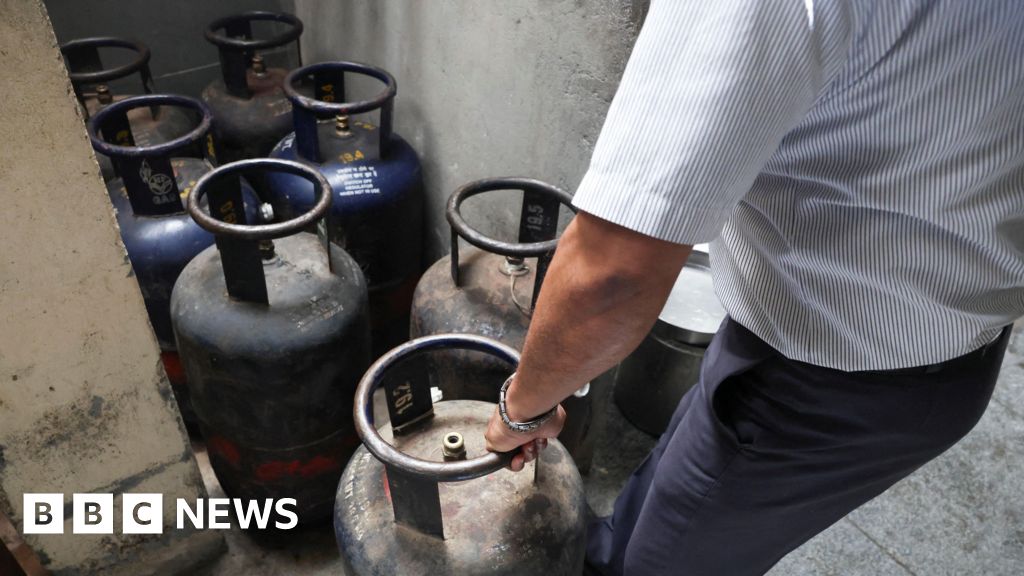
Among the most affected sectors are restaurants, cafes, and millions of eateries across the country that rely heavily on LPG as cooking fuel. India is the world’s second-largest importer of LPG after China, with 80 to 85 percent of the gas consumed being imported annually. These imports come predominantly from Gulf countries such as Qatar, Saudi Arabia, the UAE, and Kuwait, all of which depend on the Strait of Hormuz for shipping.
Industry analysts warn that LPG supplies constitute the most immediate vulnerability for India. Stocks held by refiners and distributors are estimated to cover only about two to three weeks of demand. This precarious situation means that many businesses that depend on LPG for cooking and heating are facing urgent shortages.
Manpreet Singh, treasurer of the National Restaurants Association of India, shared with the BBC that “most restaurants hardly have two days of LPG buffer with them currently. Many of them may have to close business in the next few days if the LPG shortage continues.” This stark warning highlights the fragile state of supply chains and the potential for widespread disruption in the food service sector.
Some restaurant owners are already adapting to the crisis by considering alternative cooking methods. Subramanya Holla, president of a hotels’ association in Bengaluru, India’s tech hub in the south, told BBC News Hindi, “We are not closing down. But it is possible that depending on the stocks of cylinders, hotel owners may decide to reduce the items available on the menu.” This reflects the practical realities businesses face as they try to maintain operations with limited fuel.
The LPG shortage also affects households. Typically, Indian families book LPG cylinders through authorized distributors, and in response to the supply crunch, the government has extended the interval between bookings from 21 days to 25 days. However, commercial users have slightly better access, being able to obtain LPG cylinders on a day’s notice. Commercial cylinders contain about 33 percent more gas than household cylinders but come at almost double the cost.
Price hikes have become another challenge. Some dealers are reportedly charging as much as 2,500 rupees (around $27 or £20) per LPG cylinder, according to hotel owners in Bengaluru and Delhi. This price surge adds financial strain to businesses already struggling with limited availability.
Manjunath Shetty, a restaurant owner in Bengaluru, described the impact: “We normally get three cylinders every morning. Today, we received just one… The delivery person told us that if supplies arrive, he will bring the remaining cylinders. If he doesn’t come, we may have to consider shutting down.” His account underscores how supply instability is forcing difficult decisions on business continuity.
Beyond the hospitality industry, other sectors are also facing severe disruptions. The fertiliser industry, which depends heavily on natural gas as its main feedstock, has seen some manufacturers announce planned production cuts due to tightening gas supplies. This is particularly concerning as India approaches the major cereal planting season, when fertiliser availability is crucial for farmers. Reuters news agency has reported that industry-wide reductions could curtail fertiliser supply, potentially affecting agricultural productivity.
Similarly, the ceramic and tiles industry, which relies on propane