
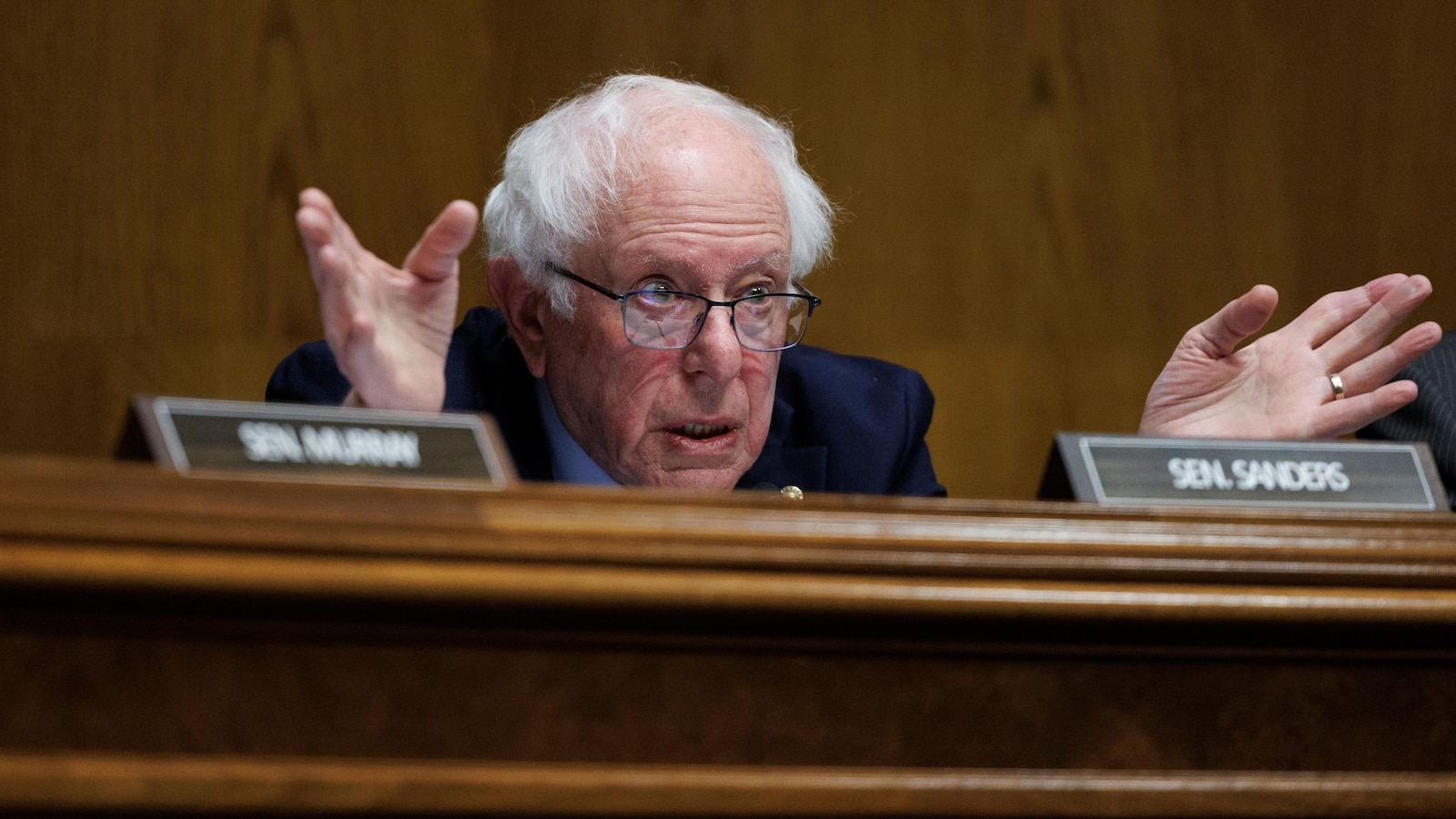
Two prominent progressive lawmakers in the United States have introduced a bill aimed at pausing the construction of new data centers across the country until comprehensive national safeguards are established. These safeguards would be designed to protect workers and consumers while ensuring that the rapidly advancing technologies powering these centers do not cause environmental harm. The bill, introduced by Democratic Representative Alexandria Ocasio-Cortez of New York and Vermont Independent Senator Bernie Sanders, reflects growing concerns among progressives about the expanding influence of data centers and artificial intelligence (AI) on society, the economy, and the environment.
Data centers, which are facilities used to house computer systems and associated components such as telecommunications and storage systems, have become increasingly vital as AI technologies develop and expand. However, their growth has sparked backlash in communities nationwide. Residents and local officials have expressed worries about the rising costs of electricity, pollution, and water consumption related to these centers. This opposition has had political repercussions. For instance, concerns over rising power prices played a significant role in recent Democratic election victories in states such as Georgia, Virginia, and New Jersey.
The surge in AI development and deployment is widely regarded as crucial for the United States' economic growth and national security, a view supported by President Donald Trump and other leaders. However, the energy demands of AI and data centers are placing unprecedented strain on the nation's power grid. In response to public concerns, President Trump invited major technology companies to the White House earlier in the month, encouraging them to commit to developing their own power generation capabilities. Trump acknowledged the public relations challenge these companies face, noting that many people fear data centers will contribute to higher electricity prices.
Despite these voluntary commitments, Senator Sanders emphasized that the public needs more than assurances from technology firms. In a statement ahead of the bill's formal introduction, he highlighted the transformative impact of AI and robotics, describing the ongoing technological revolution as the most sweeping in human history. Sanders argued that Congress has fallen far behind in understanding the full scope and speed of these changes and their consequences. He warned against allowing a small group of wealthy tech executives to make unilateral decisions that could reshape the economy, democracy, and humanity's future. Calling for serious public debate and democratic oversight, Sanders urged immediate action, proposing a federal moratorium on the construction of AI data centers until appropriate regulations are in place.
While the bill signals the urgency felt by many on the progressive side, it faces significant opposition and is unlikely to advance in Congress. Lawmakers from both parties have largely dismissed the idea of a moratorium. For example, Democratic Senator John Fetterman of Pennsylvania voiced strong disagreement, echoing Interior Secretary Doug Burgum's view that imposing a moratorium would be tantamount to surrendering the AI leadership race to China. Fetterman explicitly stated on social media platform X that he refuses to relinquish the United States' lead in AI technology to China.
The White House has also weighed in on the issue, stating last week that Congress should override state laws regulating AI that it considers too restrictive. The administration released a broad framework for federal legislation aimed at addressing AI-related concerns without stifling growth or innovation in the sector. This legislative blueprint sets out six guiding principles for lawmakers: protecting children, preventing spikes in electricity costs, respecting intellectual property rights, preventing censorship, and educating Americans on how to use AI technology effectively and responsibly.
Energy consumption in the United States has reached a record high in 2024, a trend expected to continue as data centers expand rapidly to accommodate growing AI demands. A typical AI-focused data center consumes as much electricity as approximately 100,000 households, underscoring the massive energy footprint of these facilities. This reality has heightened concerns about the sustainability of current growth patterns and the potential environmental impact.
In response to these challenges, several major technology companies have pledged to support President Trump's call to protect electricity ratepayers. Corporations including Google, Microsoft, Meta, Oracle, xAI, OpenAI, and Amazon have committed to building or purchasing new power generation sources specifically for their data centers. They have also agreed to cover the costs of necessary infrastructure upgrades to support these energy needs without exacerbating electricity prices for consumers.
The debate over data centers and AI infrastructure encapsulates broader tensions between technological progress, environmental sustainability, economic equity, and national security. Progressives like Ocasio-Cortez and Sanders call for a cautious approach that prioritizes public welfare and democratic oversight, while others stress the need to maintain the United States' competitive edge in AI development amid global competition, particularly with China.
As the discussion continues, the future of AI data centers in the United States remains uncertain. The proposed federal moratorium highlights the urgency of addressing the environmental and social impacts of these facilities, even as political and industry leaders work to balance innovation with responsibility. Meanwhile, lawmakers, the White House, technology companies, and the public will need to navigate these complex issues to chart a sustainable path forward for AI technology and its infrastructure.