
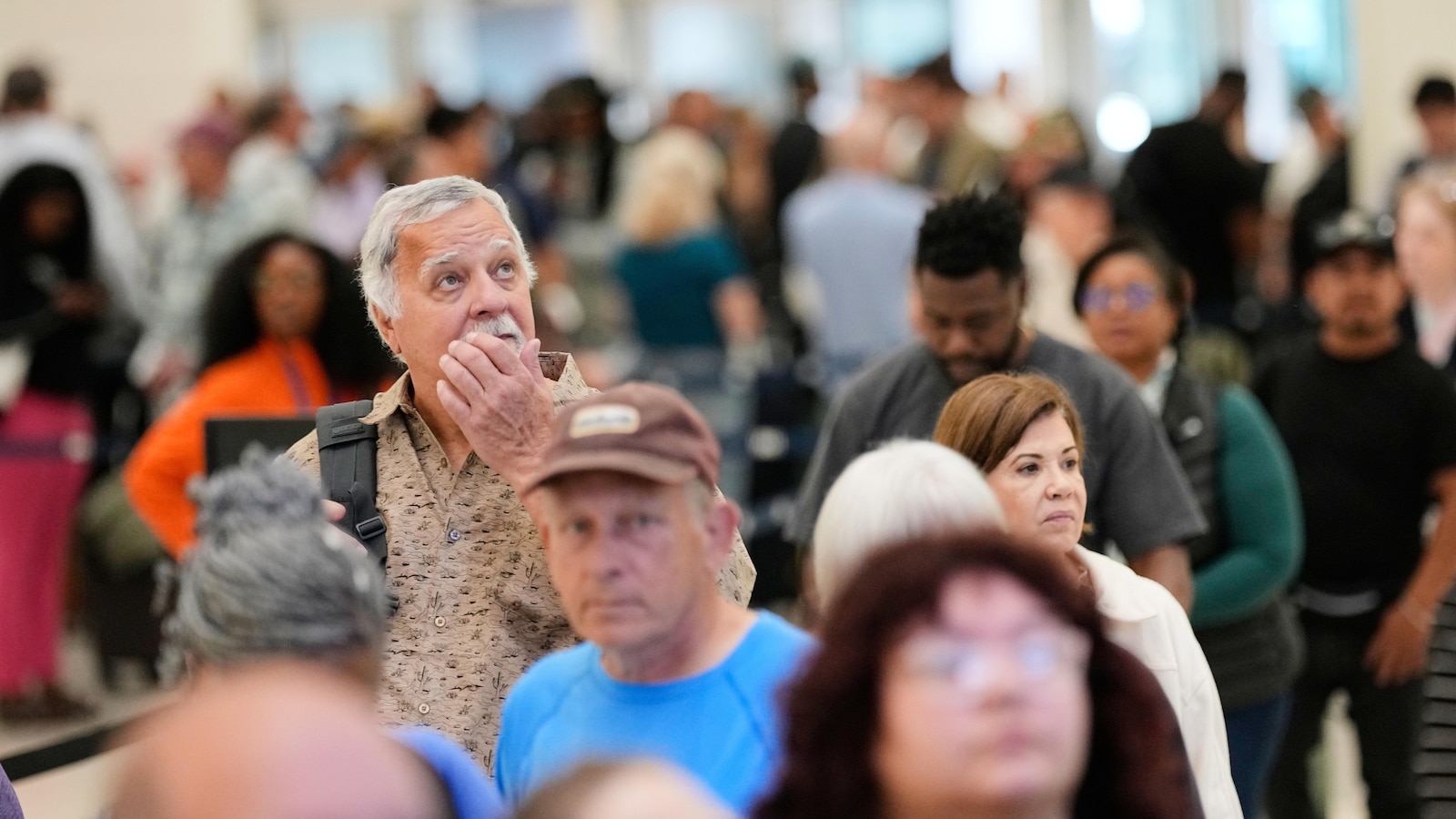
The Transportation Security Administration (TSA) is currently facing unprecedented challenges, resulting in the longest airport security wait times ever recorded under the agency's oversight. This alarming situation was detailed by Ha Nguyen McNeill, the TSA's acting administrator, during a congressional hearing on Wednesday. Her testimony highlighted not only the operational difficulties but also the severe personal hardships endured by TSA employees amidst a prolonged government funding standoff.
The agency has been caught in the crossfire of a political impasse that has lasted over 40 days, involving the Department of Homeland Security (DHS). This stalemate has led to partial government shutdown conditions affecting many frontline security workers. McNeill described how unpaid TSA employees are struggling with mounting bills and eviction threats. Some have resorted to selling plasma and taking on additional jobs just to survive financially. Despite these hardships, TSA officers are still expected to maintain high security standards to protect the traveling public.
"This is a dire situation," McNeill stressed during the House Homeland Security Committee hearing, urging lawmakers to take steps to prevent such crises in the future. Her warnings underscored the human cost behind the operational impacts, as well as the risk that prolonged understaffing and employee distress pose to national security.
The stalemate stems from a broader political dispute over immigration policies, particularly the Trump administration's enforcement and deportation agenda. Democrats have linked their demands for changes in immigration enforcement to recent incidents involving the deaths of two citizens in Minneapolis during protests, which federal officers were involved in. These events have intensified calls for reform and prompted Democrats to resist funding measures that do not address these concerns.
The latest legislative proposal put forward by Senate Republicans aims to fund most DHS operations except for the enforcement and removal activities of U.S. Immigration and Customs Enforcement (ICE), which have been at the heart of the controversy. The plan would continue funding other ICE functions and U.S. Customs and Border Protection (CBP) activities. While this proposal includes some new restrictions on immigration officers-such as the requirement to use body cameras-it falls short of the broader reforms Democrats seek.
Senate Democratic leader Chuck Schumer of New York insisted that more substantial changes were necessary, while House Democratic leader Hakeem Jeffries called for "bold" reforms to ICE's operations. The opposition from Democrats remains firm, with both leaders emphasizing that partial measures will not resolve the underlying issues.
Republican leaders, on the other hand, criticized the Democrats for what they described as putting the country's security at risk by blocking full funding. House Speaker Mike Johnson, a Republican from Louisiana, bluntly stated, "They know this is crazy." Despite this, the proposal did not satisfy conservative Republicans either, who demanded full funding for immigration enforcement and expressed skepticism about GOP promises to address related issues, such as the proof-of-citizenship voting bill, in future legislation.
The impact of the shutdown on TSA operations is severe. McNeill reported that at multiple airports, callout rates-where employees do not report for work-have exceeded 40%. Since the shutdown began, more than 480 transportation security officers have resigned. This significant reduction in staff has led to longer security lines and increased operational strain.
Financial hardship among TSA employees is stark. Many workers are forced to take drastic measures to cope with the lack of pay, including selling blood plasma and working second jobs. Despite these struggles, TSA officers remain committed to their duties, often under tremendous pressure. McNeill also revealed a disturbing 500% increase in assaults on TSA officers since the shutdown started. She condemned these attacks as "unacceptable" and pledged that such behavior would not be tolerated.
The operational consequences extend to major airports, such as Houston's George Bush Intercontinental Airport. Jim Szczesniak, the aviation director for Houston's airport system, described security lines that stretch over multiple floors, with travelers sometimes waiting four hours or more. The airport can only staff a fraction of its usual checkpoint lines-between one-third to one-half-due to the reduced TSA workforce. Szczesniak warned that if the political deadlock continues, wait times could worsen.
The situation is further complicated by the Trump administration's decision to deploy ICE agents to airports, a move that has raised concerns among lawmakers and local officials. A recent incident at San Francisco International Airport, where federal officers detained a crying woman, sparked widespread outrage, although it was unrelated to the new deployment order. Nevertheless, the presence of immigration enforcement agents at airports risks exacerbating tensions and adding to the challenges faced by security personnel.
Beyond TSA, other DHS agencies are also feeling the strain. Victoria Barton, a FEMA external affairs official, informed Congress that the agency's Disaster Relief Fund is "rapidly depleting." This fund supports FEMA's disaster response and recovery efforts and pays about 10,000 disaster workers. While the fund still has money, its depletion poses a threat to ongoing emergency operations.
The partial government shutdown is having wide-reaching effects across multiple agencies charged with protecting the public and responding to emergencies. The ongoing political dispute over immigration enforcement and funding priorities shows no sign of resolution, leaving frontline workers caught in the middle. The testimonies from TSA and FEMA officials paint a grim picture of operational challenges and human costs that could have serious implications for national security and public safety if the stalemate continues.
As lawmakers continue to debate, the public and traveling passengers are already experiencing the consequences in the form of longer wait times, increased security incidents, and mounting frustration among airport staff. The TSA's acting head's plea to Congress highlights the urgent need for a solution that restores funding, supports frontline workers, and addresses the underlying policy disputes that have brought government operations to a near halt.
The Associated Press contributed reporting from New York, Houston, and San Diego, underscoring the nationwide impact of the shutdown on transportation security and emergency response services. The unfolding situation remains a critical issue for policymakers, workers, and the traveling public alike.