
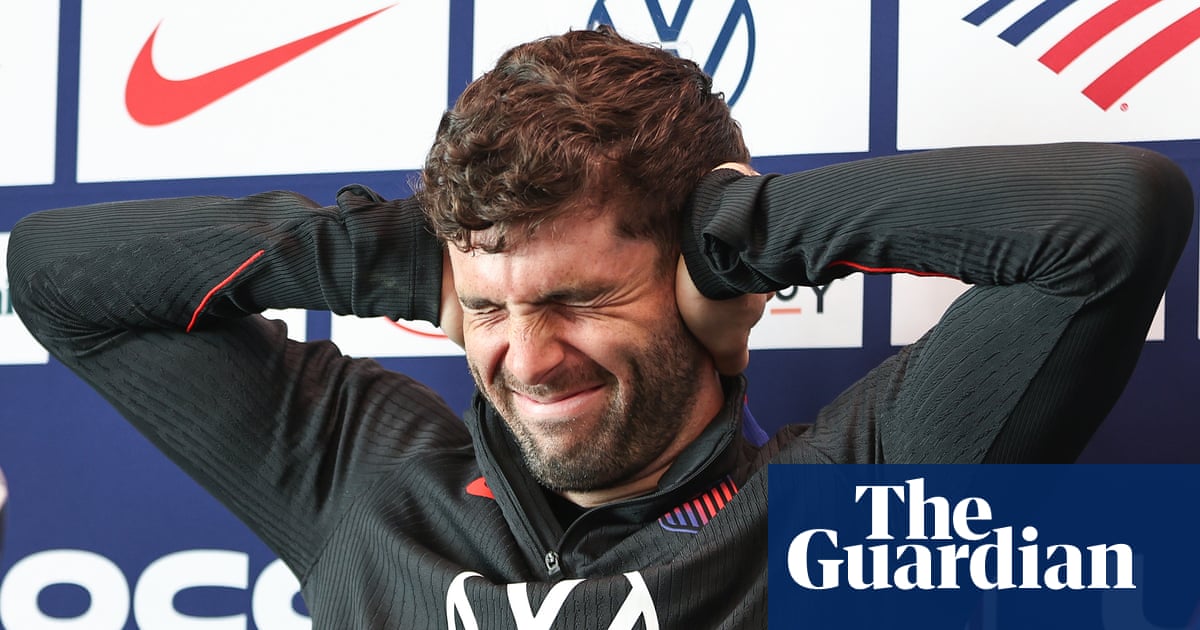
Mauricio Pochettino, head coach of the U.S. men's national soccer team (USMNT), brings a unique perspective to the intense pressure that accompanies representing one's country on the world stage. Having experienced the weight of World Cup expectations firsthand as a player for Argentina in 2002, Pochettino understands the emotional and mental challenges his players face as they prepare to compete in the 2026 World Cup, which the United States will co-host alongside Mexico and Canada.
Pochettino's World Cup journey as a player was marked by high hopes and deep disappointment. Although he was not part of Argentina's squads in 1994 and 1998, he earned a place in the 2002 team as a seasoned professional. That Argentine team was considered a strong contender, boasting stars like Juan Sebastián Verón and Gabriel Batistuta and led by the visionary coach Marcelo Bielsa. Meanwhile, Argentina was grappling with a severe economic crisis, and the national team was seen as a source of hope and pride for the country's people. Pochettino recalls the extraordinary pressure felt by Argentinians during that tournament, describing it as a "battle to survive" with an energy so heavy that the team struggled to manage it.
The 2002 World Cup ended in calamity for Argentina. The team was eliminated in the group stage for the first time in 50 years, a shock that stunned fans and players alike. After a 1-1 draw with Sweden in their final group match, many players collapsed to their knees in tears, refusing to leave the pitch, overwhelmed by the painful reality of their failure to meet expectations.
Now, nearly 25 years later, Pochettino finds himself leading a USMNT team that has never carried quite the same historic pressure, but is nonetheless facing significant expectations. The U.S. last hosted the World Cup in 1994, and there is a growing sense of urgency and hope surrounding the 2026 tournament on home soil. While soccer may not evoke the same national fervor or be perceived as a matter of life and death in the United States as it is in Argentina, the players on Pochettino's roster are likely encountering some of the most intense international pressure of their careers.
Despite this, Pochettino is cautious about dwelling on the concept of pressure. Known for his motivational approach-he has previously led team-building exercises involving walking on hot coals and trust falls-Pochettino emphasizes the importance of maintaining a positive mindset. Speaking at a press conference ahead of the USMNT's friendlies against Belgium and Portugal in Atlanta, he stressed that while pressure exists, it should not be allowed to become a burden that stifles performance.
"There's pressure for us, the coaching staff," Pochettino said, "but [we have a desire that our players] perform, sending good energy - but not to create something where you say 'it's a tragedy if you lose.' Because [we believe that] when you're free, you perform. When you feel happy, you perform. You don't need to feel the pressure. Because the pressure is a thing that if you don't deal perfectly with it, it can be heavy."
This current USMNT roster is widely regarded as one of the most talented in the country's history. On the day of Pochettino's press conference, the players appeared relaxed and in good spirits during training at Atlanta United's facility. They engaged in rondos and small-sided games, sharing laughs and lighthearted banter. Key figures such as Christian Pulisic and Weston McKennie were open and confident in their interactions with the media, reflecting a team atmosphere that seems well-prepared to handle the spotlight.
Christian Pulisic, in particular, carries a significant share of the spotlight. Often called "Captain America," he is arguably the most high-profile player in US soccer history. His image and name are ubiquitous in Atlanta, appearing on billboards and public transit, and he is a constant topic of discussion among fans. Unsurprisingly, Pulisic recognizes the pressure that comes with his role but embraces it.
"You guys want me to feel the pressure, that's for sure," Pulisic joked with reporters. "There's pressure, it's a World Cup, it's not because of my position in the team or anything. I'm used to this, I wouldn't want to be in any other position, I'm lucky to be in this position. There's pressure, I can feel it, yes, it's there, but it's nothing I can't handle. I'm going to attack it head on. I don't need to do it myself, that's the beauty of it. I have the whole team behind me, the staff, a country of fans and I'm just going to do the best I can do."
Pochettino himself faces considerable expectations beyond those borne by the players. As the highest-paid coach in American soccer history, he carries the burden of proving that he can elevate the USMNT to new heights. Critics have long questioned the team's mental toughness and motivation, but Pochettino has reportedly built strong relationships with his players, helping them focus on their goals.
When asked how he has connected with his squad and helped channel their energy, Pochettino responded thoughtfully, speaking in Spanish and emphasizing the emotional connection required to inspire true motivation.
"I think the motivation begins from the first day you meet someone," he explained. "It's vital energy that you have within yourself, where you prepare your body, your mind, your being, so that you can enjoy what you're doing... Words, a lot of the time, are empty. I can give you a motivational speech right here that's incredible. But if I don't create an emotional bond with you, it's impossible that you'll be motivated by my words... If it doesn't affect you in your heart, it's very hard."
Pochettino's optimism and motivational style may not resonate with all US soccer fans, especially those who have grown frustrated with the program's historical struggles to advance on the global stage. Yet his positivity is infectious and rooted in a hopeful belief that fuels the team's ambitions. Earlier in the week, Pochettino delivered a passionate address to his players, asking them a simple but powerful question: "Why not us?"
"Dreams inspire reality," he said during Friday's press conference. Asked why he believes the USMNT can compete for the World Cup title, he replied simply, "because we are American."
He elaborated, "What I am saying is that I am here because I believe that we can win. I can tell people that I really believe that. Whether that happens or doesn't happen, there are too many factors in the middle. But the most important piece is that we believe that we can perform and to compete and that we can earn what we want."
As the USMNT prepares for the upcoming friendlies and the much-anticipated 2026 World Cup, the blend of Pochettino's experience with pressure, his motivational leadership, and the squad's talent and confidence offers a compelling narrative. While the stakes are undeniably high, the team's approach-anchored in belief, joy, and unity-may prove to be their greatest asset in facing the challenges ahead.