
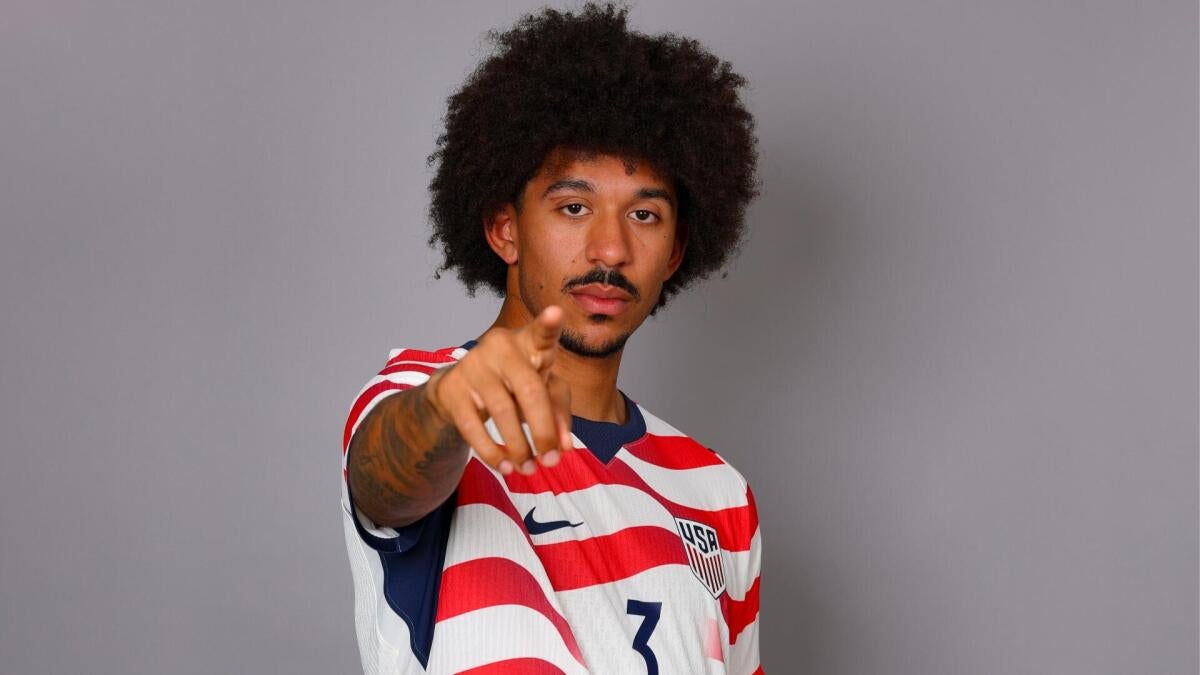
Chris Richards, a 25-year-old center back for Crystal Palace and a key figure in the U.S. men's national soccer team (USMNT), has been navigating the busiest period of his career with a mix of focus and calm. In early March, amid Crystal Palace's demanding schedule balancing Premier League matches and UEFA Conference League fixtures, Richards cherished rare moments of rest. He spent his downtime simply-taking walks near his home in south London, watching his toddler daughter absorbed by the children's show "Ms. Rachel," and catching up on TV dramas like "Fallout." Despite the intensity of his club commitments, Richards has his sights firmly set on the upcoming FIFA World Cup, which is just three months away.
Richards openly admits that the World Cup is never far from his mind. "I'd be lying if I said I didn't think about it all the time," he told CBS Sports. Yet, he strives to compartmentalize his focus, balancing his responsibilities at Crystal Palace with his aspirations for the national team. "I'm trying my best to take it day by day," he said, emphasizing the importance of maintaining steady progress through the season while preparing for the global stage.
Though no USMNT player is guaranteed a spot on head coach Mauricio Pochettino's World Cup roster, Richards is about as close to a certainty as possible. Over the past year, he has evolved into a regular starter at Crystal Palace and a dependable presence for the national squad. His steady rise from youth soccer in the United States to the Premier League has been remarkable, if not typical. Born in Birmingham, Alabama, Richards's pathway to top-flight European football took him from local youth clubs in Houston and Dallas, through Bayern Munich's famed academy and reserve teams, and on loan spells at Hoffenheim in Germany before landing in London.
Reflecting on his journey, Richards humbly remarked, "I shouldn't be here, if I'm being honest with you." His early challenges included being cut from a trial at FC Dallas, which could have derailed his ambitions. Instead, he found opportunities with a Houston youth club and later the MLS academy, which led to Bayern Munich's attention. His initial years in Europe were marked by limited first-team opportunities-he mostly played with Bayern's reserves or on loan. Even at Crystal Palace, Richards first broke into the squad playing as a defensive midfielder rather than in his preferred center back role. Yet, patience and persistence have paid off, and he is now firmly established in his favored defensive position.
Richards's emergence could not be more timely for the USMNT, which is undergoing a transformation under Pochettino. Since taking charge in late 2024, the Argentine coach has shifted the team's tactical approach, notably switching to a back three defense last September. This change has coincided with an unbeaten run over five games, signaling improved stability and results. Richards fits perfectly into this scheme, having frequently operated in a back three for Crystal Palace under coach Oliver Glasner. His role as an anchor in defense allows the USMNT to field more creative players further forward, balancing solidity with attacking freedom.
"I love it," Richards said of the back three system. He described how it enables defenders to be aggressive and win the ball high up the pitch, launching quick counterattacks. "When you're so far off the pitch, it's your time to smash into somebody and you win the ball up that high and then it really is a counterattack within 20 yards of goals." For him, this tactical setup suits his instincts perfectly.
Aggression and defensive solidity are hallmarks of the current USMNT identity, reflecting Pochettino's philosophy as he reshapes the team ahead of the World Cup. Richards embraces this ethos wholeheartedly. "There's a lot of emphasis on ball-playing center backs but for me, my first role is to defend," he said. While comfortable with the ball at his feet, Richards prioritizes neutralizing the opposition's best attacking threats. He candidly described the mindset needed for his position: "To be a center defender, you have to be a little sick in the head, to be honest with you. You have to want to head the ball. You have to want to crunch people." For him, the thrill of a well-timed tackle that excites the crowd outweighs scoring goals. "That's my job and I love it."
Richards has been a cornerstone of Pochettino's reimagined national team, present during pivotal moments on the road to the World Cup. Last summer's Concacaf Gold Cup was particularly significant. Although the squad was initially composed more of fringe players than established stars, Pochettino's emphasis on winning and toughness became evident. The USMNT had endured disappointing results in recent tournaments-a round of 16 exit at the 2022 World Cup, a group stage exit at the 2024 Copa America, and a fourth-place finish in the 2025 Concacaf Nations League.
"The Gold Cup was the time we were like, you know what? This is the time to bust people's asses," Richards recalled. The team aimed not only to assert its dominance in the region but also to build confidence heading into the World Cup. Reflecting on past setbacks, such as the loss to Panama at Copa America, Richards stressed the importance of setting a combative tone early in matches. The Gold Cup was a chance to prove that the USMNT could combine attractive soccer with an uncompromising defensive edge.
Pochettino's coaching has influenced Richards beyond tactics, helping him develop his understanding of the game. "They've taught me a lot about reading the game, about doing your work early, about [how] half of the battle is sorting the people out in front of you," he said. Richards recognizes that organizing teammates and forcing opponents to do the "dirty work" can make his own defensive duties easier. This enhanced game intelligence has been key to his growth as a player.
As the World Cup approaches, Richards is poised to play a crucial role for the USMNT. He may be the most in-form center back available, and the team's defensive performance will likely hinge on his contributions. Despite the weight of expectation, Richards remains grounded. "There's, I guess, a bit of responsibility to it, but it's not something that I'm scared of," he said.
Richards's impact extends beyond the national team. Nearly a year after helping Crystal Palace win the FA Cup-an historic triumph for the club-he remains a beloved figure among the club's community. His defensive performance against Manchester City during that cup run showcased his focus on nullifying opposing attackers. The south London fanbase, known for its hardworking and blue-collar character, has embraced Richards warmly. "A lot of the taxi drivers are Crystal Palace fans and they're always like, 'Thank you for everything that you've done for the club,'" he shared. The FA Cup victory was more than a trophy; it was a gift to a community starved for success. Richards described the moment the final whistle blew as "beautiful," with fans, club employees, and locals all sharing in the joy.
Inside the Palace locker room, Richards has found a supportive family environment. He credits former captain Joel Ward with helping him stay grounded during his early days at the club when playing time was limited. Ward's advice to "keep doing the right thing" until his opportunity arrived resonated with Richards, who admired Ward's understanding of his role even when not on the pitch. That mentorship has inspired Richards to become a leader himself, especially as he gains veteran status with the USMNT.
"I want to continue to establish myself as a leader, kind of like what Joel Ward did for me," Richards said. He recognizes the importance of managing team dynamics, supporting teammates who may be frustrated with their playing time, and fostering a culture of inclusivity and commitment. "Every minute that you play is going to count, especially at a World Cup," he asserted. Building a strong, united team culture is a priority for Richards as the USMNT prepares for the tournament.
Culture has been a recurring theme since Pochettino's arrival. The coaching staff balances intense training with genuine relaxation, encouraging players to bond off the field. During the Gold Cup, for instance, Richards and several teammates organized dinners and social activities to include newer players. One memorable evening involved inviting newcomer Alex Freeman to dinner shortly after he joined the squad, making him feel welcomed and part of the group. The lighthearted moment where Freeman was playfully told he'd pay the bill, causing him to sweat nervously before the joke was revealed, exemplified the camaraderie building within the team.
Richards also shared a slice of American culture with teammates raised in England during an international break in October. He, along with Mark McKenzie, Timothy Weah, and Weston McKennie, took Cameron Carter-Vickers and Antonee Robinson to a Chili's restaurant-a quintessential American dining experience. They ordered a variety of classic items like the Triple Dipper, endless chips and salsa, and chocolate molten lava cake, enjoying the nostalgic atmosphere. For Richards, introducing these players to such staples was a small but meaningful way to share a piece of American identity and create lasting memories.
In summary, Chris Richards's journey from a young player in Alabama to a key figure in European club soccer and the USMNT is a story of resilience, growth, and dedication. His steady rise, tactical adaptability, and leadership qualities make him an essential component of Mauricio Pochettino's vision for the national team. As the World Cup draws near, Richards carries not only the hopes of a team but also the pride of his club and community. His focus on defense, team culture, and connection with fans underscores his role as both a player and ambassador for American soccer on the world stage.