
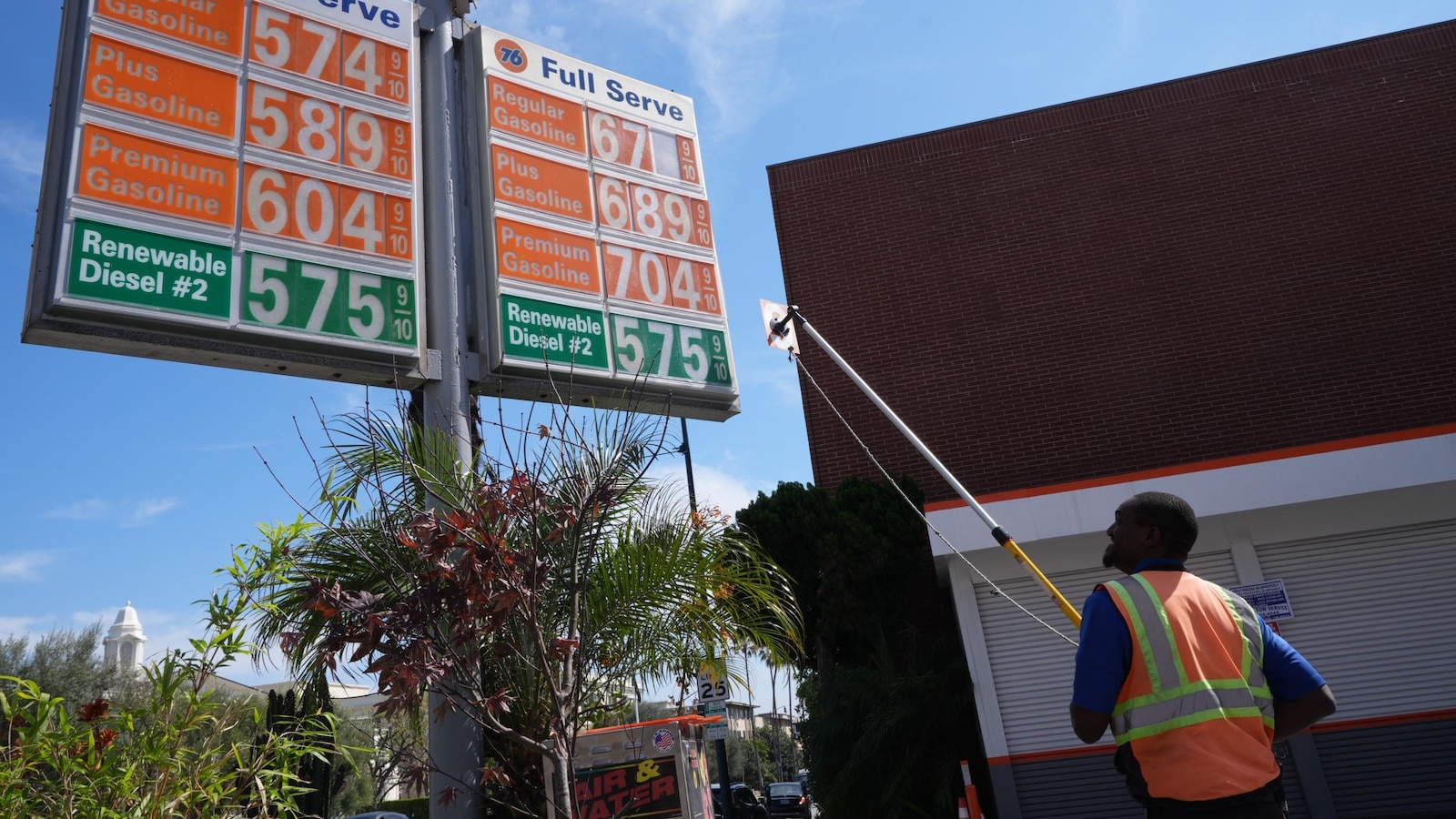
A week after the United States and Israel launched major military attacks on Iran, the price of oil has surged dramatically, showing no signs of easing as the conflict in the Middle East intensifies. This escalation has triggered widespread disruptions across the region, affecting nearly every Middle Eastern country through missile and drone strikes, and has severely impacted the vital oil shipping routes and production facilities that underpin the global energy market.
At the heart of the crisis is the Persian Gulf and the Strait of Hormuz, a narrow but strategically critical waterway through which roughly 20 million barrels of oil per day are transported. The ongoing hostilities have stranded numerous oil-carrying vessels in the Gulf, as navigating the Strait of Hormuz has become too dangerous amid the military clashes and threats of further attacks. This has led to a significant interruption in the supply of oil and gas, pushing global energy markets into a state of acute imbalance.
By the end of the week, oil prices had surged past the $90 per barrel mark. American crude oil settled at $90.90 per barrel, marking a 36% increase compared to the previous week. The international benchmark, Brent crude, climbed 27% over the same period, reaching $92.69. These sharp price increases have begun to ripple through the global economy, affecting consumer and business costs for gasoline, diesel, and jet fuel, with many drivers already noticing higher prices at the pump.
In Middlebury, Vermont, Mark Doran, a local resident filling his car with gas, expressed frustration over the rising costs. “It’s crazy. It’s not needed, especially at a time when people are already struggling,” he said, reflecting a common sentiment among consumers caught in the midst of geopolitical turmoil. Doran also voiced skepticism about prospects for a quick resolution, highlighting the persistent instability in the Middle East and the long history of conflict involving the U.S. in the region.
President Donald Trump has attempted to set expectations regarding the timeline of the military operations. On Monday, he indicated that the U.S. anticipated its actions against Iran to last around four to five weeks but emphasized that the military was capable of extending the campaign much longer if necessary. By Friday, Trump appeared to dismiss the possibility of diplomatic negotiations without what he described as Iran’s “unconditional surrender,” suggesting that the conflict could drag on without a clear end in sight.
Experts in the energy sector echo concerns about the conflict’s duration and its impact on oil markets. Al Salazar, head of macro oil and gas research at Enverus, commented, “The more news we get, the more it seems like this is going to last a really long time.” This prolonged uncertainty is contributing to the volatility and upward pressure on oil prices as supply disruptions persist.
In the United States, the rising oil prices have translated into higher costs at the pump. According to the AAA motor club, the national average price for a gallon of regular gasoline rose to $3.32 on Friday, an 11% increase over the prior week. Diesel fuel prices saw an even steeper climb, rising 15% to $4.33 per gallon. These price hikes are not limited to the U.S.; energy markets in Europe and Asia, which depend more heavily on Middle Eastern supplies, are facing even more severe consequences. Diesel prices in Europe have doubled, while jet fuel prices in Asia have soared by nearly 200%, as noted by Claudio Galimberti, chief economist at Rystad Energy.
The escalation in energy prices is directly linked to Iran’s series of retaliatory attacks following the U.S. and Israeli strikes. Iran has launched drone strikes against the U.S. Embassy in Saudi Arabia and targeted a major refinery in Saudi Arabia as well as a liquefied natural gas (LNG) facility in Qatar. These attacks have effectively halted flows of refined petroleum products and taken approximately 20% of the global LNG supply offline, creating a severe shortage in the energy market.
Galimberti explained the widespread impact of these attacks and ongoing threats: “We keep seeing news of vessels being hit or refineries or pipelines, so the list is very long.” He estimates that as a result of the conflict, around 9 million barrels of oil per day are currently off the market due to facility damages or precautionary shutdowns by producers. This has plunged global oil markets into a state of “extreme deficit,” exacerbating price pressures worldwide.
While the United States is a net exporter of oil, it is not