
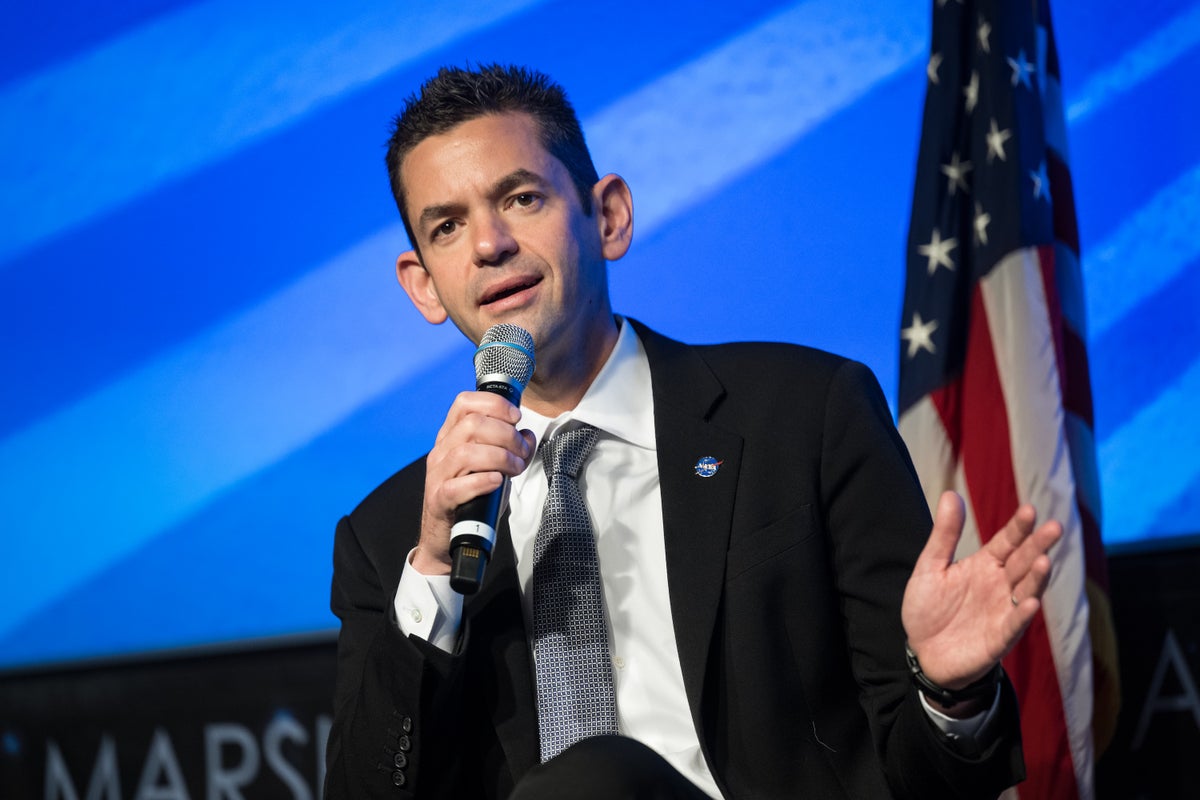
On March 24, 2026, NASA Administrator Jared Isaacman revealed an ambitious $30-billion plan aimed at accelerating the United States’ return to the moon and establishing a permanent lunar base by 2036. Announced at NASA headquarters in Washington, D.C., this bold initiative marks a significant shift in NASA’s lunar exploration strategy, prioritizing sustained human presence on the moon over short-term missions. Isaacman emphasized that unlike the Apollo era’s goal of planting flags and footprints, this time the mission is to stay and build a lasting foothold on the lunar surface.
Central to NASA’s vision is the establishment of a base on the moon’s south pole, a region of particular scientific and strategic interest due to its permanently shadowed craters believed to contain water ice and other valuable resources. These materials could be critical for supporting human habitation and future space exploration. To realize this, NASA plans dozens of launches over the next decade, carrying a wide array of equipment including rovers, drones, power systems, communication infrastructure, and habitat modules. The effort will unfold in stages, gradually assembling a lunar outpost capable of supporting regular human activity.
An important aspect of the plan is the decision to cancel the long-discussed lunar Gateway, an orbiting space station that was originally intended to serve as a staging point for moon missions. Instead, NASA will focus resources on the surface base itself and reduce emphasis on the International Space Station (ISS). The agency intends to encourage private companies to develop a separate commercial space station to succeed the ISS, which can operate independently in low Earth orbit. This shift reflects NASA’s evolving approach, blending government-led exploration with commercial partnerships.
The upcoming Artemis program missions serve as critical milestones toward this vision. NASA is preparing for Artemis II, scheduled for launch on April 1, 2026, which will send four astronauts on a test flight around the moon using the Space Launch System (SLS) rocket and the Orion capsule. This mission will validate key systems needed for crewed lunar exploration. Following Artemis II, Artemis III in 2027 will test docking procedures between Orion and two lunar landers being developed by commercial partners SpaceX and Blue Origin. If successful, Artemis IV in 2028 aims to return astronauts to the lunar surface for the first time in over 50 years. These missions lay the groundwork for the expanded lunar activities envisioned in the new moon base program.
One of the program’s most innovative elements is the embrace of nuclear power to sustain the lunar base. The moon’s south pole experiences extended periods of darkness lasting months, which make solar power unreliable. To overcome this, NASA plans to deploy radioactive isotope power sources initially, and eventually a small nuclear reactor to provide continuous energy. Experts like Casey Dreier of the Planetary Society highlight that this move toward nuclear propulsion and power could revolutionize not only lunar exploration but also future crewed missions deeper into the solar system, including Mars.
Despite the ambitious goals, NASA officials acknowledge significant challenges ahead. Carlos Garcia-Galan, a key figure in the lunar base program, pointed to the demanding “cadence” of lunar landings as a major hurdle. The first phase requires approximately two dozen launches to the moon by 2028, a pace that will test NASA’s operational capabilities and budgetary commitments. Success in these early stages is critical for maintaining public and political support for the long-term effort.
Another uncertainty involves the rockets that will ferry astronauts and cargo to the moon beyond the initial Artemis missions. While the next four Artemis flights will utilize NASA’s SLS rocket, the agency is exploring alternatives for subsequent missions. SpaceX’s Starship spacecraft is a prime candidate, not only as a launch vehicle but also as a lunar lander. However, the Starship lander currently requires multiple on-orbit refueling operations—estimated at around a dozen—to complete a lunar landing mission. SpaceX is working to reduce this number to enable a test landing prior to crewed missions. NASA’s Lori Glaze, acting head of human exploration, affirmed the agency’s commitment to landing humans on the moon by 2028 despite these technical challenges.
The international context also adds a layer of urgency to NASA’s timeline. China has announced plans to land astronauts on the moon by 2030 and is rapidly advancing its own lunar exploration capabilities. Isaacman acknowledged that China might achieve its goal sooner than expected, suggesting that the U.S. may only narrowly maintain its lead in returning humans to the lunar surface. This competitive dynamic