
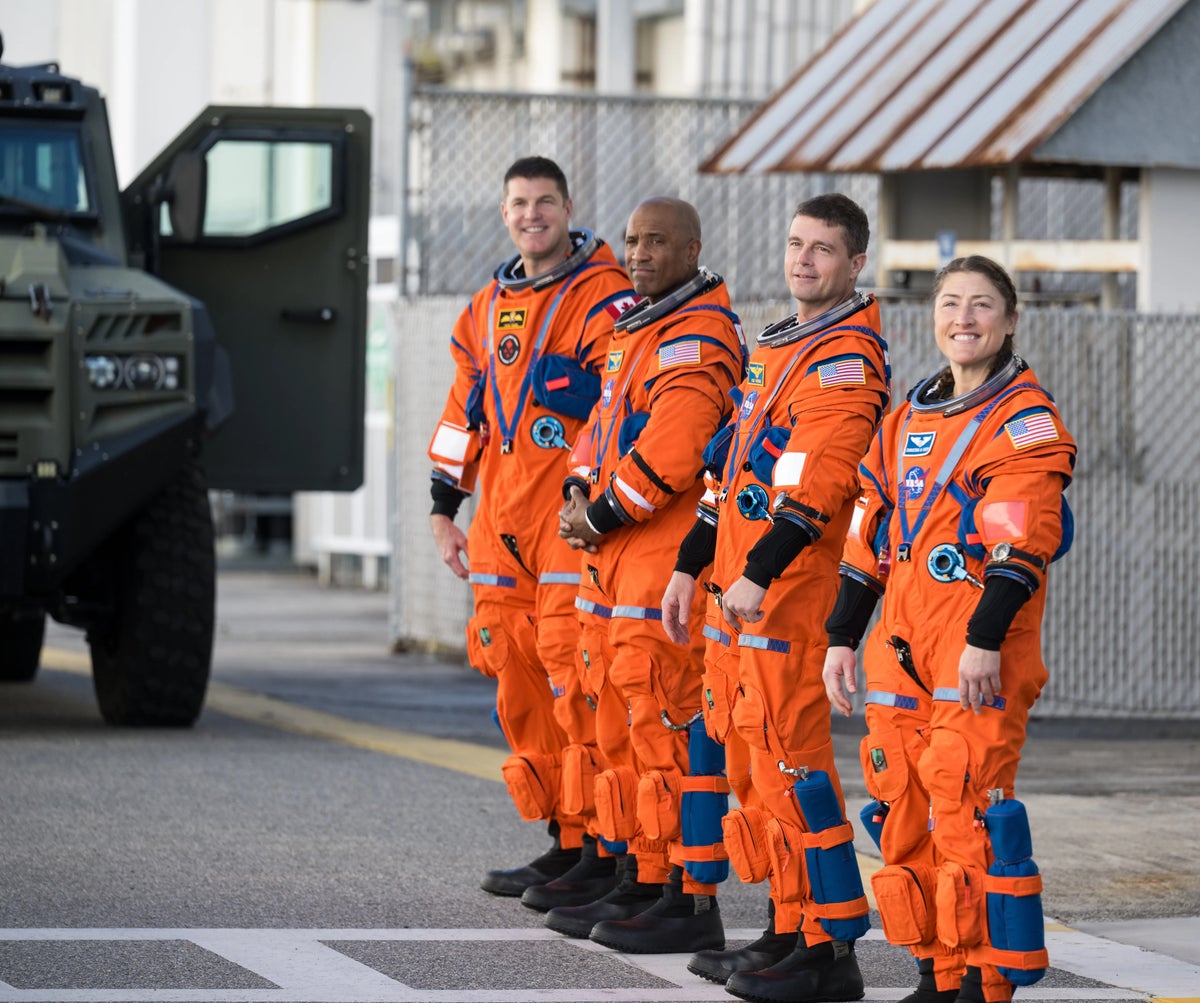
NASA is preparing to launch its Artemis II mission, aiming to send a crew of four astronauts around the moon as early as April 1, 2026. This mission will mark the first time humans have left Earth orbit in over fifty years, since Apollo 17 in 1972. Despite facing numerous delays and technical challenges, NASA officials and astronauts remain confident that the launch will proceed soon, setting the stage for the agency's renewed ambitions in lunar exploration.
The Artemis II mission involves launching the Space Launch System (SLS) rocket and the Orion crew capsule, which will carry astronauts Reid Wiseman, Christina Koch, Victor Glover, and Jeremy Hansen on a roughly ten-day journey orbiting the moon. The mission is designed to test critical spacecraft systems and gather scientific data, including observations of the moon's far side-a region that remains relatively unexplored by humans. While satellites and some Apollo missions have imaged this part of the moon, Artemis II's crew will likely see lunar surface features that no human has ever observed firsthand.
The mission has experienced multiple postponements in 2026 due to technical difficulties uncovered during spacecraft testing. However, NASA officials expressed optimism at a press conference on March 29, stating that the rocket, crew capsule, and ground systems are all ready for launch. Lori Glaze, acting associate administrator for NASA's Exploration Systems Development Mission Directorate, emphasized that all indicators point toward mission readiness. Shawn Quinn, NASA's program manager for Exploration Ground Systems, noted that the weather forecast currently gives an 80 percent chance of favorable conditions for a launch this week, which is a critical factor in deciding whether to proceed.
The four astronauts arrived in Florida on March 27 and have been in quarantine since March 18 to minimize the risk of illness that could endanger the mission. Christina Koch, speaking at a crew-only press event, emphasized that while the crew is prepared and eager to fly, they are ready to accept further delays if necessary. "We will go when this vehicle tells us it's ready, when the team is ready to go," she said, underlining the mission's safety-first approach.
The Artemis II mission serves as a vital step toward future lunar exploration goals, including NASA's Artemis III mission, which aims to land astronauts on the moon's surface and establish a sustainable human presence there. The current mission will validate the technology and operational procedures needed for these more ambitious expeditions. It will also support a range of scientific and medical experiments designed to better understand human health and performance during deep-space missions.
Mission commander Reid Wiseman spoke candidly about the responsibilities he and his crew face, acknowledging the risks involved but expressing confidence in their preparation and teamwork. "At the end of the day, every ship needs a captain, and I'm ready to make those decisions, but I'm not making them in a vacuum," he said. "We're going to go slow, and we have the ultimate trust in each other, and that's how we will get through this."
The Artemis II mission represents a significant milestone in NASA's broader vision for lunar exploration and beyond. In addition to testing spacecraft and crew capabilities, the mission will help inform plans for a permanent human settlement on the moon, an ambition that NASA hopes will open the door to deeper space exploration, including eventual missions to Mars.
As the countdown continues, NASA remains vigilant and cautious, balancing eagerness to launch with a commitment to safety and mission success. If all goes according to plan, the Artemis II crew will soon embark on a historic journey that will not only push the boundaries of human spaceflight but also inspire a new generation of explorers and scientists.
This is a developing story and may be updated as new information becomes available.