
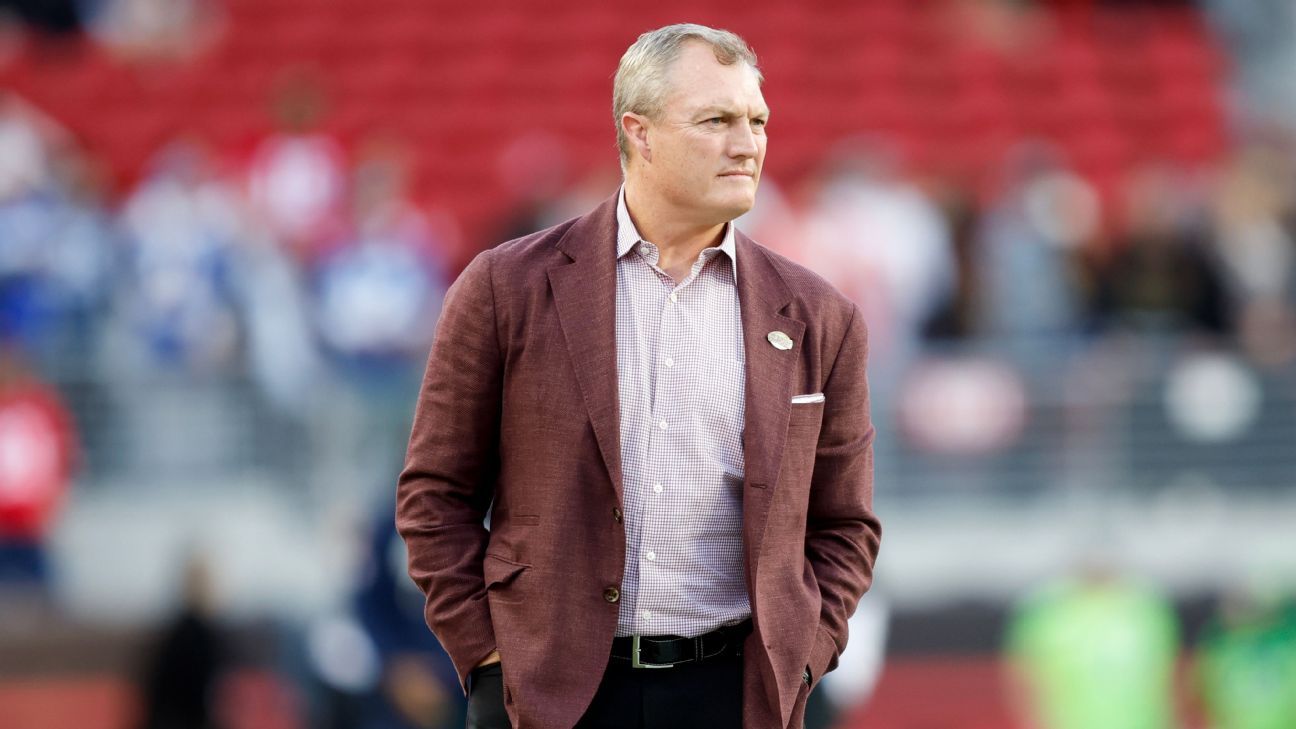
In the wake of the San Francisco 49ers' injury-plagued 2025 season, the team's general manager, John Lynch, has taken decisive steps to address concerns about player health and safety. Following the end of the season, Lynch pledged to investigate all possible factors contributing to the unprecedented wave of injuries that severely impacted the team's performance. Among these was a viral theory circulating online that suggested an electrical substation near the 49ers' training facility at Levi's Stadium might be causing harmful effects on the players. However, Lynch has now categorically dismissed this theory, providing a detailed explanation and outlining the proactive measures the team is implementing to reduce injuries moving forward.
Speaking at the NFL's annual meetings on Sunday, Lynch stated that the 49ers had hired an independent scientist to thoroughly assess the validity of the claims regarding electromagnetic interference from the nearby substation. This expert, whose name and affiliation were not disclosed by the team, reportedly possesses over 45 years of experience studying electromagnetic fields and their effects on human health. The scientist was granted full access to the entire training facility and used advanced laboratory-grade equipment to measure electromagnetic emissions in all areas occupied by players during training and rehabilitation.
The findings from these tests were clear and reassuring. The measurements indicated that the electromagnetic exposure at the facility was 400 times below the level considered unsafe in a workplace environment. In fact, the exposure levels were comparable to those experienced in a typical commercial gym or office setting. To put it in perspective, everyday household appliances such as vacuum cleaners, hair dryers, and microwave ovens produce higher electromagnetic emissions than those detected at the 49ers' facility. Lynch described the outcome as "a big nothing burger" and emphasized that the training center remains a safe and healthy environment for players, coaches, and staff alike.
Lynch acknowledged the importance of investigating the substation theory thoroughly, stating that the team did not want to dismiss any concerns without proper examination. While he noted that no free agent players had inquired about the electrical substation theory during contract discussions, he was prepared to share the expert's findings if questions arose. The team's commitment to player wellness extends beyond dismissing unfounded theories; it reflects a broader effort to confront the injury crisis head-on.
The 49ers' 2025 season was marked by a staggering number of injuries to key players, which significantly hampered the team's competitiveness. Among the most impactful losses were defensive end Nick Bosa, who suffered a torn ACL; linebacker Fred Warner, who broke his ankle; and tight end George Kittle, who tore his Achilles tendon. All three were sidelined for the remainder of the season. Additionally, rookie first-round pick Mykel Williams missed a substantial portion of the season with a torn ACL. Other players, including quarterback Brock Purdy, wide receivers Ricky Pearsall and Jauan Jennings, and linebacker Tatum Bethune, endured various injuries that required lengthy absences.
The financial impact of these injuries was also substantial. According to the sports analytics site OverTheCap, the 49ers had 20 players on reserve injury lists during the season. These players collectively accounted for more than $95 million in adjusted annual contract value, which was the highest figure in the NFL by nearly $20 million. This statistic underscores not only the depth of the injury problem but also the significant resources invested in sidelined players. Historically, the 49ers have struggled with injuries; in both 2020 and 2024, they led the league in adjusted games lost, a metric that estimates the overall impact of injuries on team performance.
In response to these ongoing challenges, Lynch revealed that the organization is making substantial investments to improve its rehabilitation and recovery facilities. Following a report card from the NFL Players Association (NFLPA) that rated the team's training staff and facilities with a mediocre C-minus grade, the 49ers are committing $9 million toward upgrading their resources. A significant portion of this budget is allocated to enhancing water-based recovery options such as cold plunges, pools, and underwater treadmills, which are increasingly recognized for their benefits in athlete rehabilitation.
Alongside facility improvements, the 49ers are strengthening their medical and training personnel. While the team is not replacing its current training staff, it is in the process of hiring three additional physical therapists to provide more individualized attention to players. Lynch emphasized that modern athletes expect and benefit from personalized care, and the team acknowledges that their previous staffing levels, though adequate, were not among the league's best. Increasing the number of specialists is seen as a crucial step toward better injury prevention and recovery.
Lynch expressed a philosophy of continuous improvement, remarking that after a difficult year, the team must either get better or risk declining further. He acknowledged that sometimes a season with many injuries can be an unfortunate anomaly, but the feedback from players and the NFLPA's report highlights areas needing attention. The team's approach combines upgrading physical infrastructure with expanding human resources to ensure player health is prioritized.
Regarding the status of injured players, Lynch offered some encouraging updates. Both Nick Bosa and Mykel Williams are reportedly recovering well from their ACL surgeries and are expected to resume activities at the start of training camp, albeit potentially on modified schedules to ease their return. Perhaps most notably, Lynch expressed optimism about George Kittle's recovery, suggesting that the tight end, who suffered his Achilles injury during the team's NFC wild-card playoff victory on January 11, could be ready to start the 2026 season. "I think we're hopeful for Week 1," Lynch said, noting that Kittle is progressing at a promising rate.
In summary, the 49ers have taken a comprehensive and transparent approach to addressing the injury issues that have plagued the team in recent years, culminating in a particularly difficult 2025 campaign. By debunking misinformation about the training facility's environment, investing heavily in modern recovery infrastructure, expanding medical staff, and closely monitoring player rehabilitation, the organization is signaling its commitment to improving player health and team performance. While challenges remain, especially given the severity and frequency of injuries in recent seasons, Lynch and the 49ers are actively pursuing solutions designed to foster a safer and more resilient team environment as they prepare for the upcoming season.