
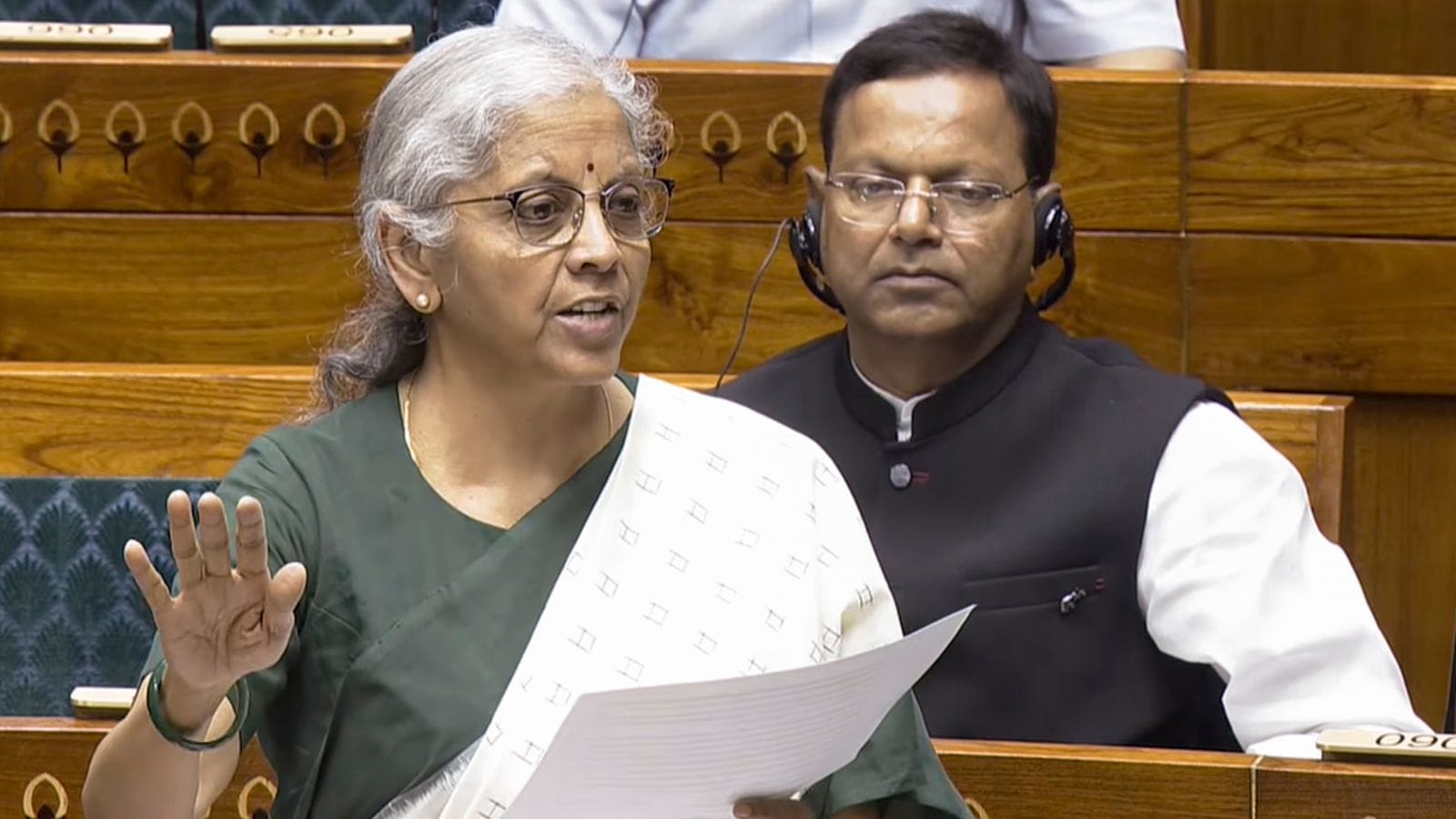
On Wednesday, the Lok Sabha passed the Finance Bill 2026 through a voice vote, effectively rejecting all amendments proposed by Opposition members while approving 33 amendments put forward by Finance Minister Nirmala Sitharaman. This marks a significant step forward in the Union Budget process for the fiscal year 2026-27. The Bill will now proceed to the Rajya Sabha for approval, after which the Budget cycle for the upcoming year will be complete.
The Union Budget for 2026-27 outlines a total expenditure of Rs 53.47 lakh crore, which reflects a 7.7 percent increase compared to the current fiscal year ending on March 31. The fiscal deficit for the upcoming year is projected to be 4.3 percent of the Gross Domestic Product (GDP), showing a marginal improvement over the 4.4 percent fiscal deficit estimated for the current fiscal year. These figures indicate the government’s intent to maintain fiscal discipline while continuing to support economic growth.
During the debate on the Finance Bill, Finance Minister Nirmala Sitharaman took the opportunity to respond sharply to criticisms from the Congress party regarding fiscal management, particularly on the issue of fiscal deficits. She pointedly accused the Congress of hypocrisy, arguing that while the current government has been diligently repaying loans incurred through oil marketing bonds during the Congress-led United Progressive Alliance (UPA) regime, the opposition party continues to lecture the government on fiscal prudence.
Sitharaman recalled the 2008-09 global financial crisis and contrasted the UPA government’s response with that of the current administration during the COVID-19 pandemic. She remarked that the UPA government was “shaken” during what she called a “small global financial crisis,” whereas the Modi government maintained composure during the far more severe global crisis posed by COVID-19. She highlighted that the fiscal deficit ballooned to 9.3 percent during the pandemic year but has since been brought down, implying effective fiscal management under her leadership.
The Finance Minister also criticized the Congress government for what she described as “whitewashing” their fiscal deficit figures during their tenure. She said that the actual fiscal deficit during 2008-09 was 7.9 percent, but the government at the time manipulated accounts by booking loans raised through oil marketing companies, thereby artificially lowering the reported deficit to 6.1 percent. Sitharaman alleged that this maneuver was a deliberate attempt to present a rosier fiscal picture than reality warranted.
Moreover, Sitharaman emphasized that the current government has been actively repaying these oil marketing bonds, which the previous government used to shift fiscal burdens to future generations. She stated that the Modi administration inherited outstanding debts of Rs 1.3 lakh crore from these oil bonds and has since paid back Rs 1.43 lakh crore, including Rs 44,650 crore in principal amount. She lamented that this repayment obligation has constrained the government’s ability to allocate funds to development projects such as hospitals and schools. Her remarks underscored the point that while Congress criticizes the government on fiscal deficit, it is the present administration that is bearing the cost of past fiscal mismanagement.
Addressing further criticism from Congress member Manish Tewari about rising government debt, Sitharaman argued that looking at debt in nominal terms without accounting for GDP growth was misleading. She pointed out that India’s nominal GDP has grown significantly, from Rs 113 lakh crore in 2013-14 to Rs 345 lakh crore projected for 2025-26. In this context, although total government debt has risen from Rs 56.5 lakh crore to Rs 214.8 lakh crore during the same period, the growth in GDP provides a crucial frame of reference for understanding the debt burden. She also highlighted that the Central government alone cannot be held responsible for debt, hinting at the fiscal responsibilities of state governments. In a pointed remark, she suggested that Tewari should work with chief ministers from states like Himachal Pradesh and Karnataka to help reduce their debts if he was serious about the issue.
Beyond addressing the Congress party, Sitharaman also took aim at the Trinamool Congress (TMC) and Dravida Munnetra Kazhagam (DMK), the ruling parties in the upcoming election states of West Bengal and Tamil Nadu, respectively. She accused members of these parties of frequently being absent from the Parliament during her responses, implying a lack of seriousness in engaging with national fiscal discussions.
Specifically,