
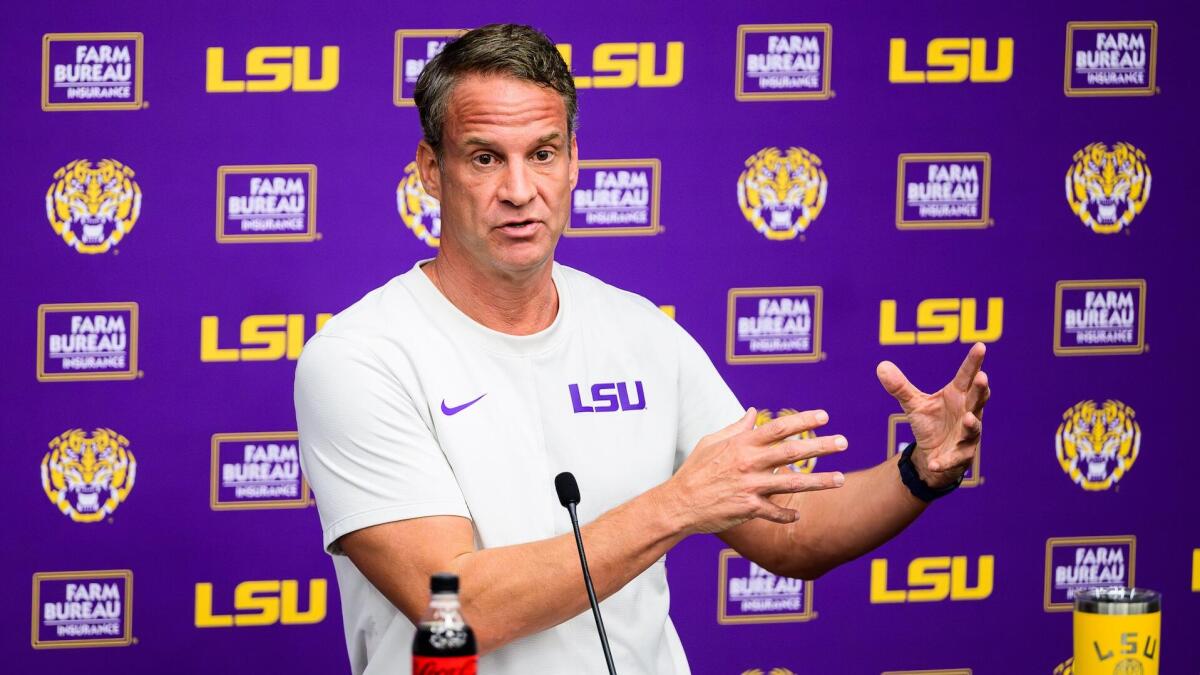
LSU embarked on its spring football practice on Wednesday, marking the beginning of preparations for the 2026 season. With heightened expectations surrounding the Tigers in the wake of significant offseason changes, the atmosphere in Baton Rouge is charged with anticipation. However, new head coach Lane Kiffin tempered the enthusiasm by emphasizing the need for patience and steady progress rather than immediate success.
Speaking to the media after the initial practice session, Kiffin underscored the work that lies ahead. "We have a lot of work to do," he said plainly. "I said that the first day that we got here. Now that we're into practice format, things don't happen overnight. It takes a lot of work to get a program to an elite-performing program level. We're making some first steps, but there's a ton of work to do." His message was clear: despite the excitement, the Tigers are still early in their journey toward becoming a top-tier program again.
The coaching staff and fan base alike face a unique challenge: balancing the lofty expectations with the realities of building a cohesive and competitive team. LSU's offseason moves have been nothing short of headline-grabbing, which naturally fuels the hype. The university aggressively pursued Kiffin, luring him away from his position at Ole Miss with a lucrative contract reportedly worth $13 million per year before incentives. In addition, LSU honored the playoff bonuses stipulated in Kiffin's former contract, signaling a strong commitment to securing his leadership.
Beyond the coaching hire, LSU has made waves in the transfer portal, assembling what many consider the premier transfer class in the country. This haul includes three five-star transfers: quarterback Sam Leavitt, offensive tackle Jordan Seaton, and edge rusher Princewill Umanmielen. Their arrivals, combined with other additions, have transformed the Tigers' roster into one brimming with talent and depth at marquee positions.
The financial investment behind this roster overhaul is staggering. Sources reported to CBS Sports in January that LSU is spending in the neighborhood of $40 to $50 million on its 2026 roster alone. When factoring in Kiffin's salary and the cost of assistant coaches, the total program expenditure could exceed $60 million. This level of spending is almost unprecedented in college football, underscoring LSU's ambition to reclaim national prominence.
Yet, for all the money poured into the team, Kiffin remains cautious about setting rigid, outcome-based goals. He explained that the program is focused on "process-based" objectives rather than fixating on wins, playoff appearances, or championships. "I think expectations can be really scary, so we don't really look at it that way," he said. "We don't have goals and say, 'We need to have this many wins or playoffs.' We don't talk that way because it's outcome-based and not process-based. A lot of those things are determined by things out of your control."
Kiffin's philosophy centers on daily improvement and player development rather than instant results. He acknowledged the roster's impressive talent but was quick to add that assembling skilled individuals does not immediately translate to a cohesive, high-performing team. "Those individual pieces are still a long way from being a really good team," he noted.
When asked about his aspirations for the first season, Kiffin emphasized progress above all else. "I don't say, 'Hey, this is what we need to do in Year 1,'" he said. "Because it doesn't matter. It's much more about the day-to-day process and trying to improve our players and get them to a higher level."
The transfer portal has dramatically reshaped college football rosters nationwide, and LSU is no exception. Kiffin described the Tigers' roster turnover as "really high," reflecting a broader trend where player movement between programs is more frequent than ever. One notable change to the transfer system-the elimination of the spring transfer window-presents new challenges for roster management. Coaches must now finalize their rosters earlier, with fewer opportunities to replace underperforming players mid-season.
Kiffin commented on this shift, noting both its benefits and drawbacks. While the reduction to a single transfer window is generally positive for college football's stability, it means coaches have less flexibility to address depth concerns after spring practice. "Now, you have what you have," Kiffin said. "You can't anymore say, 'Well, that guy isn't playing that well, so we'll go get another guy at that spot.' This is it. There's nowhere to go. There's a good and bad to it."
The depth issue is particularly pressing given the Tigers' heavy investments in star players at key positions. Kiffin likened the current college football environment to the NFL in terms of roster construction-where significant resources are concentrated on top-tier talent, often at the expense of overall depth. This dynamic is partly driven by the combined effects of the transfer portal and NIL (Name, Image, and Likeness) deals, which empower players to seek opportunities that best suit their ambitions and financial interests.
"Dynasties that you used to see, I don't think are going to take place as far as the dominant dynasty teams, because you can't make a roster that deep because they won't stay," Kiffin explained. "If they're not playing enough, they won't stay." The implication is clear: sustained dominance like that seen in previous college football eras may be harder to achieve in the current landscape.
Despite these challenges, the expectations in Baton Rouge remain sky high. With millions invested and a roster stocked with talent, LSU is widely viewed as a contender for the SEC title and a strong candidate to reach the College Football Playoff in Kiffin's debut season. According to FanDuel, the Tigers hold the eighth-best odds to win the national championship at +1500, a testament to the program's perceived potential.
Still, Kiffin is keenly aware that such projections come with pressure and that patience will be essential for long-term success. He insists that focusing on incremental improvement and building a strong team culture are more important than chasing immediate glory. "It's much more about the day-to-day process," he reiterated, "trying to improve our players and get them to a higher level."
In sum, LSU's 2026 spring practice marks a pivotal moment for the Tigers as they attempt to translate offseason promise into on-field performance. With a star-studded roster, a high-profile coaching hire, and significant financial backing, the foundation for success is in place. Yet, the realities of roster turnover, depth concerns, and the evolving college football landscape mean that Kiffin's call for patience and process-oriented focus will be tested. Whether LSU can meet the lofty expectations set by fans and analysts alike remains to be seen, but one thing is certain: this will be a season closely watched by the college football world.