
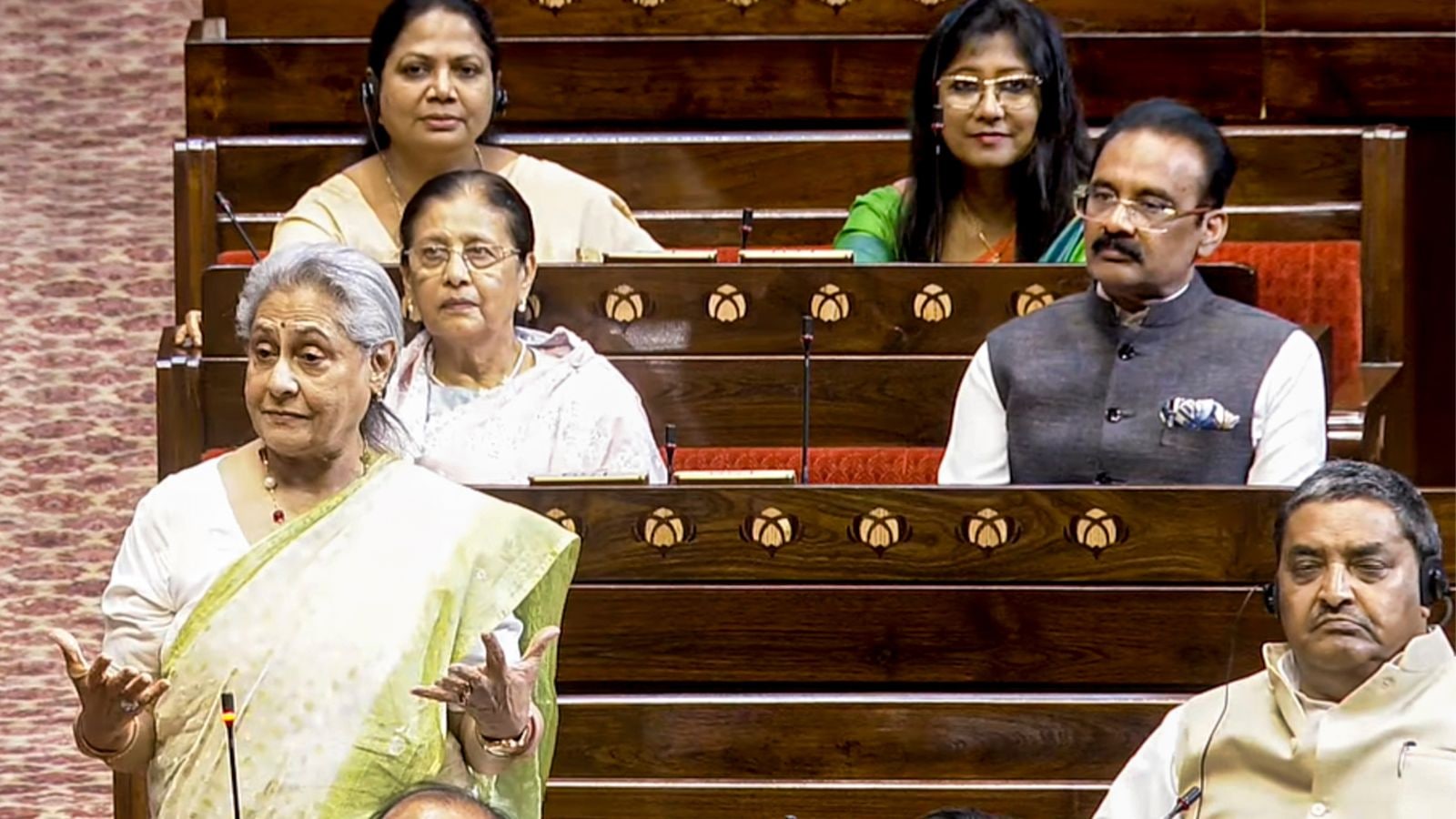
On Wednesday, Samajwadi Party MP and veteran actor Jaya Bachchan delivered a passionate and forceful opposition to the Transgender Persons (Protection of Rights) Amendment Bill during a heated debate in the Rajya Sabha, India's Upper House of Parliament. The discussion became contentious, marked by a notable exchange between Bachchan and the Deputy Chairman of the House, Dr. Dinesh Sharma. Despite the uproar in the chamber and protests outside Parliament, the Bill was ultimately passed, drawing sharp criticism from activists, rights groups, and members of the transgender community.
The confrontation began as Bachchan rose to speak amid ongoing disruptions. Members from the treasury benches were engaged in side conversations, which visibly irritated her. When Deputy Chairman Dr. Sharma called on her to face the Chair while speaking, Bachchan resisted, arguing that if she spoke while facing the Chair, the Chair's attention would be drawn only to her, while others talking would be ignored. This led to a back-and-forth where Bachchan repeatedly challenged Sharma over what she perceived as unequal treatment during the debate. At one point, she admonished unruly members by saying, "Children, sit down," and expressed frustration that her allotted time was being wasted. She even remarked, "Phansi chada dijiye" (hang us), highlighting her willingness to continue despite the obstacles.
The exchange underscored the tension within the House about the Bill and the manner in which the debate was being conducted. Bachchan insisted that the Chair take action against interruptions from the treasury benches, while Sharma maintained that disruptions were coming from both sides. Even as her time was running out, Bachchan declared she would continue to speak, saying, "If enough time is not there, I will go to the Well of the House and speak," signaling her determination to be heard.
Despite the tumult, Bachchan delivered a strong critique of the Bill, grounding her opposition in religious and cultural references. She invoked Lord Ram, a revered figure in Hindu tradition, noting that transgender persons have traditionally been considered auspicious and have played a special role in cultural ceremonies. "Ram had said in every special occasion, the presence of transgender person will turn the event auspicious," she said. She elaborated on the traditional practices where transgender individuals visit homes during significant life events, such as childbirth, offering blessings and receiving heartfelt offerings in return. According to Bachchan, this cultural legacy should inform the approach to transgender rights in India.
Beyond cultural symbolism, Bachchan called for greater political representation for transgender persons, urging the government to nominate members of the community to Parliament. She emphasized the importance of listening to their lived experiences, including the difficulties and struggles they face in society. Only through such inclusion, she argued, could legislation truly address their needs. She insisted that the Bill should be brought to the House after thorough consultation with transgender persons themselves.
Meanwhile, the Bill itself has sparked widespread controversy. On the day of the debate, the Supreme Court-appointed advisory committee on transgender rights sent a letter to Union Social Justice Minister Virendra Kumar, urging the government to withdraw the Bill. This move came amid nationwide protests by activists and transgender community members, who argue that the amendment undermines the rights previously recognized under the 2019 Transgender Persons (Protection of Rights) Act.
Critics contend that the Bill relies on vague and unscientific criteria to define transgender persons and imposes mandatory medical examinations that violate bodily autonomy. They fear that this medical scrutiny will lead to invasive surveillance and effectively erase the diversity of gender identities that exist beyond traditional categories.
One of the most contentious aspects of the amendment Bill is its rollback of the right to gender self-identification. This right was established by the Supreme Court in its landmark 2014 NALSA judgment, which affirmed that individuals have the right to legally identify their gender without undergoing any medical intervention. The current amendment replaces this with a strict state-controlled medical certification process. Under the new provisions, individuals must be assessed by a medical board led by a chief medical officer to be legally recognized as transgender.
Furthermore, the Bill narrows the legal definition of who qualifies as a transgender person. It restricts recognition to certain socio-cultural groups, such as hijras and kinners, and to individuals with specific congenital biological variations. This exclusionary definition effectively leaves out large sections of the transgender community, including trans-men, trans-women, and non-binary persons, thereby denying them legal protections and recognition.
The passage of the Bill has ignited protests and mobilized activists across India, many of whom see it as a backward step in the struggle for transgender rights. They argue that the Bill's provisions are out of sync with contemporary understandings of gender identity and human rights standards. The mandatory medical certification is viewed as a form of gatekeeping that undermines the autonomy and dignity of transgender individuals.
In summary, the Transgender Persons (Protection of Rights) Amendment Bill passed in the Rajya Sabha amidst significant controversy, including a vociferous opposition from MP Jaya Bachchan. Her intervention highlighted the cultural and religious significance of the transgender community in Indian society and called for their political inclusion. However, the Bill itself has been widely criticized for restricting the right to self-identify and imposing medical scrutiny that many see as discriminatory and regressive. The debate around the Bill reflects broader tensions about transgender rights, representation, and the role of the state in regulating gender identity in India. As protests continue and voices from the community grow louder, the struggle for comprehensive and inclusive transgender rights remains unresolved.