
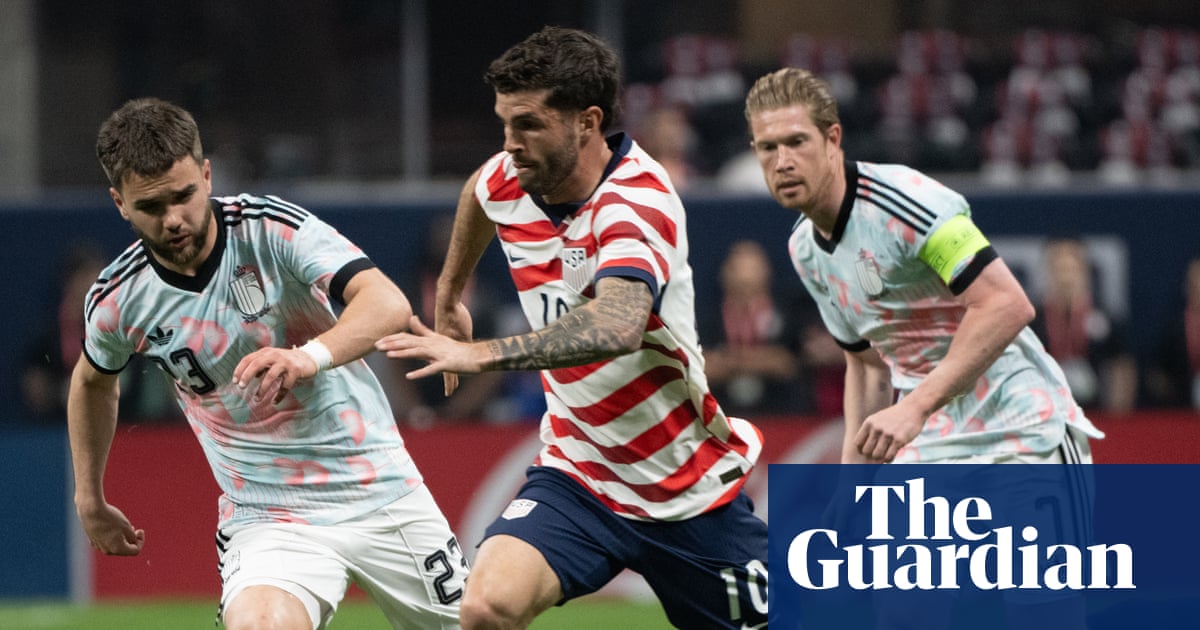
On Saturday, the US men's national soccer team faced Belgium in a friendly match at Mercedes-Benz Stadium in Atlanta. Known for its vast 70,000-seat capacity and state-of-the-art facilities, the stadium provided a unique setting for this game. The match was played indoors on natural grass, with the temperature carefully maintained at a comfortable 72 degrees Fahrenheit (22 degrees Celsius) by the stadium's massive HVAC system, which weighs 8,400 tons and is designed to combat Atlanta's typically high summer humidity. Outside, the weather was equally pleasant, a perfect spring day, making the indoor climate control somewhat redundant.
Despite the ideal playing conditions, the match featured an unusual element that confused many fans both in the stands and watching at home: mandatory hydration breaks. These breaks are a relatively new feature in international soccer, introduced primarily to protect player health during extreme weather conditions. However, this summer's FIFA World Cup will require hydration breaks in every match regardless of the venue or weather. To simulate these upcoming conditions, the US-Belgium friendly incorporated the breaks, which took place twice during the game. The announcement of the stoppages drew boos from many of the 66,867 spectators, who were puzzled by the unexpected interruptions in an otherwise smooth game.
On the field, the hydration breaks presented a new tactical dynamic. Both head coaches used the time to consult with their players and make adjustments. US head coach Mauricio Pochettino gathered his team in a tight circle, delivering a firm, basketball-style timeout pep talk. Belgium's coach, Rudi Garcia, took a similar approach, using the breaks to communicate strategy and reinforce his team's game plan.
After the match, Pochettino expressed his displeasure with the hydration breaks. He acknowledged their necessity in some situations but argued that in a climate-controlled stadium with ideal temperatures, the breaks disrupted the flow and rhythm of the game. "I don't like [them]," Pochettino said. "I think you cut the rhythm of the game. I understand when you play in open stadiums, maybe yes, we need to care about the health of the players. But in this type of stadium when it's 21, 22, 23 degrees Celsius, I think it's the perfect time and weather to play. But that's the new rule that we need to accept."
In contrast, Rudi Garcia welcomed the breaks, seeing them as valuable opportunities for in-game coaching. "I like them because this is an opportunity for us coaches to speak with the team, to speak about strategy and plan," he explained. Belgium had taken control of the match by the time the first break occurred, and Garcia noted that the stoppages allowed him to reinforce his defensive and tactical approach. "We play as we know with our 4-3-3 and it was a good decision. It was very good and interesting to speak with the team during these breaks," he added.
Among the US players, the hydration breaks seemed to be a familiar and largely accepted feature. Goalkeeper Matt Turner pointed out that players in Major League Soccer often experience similar conditions during the hot summer months and are accustomed to such pauses. Forward Timothy Weah praised the breaks for prioritizing player safety, a sentiment echoed by midfielder Weston McKennie, who admitted he was relieved to have the chance to hydrate. "I had a super dry mouth, honestly," McKennie said with a laugh. He also speculated that teams more used to cooler European climates might find these breaks helpful in leveling the playing field during the summer's World Cup, whether matches are held indoors or outdoors.
Christian Pulisic, a key figure in the US lineup, said the hydration breaks had little impact on the game's flow but highlighted another issue that complicated the match: the teams' kits. The US took the field wearing their vibrant red-and-white-striped World Cup jerseys, designed to evoke the American flag in motion, paired with blue shorts and white socks. Belgium wore their away kit, a lighter-colored uniform representing the country's "rich artistic heritage," according to Adidas.
Despite the distinct designs, the color schemes caused confusion on the field and among viewers. Pulisic noted that even he struggled to distinguish teammates from opponents during fast-paced moments. "That's not an excuse at all, because both teams had to deal with it, but that just can't happen," he said.
"Was it hard for you guys? Turning on the field I looked up and sometimes couldn't tell them apart. I didn't know until we took off the pre-match shirts and then I saw it.
Everyone was a bit shocked."
The mix-up stemmed from the teams' kit selection process earlier in the week. The US Soccer Federation informed the Belgian federation that the US would wear their striped home kit and requested Belgium wear their alternate uniforms. The match commissioner reviewed and approved the kits, and referees confirmed the choice on match day. However, the issue only became apparent once players were on the field. Belgium did not have a second set of uniforms available, having already shipped their alternate kits to Chicago for their next friendly against Mexico at Soldier Field.
This lack of distinct contrast complicated gameplay. Weah acknowledged that quick identification of teammates is crucial, especially when making fast decisions on the ball. "Some of us have pretty good vision but some of us don't," he said. "Mixing up the jerseys, it's kind of something where you're looking up fast and you have to find your teammate as quickly as possible. Not being able to do that at your best was tough tonight."
McKennie concurred, emphasizing that the kit confusion did not affect the overall outcome but did make the game more challenging. "It definitely was a little difficult," he said. "Whenever you do a quick glance to tell which was which it was almost like a 50/50 thing, so you definitely had to take a little more time on the ball before you made a decision or play one-touch to a player."
Ultimately, the friendly ended in a scoreless draw, with both teams gaining valuable experience ahead of the World Cup. The hydration breaks and kit confusion offered a glimpse into the adjustments players and coaches will have to make in the upcoming tournament. For Pochettino, the breaks were an unwelcome disruption to the game's natural rhythm, but for Garcia, they were a tactical opportunity. The players themselves seemed adaptable, taking the hydration breaks in stride and managing the uniform confusion as best they could.
The match highlighted the complexities of preparing for a global tournament where new rules and conditions-such as mandatory hydration breaks regardless of environment-and logistical challenges-like kit selections-can affect even the highest levels of play. As the US and Belgium teams continue their World Cup preparations, lessons learned from this friendly will likely influence their strategies and approaches in the weeks to come.