
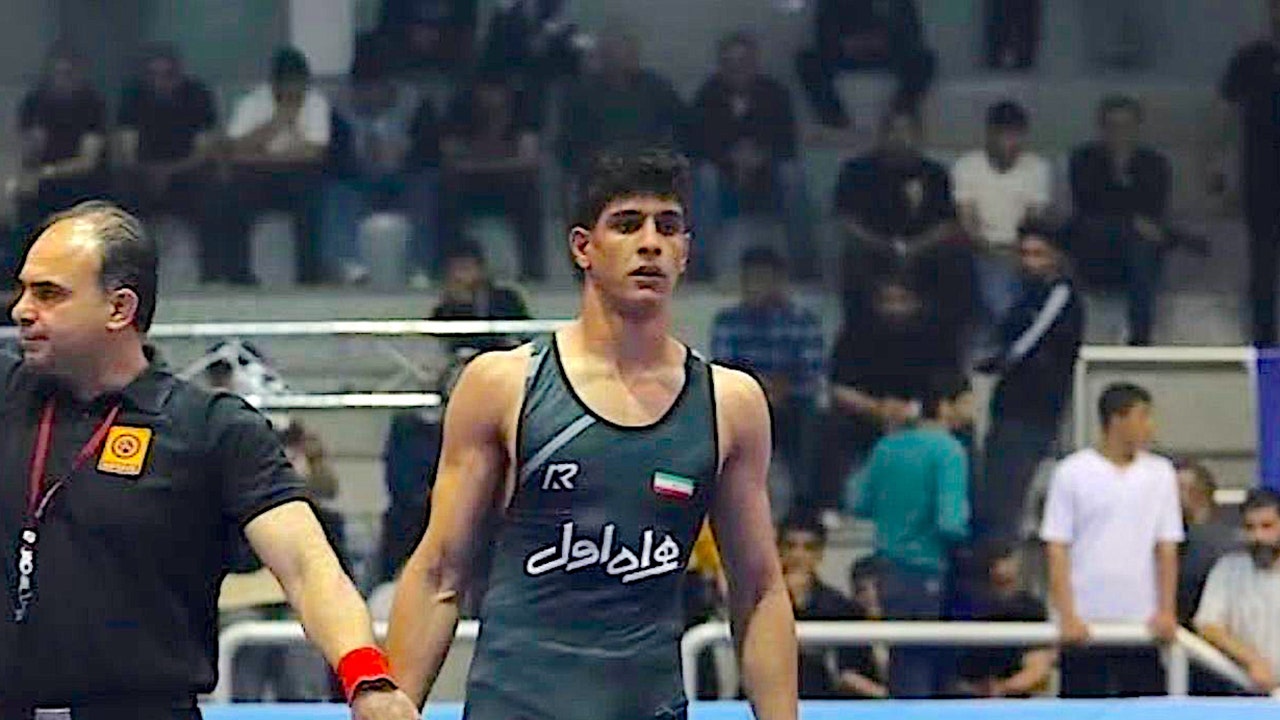
The recent execution of 19-year-old Iranian wrestling star Saleh Mohammadi has sparked widespread condemnation from athletes and human rights activists worldwide, bringing renewed attention to the ongoing unrest and political turmoil in Iran. Mohammadi’s death, reportedly by public hanging, marks a tragic and controversial moment amid nationwide protests and government crackdowns. As Operation Epic Fury continues into its third week in the Middle East, the international community, including prominent sports figures and organizations, has voiced deep concern about the treatment of athletes caught in the crossfire of political conflict.
Saleh Mohammadi, a promising young athlete, was executed alongside two other Iranian men, Mehdi Ghasemi and Saeed Davoudi. According to reports from Iranian American human rights activists and dissidents, as well as coverage by Iran International citing the judiciary-linked Mizan news agency, the trio was accused of killing two police officers during the anti-government protests earlier this year. The protests have been met with severe repression by Iran’s regime, which has drawn global criticism for its harsh measures against dissenters.
Mohammadi’s execution has struck a particular chord across the international sporting community due to his status as a rising wrestling talent. Just last September, he earned a bronze medal representing Iran at the Saytiyev International Cup in Krasnoyarsk, Russia, showcasing his potential as an Olympic-caliber athlete. His dream of becoming an Olympic champion, which he openly shared during an interview with Islamic Republic of Iran Broadcasting, was tragically cut short.
The global response was swift and passionate. Several Olympians, including U.S. gold medalists Brandon Slay, Tyler Clary, and Kaillie Humphries, publicly condemned the execution. Slay expressed solidarity with Mohammadi’s family and those suffering under oppression, invoking his faith as a source of hope and justice amid darkness. Clary echoed the sentiments of former President Donald Trump, who harshly criticized the Iranian regime, labeling them as “thugs and animals” and expressing no surprise at their decision to execute young protesters.
In the midst of this outcry, the International Olympic Committee (IOC) issued a statement addressing the situation. The IOC emphasized its deep concern for athletes worldwide who suffer mistreatment, especially those affected by conflict and political unrest. However, the organization also highlighted the challenges it faces in verifying information from conflict zones and its limited ability to intervene in sovereign nations’ internal affairs.
The IOC underscored its role as a civil, non-governmental organization focused on uniting the world through peaceful sports competition, rather than a political entity capable of changing laws or political systems. It acknowledged that while it cannot directly influence national governance or judicial decisions, it remains committed to engaging with the Olympic community in Iran and utilizing “quiet sports diplomacy” to offer support where possible.
This delicate positioning reflects the broader dilemma faced by international sports organizations when athletes become entangled in geopolitical conflicts. The IOC’s statement recognized the increased frequency with which such tragic cases arise, attributing it to the increasingly divided global landscape. Nonetheless, the committee reaffirmed its mission to promote solidarity and peace through sports, even as it navigates the complexities of global politics.
Mohammadi’s execution is emblematic of the broader human rights crisis unfolding in Iran. The government’s crackdown on protesters—many of whom have been detained, tortured, or executed—has drawn condemnation from governments and activists worldwide. The case has especially resonated within the athletic community, which often strives to transcend political divides and represent unity on the global stage.
Former President Trump’s remarks on the executions underscored the geopolitical implications of the incident. His blunt language reflected a hardline stance against the Iranian regime, reinforcing calls for international pressure and support for dissidents. Such statements also highlight the intersection of sports and politics, where athletes’ lives and freedoms can become casualties of broader national struggles.
The voices of Olympic athletes condemning the execution further illustrate the solidarity within the sports world. Wrestler Brandon Slay’s invocation of the Gospel of Jesus Christ as a beacon of hope and justice reveals the personal and moral dimensions that athletes bring to their activism. Swimmer Tyler Clary’s endorsement of Trump’s firm approach towards Iran highlights how political perspectives often inform athletes’ responses to global events.
As the situation in Iran continues to evolve, the international community remains watchful. The tragic fate of Saleh Mohammadi serves as a poignant reminder of the vulnerability of athletes who find themselves caught in political crosshairs. It also challenges