
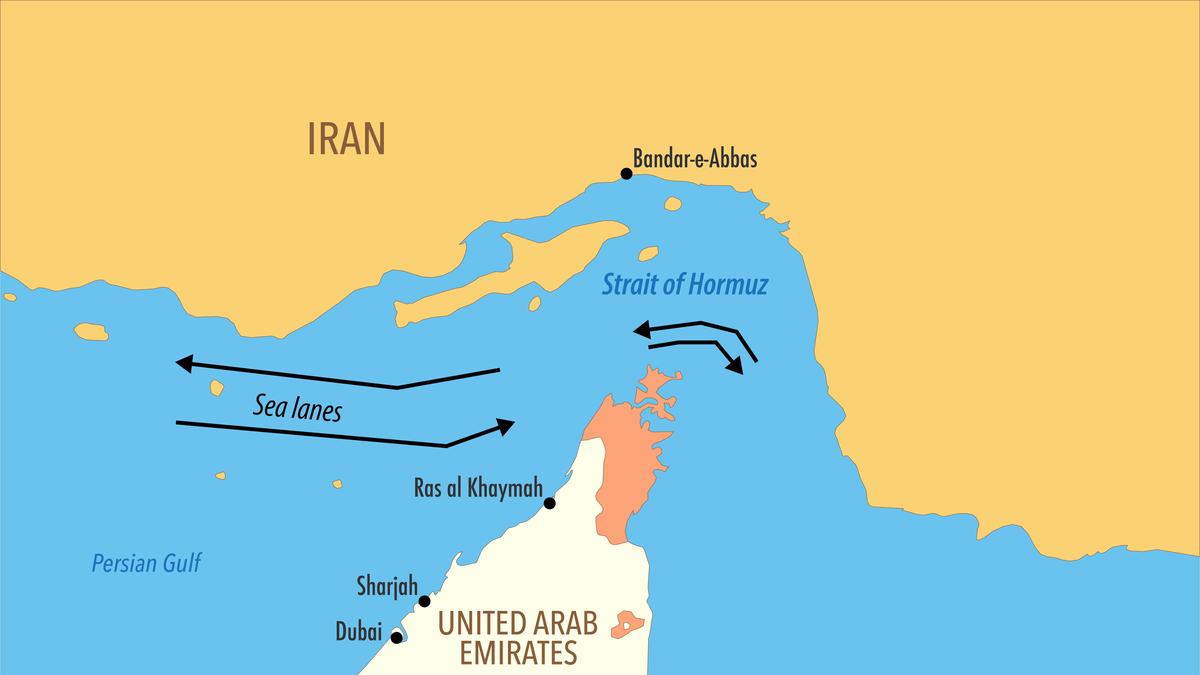
On March 26, 2026, Iran's Foreign Minister Seyed Abbas Araghchi announced that Iran has permitted India and several other "friendly nations" to use the Strait of Hormuz for commercial shipping. This statement comes amid ongoing hostilities following the outbreak of war between Iran and Israel, with significant involvement from the United States. The declaration highlights Tehran's assertion of sovereignty over the strategic waterway, which connects the Persian Gulf to the Gulf of Oman and is a vital route for global oil and trade shipments.
In an interview broadcast by the Iran News Network on the night of March 25, Mr. Araghchi confirmed that Iran has allowed China, Russia, India, Iraq, and Pakistan to navigate their ships through the Strait of Hormuz. He emphasized that the strait lies within the territorial waters of both Iran and Oman, but stressed that Iran's sovereignty over the waterway is firmly established. He added that, following the conflict, Tehran intends to implement new arrangements governing passage through the strait, signaling a shift in the management of this critical maritime corridor.
The move to allow specific nations passage comes in the context of heightened tensions and military confrontations in the region. Notably, the Iranian frigate IRIS Dena was sunk by a U.S. Navy submarine on March 4 off the coast of Sri Lanka in the Indian Ocean. The vessel was returning from naval exercises in Visakhapatnam, India, when it was attacked without warning, resulting in the deaths of at least 87 Iranian sailors. Mr. Araghchi publicly thanked India and Sri Lanka for their "significant help" in ensuring the safety of two other Iranian ships, IRIS Lavan and IRIS Bushehr, which had also been participating in the drills and have since docked in Kochi, India, and Trincomalee, Sri Lanka, respectively.
The Strait of Hormuz has traditionally been a busy maritime passage, with more than a hundred ships transiting daily before the war began. However, since the outbreak of hostilities on February 28, following the joint U.S. and Israeli military campaign against Iran, traffic through the strait has plummeted dramatically to single-digit numbers. Despite this decline, at least four India-flagged vessels - Jag Vasant, Pine Gas, Shivalik, and Nanda Devi - have successfully transited the strait since the war commenced, reflecting India's continued maritime activity in the region amid the conflict.
Mr. Araghchi, who served as Iran's chief negotiator with the United States before the war erupted, also addressed the current state of diplomatic engagement between Tehran and Washington. He stated unequivocally that no formal negotiations were underway, although he acknowledged that the U.S. had recently begun sending messages through various intermediaries. Iran has responded by clearly stating its positions, but these exchanges amount only to communications through friendly channels rather than official talks. He reiterated Iran's commitment to continue resisting and defending its territory, affirming that Tehran has no intention of entering into negotiations at this time.
This stance contrasts with public statements from U.S. leadership. President Donald Trump, who had previously threatened to strike Iran's power infrastructure but postponed such actions on March 23, has indicated that Washington is engaged in talks with Tehran. Pakistan's Deputy Prime Minister and Foreign Minister Ishaq Dar has also confirmed that "indirect talks" are ongoing between the two sides, facilitated through messages relayed by Pakistan. Mr. Dar noted that the U.S. has presented a list of 15 points for consideration by Iran, and that other countries, including Turkey and Egypt, are supporting these diplomatic efforts.
Iran's state media reported on March 25 that Tehran has rejected the U.S. proposal and instead introduced a five-point plan aimed at ending the conflict. This plan includes demands for security guarantees to prevent future aggression, reparations for war damages, and a new operational framework for the Strait of Hormuz. The proposal underlines Iran's insistence on safeguards and reparative measures as prerequisites for any ceasefire or peace agreement.
President Trump responded on March 26 by warning that Iran should "better get serious soon" in the talks, cautioning that delays could lead to irreversible consequences. Meanwhile, reports from American media suggest that the Pentagon is deploying additional troops to West Asia in preparation for a possible ground offensive against Iran, indicating that military options remain on the table despite ongoing diplomatic overtures.
Mr. Araghchi criticized the U.S. for what he described as contradictory signals regarding negotiations. He pointed out that earlier, President Trump had demanded Iran's unconditional surrender on social media, yet now American officials are mobilizing for talks. He interpreted this shift as an admission of failure by the U.S., asserting that Iran was never seeking war but also would not accept a ceasefire without guarantees. "A ceasefire without guarantees is a vicious cycle that repeats the war," he said, emphasizing that Iran seeks a durable resolution that prevents future attacks.
The recent developments underscore the complex dynamics in the Persian Gulf region amid the Iran-Israel conflict and the broader involvement of global powers. Iran's decision to allow select nations, including India, to use the Strait of Hormuz reflects a strategic balancing act, maintaining control over a critical maritime chokepoint while navigating the pressures of war and diplomacy. India's role in providing assistance to Iranian vessels and continuing commercial shipping through the strait highlights its ongoing engagement in the region despite the conflict.
As the situation evolves, the international community watches closely for signs of escalation or resolution. The interplay of military actions, such as the sinking of the IRIS Dena and the buildup of U.S. forces, alongside diplomatic maneuvers including indirect talks and proposed peace plans, will likely shape the course of the conflict in the coming weeks. For now, Iran remains steadfast in its position of resistance, demanding security and reparations, while the U.S. and its allies weigh the prospects of negotiation against the backdrop of military preparedness.
This ongoing conflict continues to impact global oil and gas activities, given the strategic importance of the Strait of Hormuz for upstream and downstream energy supplies. The disruption of shipping traffic has significant economic implications, especially for countries dependent on the flow of hydrocarbons through this vital corridor.
In summary, Iran's announcement permitting friendly nations to use the Strait of Hormuz amid the war, its assertion of sovereignty, and the rejection of direct U.S. negotiations paint a picture of a nation determined to defend its interests while cautiously engaging with select international partners. Meanwhile, the U.S. and its allies remain poised between diplomatic efforts and military readiness, with the future of the conflict uncertain but fraught with high stakes for regional and global stability.