
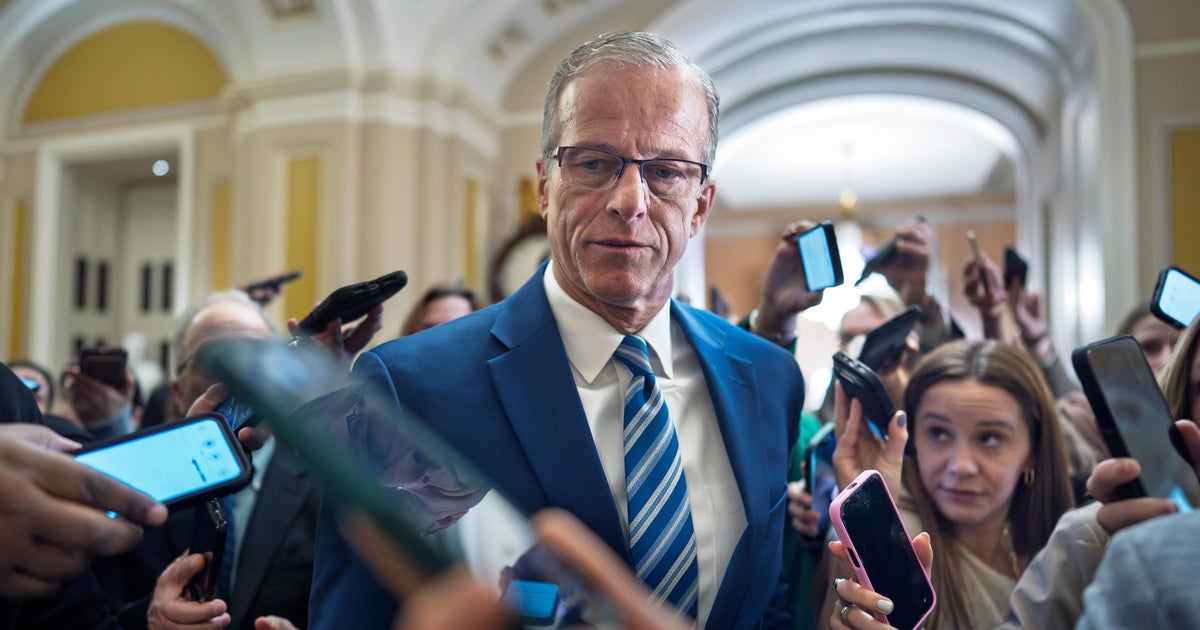
The U.S. Senate continues to grapple with a stalemate over funding for the Department of Homeland Security (DHS), with Democrats and Republicans engaged in intense negotiations but unable to reach an agreement. As of March 26, 2026, the impasse remains unresolved despite multiple attempts to advance legislation, and the political tensions surrounding the issue are escalating.
Democratic Senator Andy Kim of New Jersey, speaking off the Senate floor, characterized the ongoing discussions as active but insufficient. He indicated that Democrats are reviewing a recent offer from Republicans but expressed dissatisfaction with its content. "We're talking through it right now but it's not where we want it to be," Kim said. "We just continue to be stuck here." He declined to provide detailed information about the latest proposal, noting that conversations are "evolving in real time," but added plainly, "But for me, it's not good enough."
The Senate is currently focused on a procedural vote concerning DHS funding, marking the seventh attempt to advance the measure. The vote requires a 60-vote supermajority to proceed, a threshold that has yet to be met. Senate Majority Whip John Barrasso's office announced that votes originally scheduled for 1:30 p.m. on the voter ID amendment and DHS funding advancement were moved up to 1 p.m.
Republican Senator John Thune, a leading figure in the negotiations, expressed hope that the ongoing process would soon reach a conclusion. He noted that a final offer had been presented to Democrats and said, "Let's hope this gets it done." Thune emphasized the importance of resolving the situation promptly and mentioned that the White House has been actively involved in the back-and-forth discussions occurring overnight and into the morning. He also suggested that the current offer closely resembles one made earlier in the week, which Democrats had rejected because it lacked reforms related to Immigration and Customs Enforcement (ICE).
The Senate is also voting on an amendment to the controversial SAVE America Act, which would require photo identification to cast ballots in federal elections. This amendment failed to advance, with a vote of 53-47, falling short of the necessary 60 votes. The SAVE America Act itself is a point of contention; it would mandate proof of citizenship for voter registration and require specific forms of photo ID for voting. While the legislation lacks sufficient support to clear the Senate, former President Donald Trump has increased pressure on Senate Republicans to push it through.
Republican Senator Katie Britt of Alabama, involved in efforts to resolve the DHS funding deadlock, described the talks with Democrats as productive. "We had very fruitful conversations last night with some of our Democrat colleagues and this morning," she told reporters. Britt expressed hope for a resolution, emphasizing the critical nature of funding DHS missions and ensuring that personnel are paid.
Senator Angus King, an independent who caucuses with Democrats and has participated in the DHS funding discussions, confirmed that Democrats are reviewing the latest Republican proposal. However, he and other Democrats remain cautious about the offer's adequacy, particularly its treatment of ICE components.
In the lower chamber, the House of Representatives is also engaged in action related to DHS funding. The House has twice passed bills to fund the entire department through September, but these measures have stalled in the Senate due to the 60-vote requirement. The House plans to vote on legislation to fund DHS again, alongside a resolution expressing support and gratitude for DHS employees. Meanwhile, House Democrats are pushing a discharge petition to force a vote on funding the department except for ICE and Customs and Border Protection (CBP). Although the petition has garnered the backing of most Democrats, it lacks the necessary signatures and bipartisan support to move forward.
Senator John Hoeven, a Republican from North Dakota involved in the negotiations, noted that talks have increased in intensity and remain ongoing. He urged Democrats to stop "backing up" and vote to fund DHS and pay Transportation Security Administration (TSA) agents. Hoeven highlighted developments such as new leadership at DHS and a deescalation of tensions in Minneapolis, along with some reforms proposed within the DHS bill. "I'm hoping that as we get to the end of this week-that's going to get us to a point where we get it done," Hoeven said, acknowledging that the Senate voting process itself could help break the deadlock.
Republican leaders have accused Democrats of moving the goalposts and engaging in circular discussions. Senator Thune, appearing on Fox News, criticized Democrats for shifting their demands, pointing out that they initially opposed funding ICE altogether and have since added calls for reforms. "I think they're just playing politics with this, have been from the beginning," Thune asserted, suggesting that Democrats are motivated more by political considerations than by governance. He expressed hope that Democrats "will come to their senses" and indicated that the Senate might delay its planned recess if DHS funding is not resolved.
President Donald Trump has also weighed in, sharply criticizing Democrats for the ongoing stalemate. Speaking at the White House, Trump accused Democrats of "really punishing the American people" and called for an immediate end to the shutdown. He warned that "very drastic measures" might be necessary if the impasse continues, though he did not specify what those measures might entail.
Trump has repeatedly urged Republicans to incorporate the SAVE America Act-a voting legislation he strongly supports-into DHS funding negotiations. Earlier in the week, he complicated the talks by instructing Republicans not to make a deal with Democrats unless the elections bill was included. He also called for ending the Senate filibuster, which requires 60 votes to advance most legislation, arguing that Republicans should demand this change to move forward.
Senator Ron Johnson of Wisconsin echoed calls for reforming Senate rules in an op-ed published Thursday. Johnson criticized the filibuster as a source of Senate dysfunction, likening it to "plaque clogging an artery leading to a heart attack." He argued that ending the 60-vote threshold could actually encourage bipartisanship by motivating senators to seek common ground. Johnson, who previously opposed abolishing the filibuster, changed his stance after the 43-day government shutdown last year, the longest in U.S. history.
Despite these calls, Senate leadership, including Thune, has indicated that there is little support within the Republican caucus for ending the filibuster. Thune noted that the Senate is scheduled to recess for two weeks starting next week but left open the possibility that senators could remain in Washington if the DHS funding issue remains unresolved.
The political stakes are high as multiple votes on DHS funding and related amendments continue. On Wednesday, the Senate voted to advance the DHS bill with a GOP offer that would fund the department but exclude funding for ICE's Enforcement and Removal Operations (ERO) division. This measure failed to reach the 60-vote threshold, with only one Democrat, Senator John Fetterman of Pennsylvania, crossing party lines to support it. Republicans hope to gain more Democratic support in upcoming votes.
Democrats have proposed reforms aimed at ICE, including higher training standards and requiring immigration officers to wear identification badges. Republicans dismissed these as "unserious," arguing that Democrats cannot both refuse to fund ICE and simultaneously demand reforms. Independent Senator Angus King highlighted concerns about the GOP proposal's approach, noting that while ICE's Homeland Security Investigations (HSI) division and CBP would be funded, much of HSI is involved in ICE's ERO activities. King warned that staffing ICE with personnel from other agencies would be an "illusory solution."
Nonetheless, Thune suggested there may be room for negotiation if Democrats present more realistic proposals. He did not rule out the possibility of a short-term funding measure to keep the government operating while longer-term discussions continue.
In summary, the Senate remains deadlocked over DHS funding, with Democrats and Republicans at odds over ICE funding and related reforms. Multiple votes have failed to meet the 60-vote threshold needed to advance legislation, and the debate is complicated by the intertwined issue of election laws, specifically the SAVE America Act. Both sides remain engaged in talks, and leadership has kept the Senate's recess tentative pending a resolution. Meanwhile, pressure is mounting from President Trump and some Republican senators to reform Senate procedures or to link DHS funding with broader political objectives. As the deadline approaches, the impasse continues to disrupt government operations and heighten partisan tensions.