
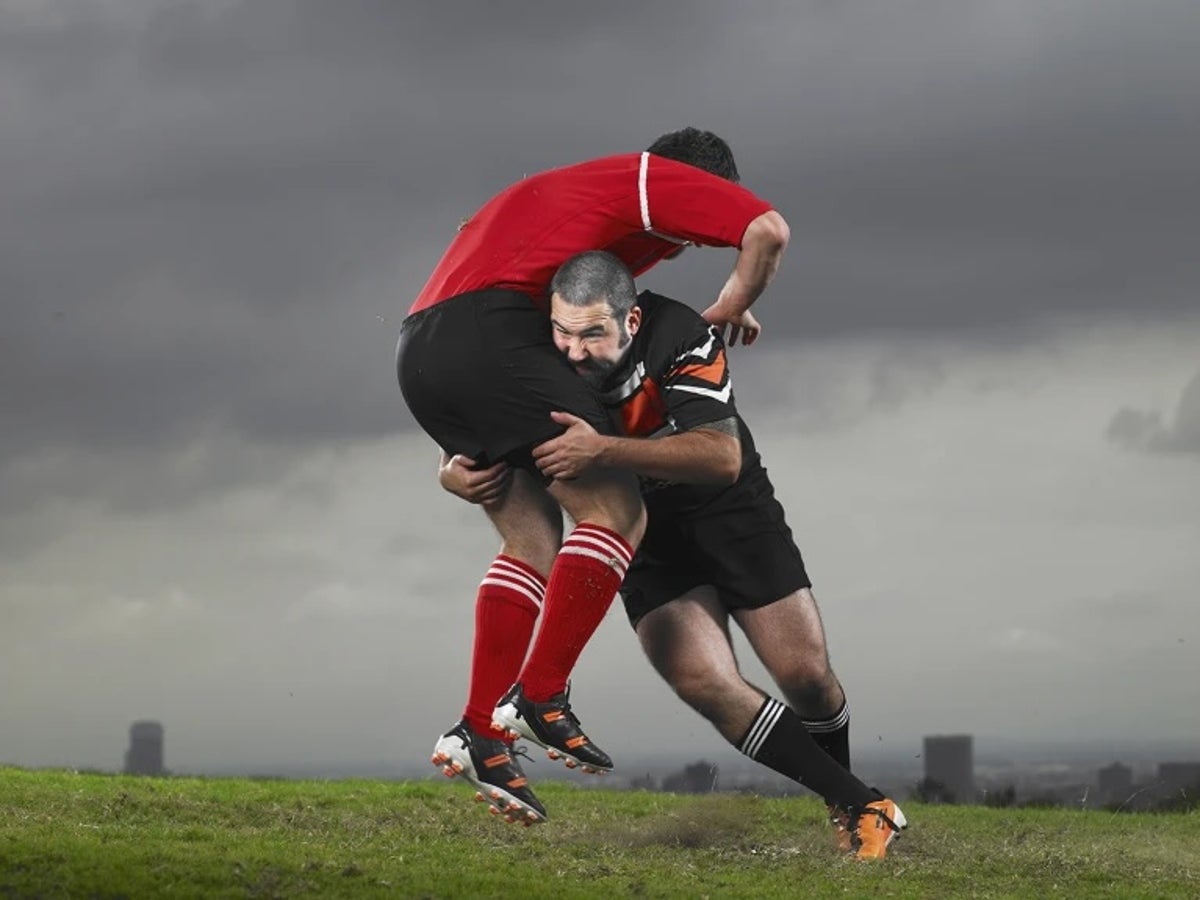
A groundbreaking new study published in Science Translational Medicine sheds fresh light on the long-term effects of repeated head trauma experienced by athletes in contact sports. For years, scientists have grappled with understanding how the repeated blows to the head sustained during sports such as rugby and boxing can eventually lead to severe cognitive decline, memory loss, and neurodegenerative diseases like chronic traumatic encephalopathy (CTE). This latest research reveals that damage to the brain’s protective blood–brain barrier (BBB) can persist for decades after athletes retire, triggering long-lasting immune responses that are closely linked to cognitive impairment.
The blood–brain barrier is a critical, dense layer of cells lining the blood vessels in the brain. Its primary function is to protect the brain by preventing harmful substances circulating in the bloodstream from leaking into the delicate neural tissue. However, the new study shows that this barrier becomes “leaky” in athletes who have experienced repeated head trauma, and importantly, this leaky state can endure for many years after an athlete stops playing contact sports.
Matthew Campbell, a neurovascular genetics expert at Trinity College Dublin and co-author of the study, explains that one of the biggest challenges in studying the long-term effects of head trauma is the difficulty in diagnosing conditions such as CTE in living individuals. Traditionally, CTE and similar neurodegenerative diseases could only be definitively diagnosed post-mortem by examining brain tissue. This limitation has hindered early detection and intervention efforts in athletes who are at risk.
To address this, Campbell and his colleagues sought to identify potential biomarkers and warning signs of brain injury in living individuals. They focused on the integrity of the blood–brain barrier, hypothesizing that its damage might be detectable through advanced brain imaging techniques. The study involved brain scans of 47 retired athletes from high-impact contact sports, including rugby and boxing. These athletes had retired an average of 12 years prior to the study. For comparison, the researchers also included a control group composed of non-athletes and athletes from non-contact sports.
The brain imaging results were striking. The researchers found that the blood–brain barriers in athletes from contact sports were significantly more permeable or “leaky” than those in the control group. This leakiness was observed despite the fact that the athletes had been retired for over a decade, indicating that the damage to the BBB can be long-lasting and persistent. Furthermore, the extent of barrier disruption correlated with cognitive performance: athletes with greater BBB damage scored lower on memory and other cognitive tests.
“This was the first evidence in the living human brain that the blood–brain barrier is disrupted in individuals likely to have CTE,” Campbell said, highlighting the significance of the findings. The discovery offers a potential pathway toward diagnosing and monitoring neurodegenerative diseases in living patients, something that has previously been elusive.
In addition to imaging, the research team explored blood-based biomarkers to assess brain damage and immune system activity. Interestingly, standard blood tests commonly used to detect brain injury were not effective in identifying athletes who were experiencing cognitive decline. Instead, more detailed immune profiling revealed that those with the most BBB damage and cognitive deficits exhibited elevated levels of inflammatory white blood cells and other markers indicative of systemic immune activation.
Campbell described this state as a “hyper-inflamed” condition in which the immune system remains persistently activated long after the initial brain trauma. This chronic immune response is believed to contribute to ongoing neurodegeneration and cognitive decline. The findings suggest that the leaky blood–brain barrier allows inflammatory substances and immune cells to infiltrate brain tissue, fueling a cycle of damage and inflammation.
The implications of these findings are profound. On a clinical level, the ability to detect blood–brain barrier disruption through brain imaging and immune profiling could pave the way for earlier identification of individuals at risk for severe neurodegenerative diseases. This would be a major advance, allowing for timely interventions that might prevent or slow cognitive decline. Moreover, the research opens new avenues for developing treatments aimed at repairing or protecting the blood–brain barrier and modulating the immune response to head trauma.
Despite the serious nature of the findings, the researchers emphasize that the study should not discourage participation in sports or physical activity. “Playing sports is incredibly healthy for the brain,” Campbell noted. The concern lies primarily with the cumulative effects of repeated head impacts over many years, which appear to cause lasting damage to the brain’s protective barrier. For most people engaging in moderate physical activity, the benefits to brain health far outweigh the risks.
Looking