
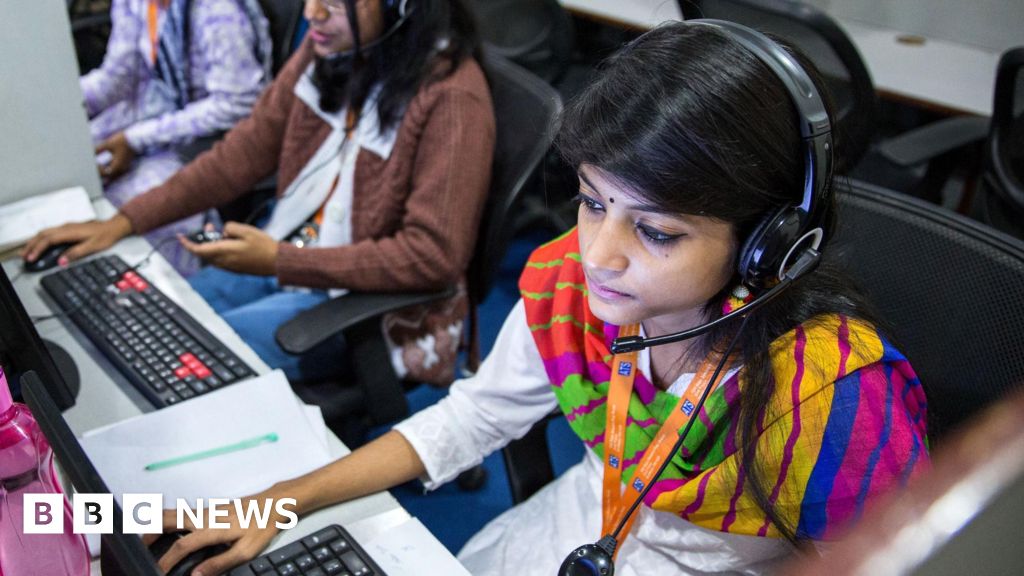
Indian technology stocks have experienced a significant and unprecedented decline in recent weeks, driven largely by fears that artificial intelligence (AI) could fundamentally disrupt the traditional outsourcing model that underpins the country’s massive $300 billion back-office industry. This sell-off is part of a broader, global correction affecting traditional software and IT companies, but it holds particular significance for India due to the outsized role the technology services sector has played in the country’s economic and social transformation over the past several decades.
For more than 35 years, India’s software industry has been a major engine of economic growth and job creation. It has generated millions of white-collar jobs, helping to build a new middle class characterized by high aspirations and strong purchasing power. This burgeoning middle class, in turn, has stimulated demand for consumer goods and services such as apartments, cars, and restaurants, particularly in major urban centers like Bengaluru, Hyderabad, and Gurugram. The industry’s importance is reflected in the performance of the Nifty IT index, which tracks 10 of India’s largest software companies. This index has fallen by approximately 20% in 2024, erasing tens of billions of dollars in investor wealth.
The sell-off began in early February following the release of a new AI tool by Anthropic’s Claude agent, which claimed to automate critical legal, compliance, and data processes. This announcement struck at the core of India’s labor-intensive IT services model, raising alarm bells across the industry. Since then, concerns have intensified dramatically, with some founders warning that the traditional IT services business model could disappear entirely by 2030. A number of CEOs have gone further, suggesting that AI advancements could eliminate up to half of all entry-level white-collar jobs in the sector.
In response to this wave of anxiety, India’s IT giants have sought to reassure investors and employees that the fears are overblown. While they acknowledge that AI will profoundly change how the industry operates, they argue that it will also create new opportunities rather than simply destroying existing ones. For example, instead of routine application maintenance and bug fixes—which currently constitute a large portion of revenues—client engagements are expected to shift toward higher-value advisory and implementation work. According to a note from global investment bank Jefferies, this shift will likely cause a sharp decline in revenues from application managed services (which make up between 22% and 45% of total revenues for many companies), but will open avenues for new services.
Jefferies projects that this transition could result in a worst-case scenario where revenue growth for Indian IT firms slows by 3% annually over the next five years, followed by stagnant growth beyond 2031. This would mark a significant departure from the robust growth rates the industry has enjoyed for decades and would have major implications for employment.
However, not all industry observers view the future as bleak. JPMorgan Chase, which describes IT firms as the “plumbers of the tech world,” cautions against assuming that AI can fully replace traditional software customization and implementation. While AI can accelerate complex tasks and generate software code, it lacks the nuance and customization capabilities that human engineers provide. JPMorgan foresees increased collaboration between AI tool developers and IT services firms, which could generate new types of work and revenue streams.
Supporting this optimistic outlook, Salil Parekh, CEO of Infosys—India’s second-largest IT company—has emphasized that AI will expand opportunities rather than eliminate them. Infosys estimates that while generative AI could displace up to 92 million jobs such as front-end developers and testers, it will simultaneously create around 170 million new positions in emerging roles like data annotators, AI engineers, and AI leads.
This balanced perspective is gaining traction among analysts. HSBC, in a recent report titled “Software Will Eat AI,” argued that software companies will be the primary vehicles for AI adoption across large enterprises worldwide. The report emphasized that large-scale AI systems remain inherently flawed and are not yet capable of replacing complex enterprise software platforms. These platforms have evolved over decades to be highly reliable and secure, incorporating critical intellectual property that cannot simply be replicated or trained through public data sources. As a result, the report contended that IT services firms will play a crucial role in integrating AI tools within existing enterprise systems.
Nonetheless, even with these optimistic projections, Indian IT companies are unlikely to emerge unscathed from the ongoing technological disruption. JPMorgan noted that while the exact impacts are difficult to quantify, the industry is already experiencing ripple effects