
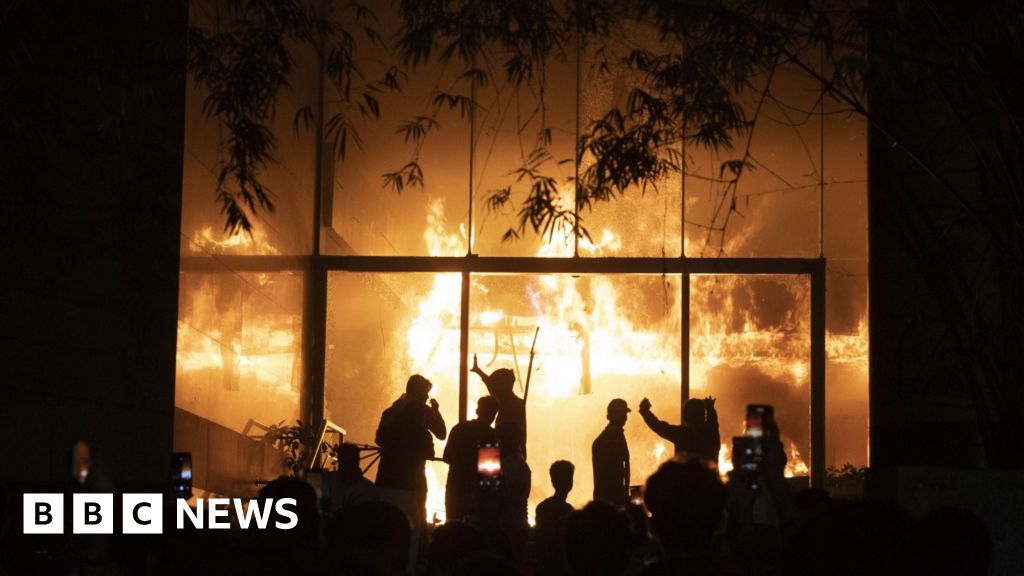
On the night of December 18th, 2023, Zyma Islam, an investigative journalist at The Daily Star—the largest English-language newspaper in Bangladesh—found herself trapped in a terrifying and unprecedented situation. Well past midnight, as she was finishing a story, a violent mob surrounded and attacked her newsroom building in Dhaka, setting it ablaze. Alongside 27 other journalists and staff members, she was forced onto the roof of the building, struggling for breath amid thick black smoke, as flames engulfed the floors below. Her desperate Facebook message, "I can't breathe any more. There's too much smoke. I'm inside. You are killing me," was a stark cry for help from a journalist under siege—not on a distant battlefield, but in her own workplace.
The context of this violent attack traces back to a politically charged environment in Bangladesh. Zyma Islam had been working late on a lead story about the death of Sharif Osman Hadi, a prominent youth leader who had played a key role in ousting former Prime Minister Sheikh Hasina in August. Hadi had been shot by masked assailants outside a mosque in Dhaka the previous week and later died in a hospital in Singapore. The Daily Star and its sister publication, Prothom Alo—the country's leading Bengali-language newspaper—had been covering the incident extensively. However, extremist political factions accused these newspapers of "setting the ground" for Hadi’s killing, an allegation baseless but potent in the already tense political climate.
Leading up to the attack, threats had been escalating. Social media campaigns branded The Daily Star and Prothom Alo as "Indian agents," accusing them of downplaying the assassination—a charge fueled by Hadi’s own anti-India rhetoric. Protesters had already gathered outside the newspapers’ offices, and the atmosphere was charged with hostility. Despite these threats, Islam and her colleagues pressed on with their work. "We don't stop the press. Not for nothing," she explained later. "If we stopped every time there was a threat, we wouldn't go to print on many days."
Just minutes after midnight, as Islam submitted her story and prepared to leave her desk, the mob arrived. The sound of bricks smashing through glass was immediate and furious. Some staff fled, but 28 journalists and employees, including two women, remained trapped inside the building. Rather than barricading themselves in the newsroom, Islam and several colleagues decided to head to the roof, reasoning that an open-air space with easier access for emergency responders was safer. They climbed nine flights of stairs in near darkness, with Islam still on the phone to the police as the smoke thickened around them.
By 12:50 a.m., the fire had taken hold, and the smoke was so thick it was impossible to see even a hand in front of the face. The flames, set below, funneled up the elevator shaft, turning the building into a deadly trap. On the rooftop, a small garden with potted palms, the journalists locked the iron door and dragged heavy planters across it to block the fire escape. They avoided the edges where motion-activated lights might reveal their location to the mob below. As the smoke thickened, they soaked cloths in water to breathe through, lay flat to find pockets of cleaner air, and called out to one another to stay calm.
The situation was harrowing. Some colleagues broke down, calling family members to say goodbye. One man attempted to jump two floors down to a neighboring building but was stopped by his peers. Islam herself remained composed, calling her parents only to let them know she was trapped but alive—no dramatic farewell, just a quiet reassurance.
Meanwhile, outside, the mob ransacked the newsroom. Furniture was smashed, archives torched, a photo exhibition destroyed, and the ground-floor auditorium gutted. Stationery stores, the cafeteria, and administrative offices were looted, while the photo department lost 35 years’ worth of archives, along with cameras and hard drives. Attackers climbed as high as the seventh floor, breaking glass and causing widespread damage. The only reprieve was that thick smoke possibly spared the server room from destruction.
The police and army eventually arrived around 4:30 a.m., forming a cordon to hold back the crowd. The trapped journalists then fled down the smoke-filled stairwell, many pressing wet clothes to their faces to filter the air. At the building’s rear, a ladder was propped against a wall