
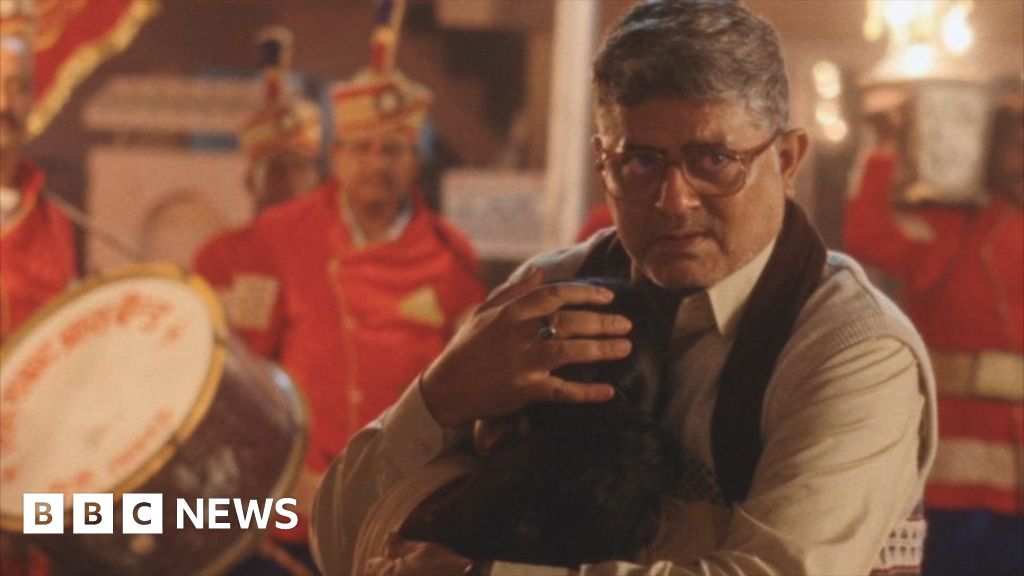
A powerful new short film from India, titled *Band Baaja Bitiya*—which translates to “a wedding band and daughter”—has captured widespread attention for its bold challenge to a deeply entrenched cultural belief: that a married daughter must remain in her husband’s home, no matter the circumstances, including abuse. The film poignantly tells the story of a father who defies social norms by rescuing his daughter from her violent marital home and celebrates her return with the same joyful fanfare that accompanied her wedding send-off. This moving narrative has struck a chord across the country, shining a spotlight on domestic violence and the urgent need for parental support for women trapped in abusive marriages.
The film, lasting just over three minutes, opens with a heart-wrenching phone call from the daughter, Surabhi, to her father, played by veteran Bollywood actor Gajraj Rao. His expression reveals the pain of hearing about her suffering yet again. The advice he receives from well-meaning family and friends echoes common societal attitudes: “It’s her home, her fate,” or “Tell her to adjust.” Others dismiss physical violence as “no big deal” or suggest that having a child will resolve marital tensions. These responses reflect a widespread cultural norm in India where daughters are traditionally expected to live with their husbands after marriage and endure hardships silently.
Rao explains that in Indian culture, the bride is metaphorically “carried” into her husband’s home on a palanquin and is expected to leave that home only upon death, carried out on a funeral bier. This belief also implies that a father’s responsibility toward his daughter ends the day he gives her away in marriage. However, the film’s father refuses to accept this outdated notion. Instead, he chooses to act decisively to end his daughter’s suffering. In a striking display of defiance and love, he hires a wedding band to welcome her back—not with shame, but with pride and celebration. Rao describes this as a deliberate act to honor his daughter and to symbolically reclaim his role in her life by treating her return as a joyful occasion, not a disgrace.
As Surabhi runs into her father’s arms, the film delivers a powerful message: a daughter is forever part of her parental family, regardless of marriage. This reversal of traditional expectations challenges the stigma that often surrounds women leaving abusive relationships. It serves as a reminder that parental love and protection should not end with marriage, but continue throughout a daughter’s life.
The film’s social impact is underscored by stark statistics illustrating the prevalence of domestic violence in India. Official data reveal that approximately one in three Indian women experience domestic abuse. Moreover, dowry-related violence remains a grave issue, with over 6,150 women killed in 2023 alone due to dowry disputes. Additionally, more than 133,000 cases of cruelty by husbands or their families were registered by the police that year. Despite these alarming figures, many women remain trapped in abusive marriages because their parental families often fail to intervene or offer support.
This is why the simple yet powerful act portrayed in the film—a father publicly standing by his daughter—has resonated so deeply online. The film has garnered millions of views and widespread praise on social media. Viewers have described it as “the best ad film of 2026” and “a revolutionary idea whose time has finally come.” Many were moved to tears, with comments emphasizing the need for more supportive fathers and parents willing to challenge traditional norms. Women shared personal stories of fathers who had stood by them, while some fathers wrote about their commitment to always support their daughters.
Gajraj Rao, celebrated for his acclaimed performances in Bollywood films such as *Badhai Ho*, says the overwhelming response to *Band Baaja Bitiya* has been deeply gratifying. He recounts being surrounded by enthusiastic fans at an airport, all eager to express their appreciation for the film’s message. “People have accepted it and welcomed it with open arms,” he said. The positive reception highlights a growing awareness and willingness among the public to reconsider entrenched social attitudes.
The film’s director, Prosit Roy, who is a father to a young daughter himself, describes the project as a personal mission to confront “old ideas and archaic values.” Calling himself “a girl dad,” Roy emphasizes that domestic violence is widespread, yet many parents hesitate to intervene out of fear of social judgment. “We tell our daughters to adjust and sometimes it’s