
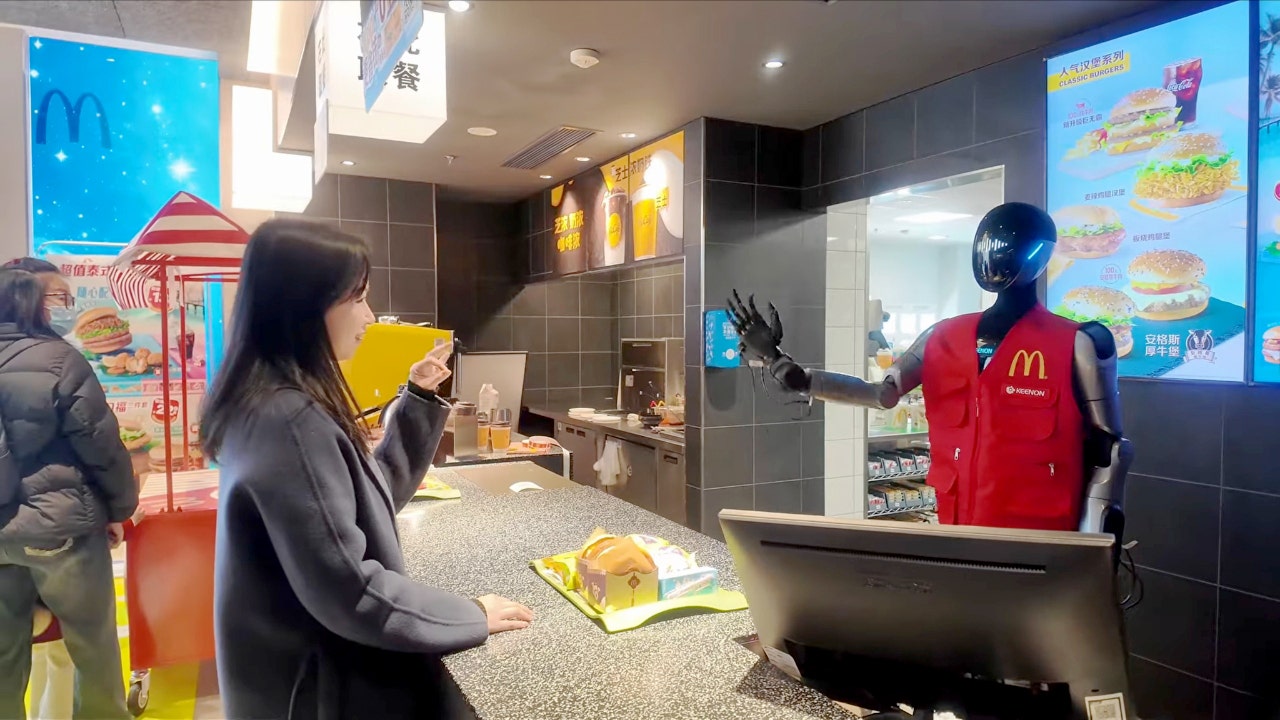
In a recent short-term experiment at a McDonald's location in Shanghai, the fast-food giant tested the use of humanoid and service robots developed by Chinese robotics firm Keenon Robotics. This pilot project, tied to the opening of the new restaurant, showcased a variety of robots performing front-of-house tasks, including greeting customers, delivering food, clearing trays, and providing entertainment. The robots, dressed in McDonald's uniforms and equipped with interactive gestures, added a novel experience to the visit, drawing attention from diners. However, this was not a permanent operational change or a broad rollout; rather, it was a limited demonstration designed to explore the potential of automation in the fast-food environment.
Inside the restaurant, human employees continued to perform the core functions of cooking, order management, and handling any tasks requiring judgment and problem-solving. The robots were not intended to replace staff but to assist with simple, repetitive tasks and enhance the customer experience. This distinction is important, as current robotic technology still struggles with the complexities of fast-food operations, including cooking precision, special customer requests, and adapting to busy, unpredictable environments.
The Shanghai test highlights a larger trend emerging in the restaurant industry worldwide. Many fast-food chains face ongoing challenges in hiring and retaining workers, especially for roles that are repetitive and often low-paid. At the same time, fewer people are eager to fill these positions, leading businesses to consider automation as a way to bridge workforce gaps. Robots offer advantages such as consistent performance, tireless operation, and the potential to reduce labor costs over time. While technology is not yet advanced enough to fully replace human workers in these settings, it can support them by handling basic service tasks, improving efficiency, and even adding a layer of entertainment that appeals to certain customer segments.
This hybrid model of human-robot collaboration appears to be the most realistic near-term future for fast food and similar industries. Humans remain essential for tasks that require critical thinking, judgment, and flexibility, while robots can take on simpler, routine activities. As the technology develops and becomes more sophisticated, the balance between human and robotic roles may shift, but for now, the integration is cautious and incremental.
Beyond operational efficiency, these robotic experiments also serve a marketing and experiential purpose. Introducing robots into a restaurant setting can create a unique and memorable dining experience, especially for families and younger customers. The novelty of interacting with a robot can differentiate a brand and draw media attention, which has value beyond the immediate service improvements.
While this Shanghai test was temporary and limited in scope, it provides a window into how automation might gradually become part of everyday life. Similar robotic applications are being explored in various sectors, from drone food delivery in New Jersey to robot firefighters entering burning buildings first, showing a broadening acceptance of robots in roles that support or augment human effort.
Despite these advances, widespread fully automated restaurants remain a distant prospect. The complexity of food preparation, customer service, and the dynamic nature of busy dining environments mean that human workers are still indispensable. However, the presence of robots in fast-food settings is likely to increase, potentially changing the nature of jobs rather than eliminating them outright. Future roles may focus more on customer support, problem resolution, and technology management rather than repetitive manual tasks.
As automation continues to make inroads into daily life and workspaces, it raises important questions about how quickly these technologies will evolve and what impact they will have on the workforce. While robot-assisted service may soon become a familiar sight, the human element will remain crucial for the foreseeable future.
In summary, McDonald's short-term deployment of Keenon Robotics' humanoid and service robots in a Shanghai restaurant was a small-scale experiment that combined entertainment with basic service assistance. It demonstrated the potential for robots to fill some workforce gaps in the fast-food industry, which faces labor shortages and changing workforce preferences. However, humans continue to play the central role in cooking and customer interaction, and the technology is currently insufficient for full automation. This pilot reflects a broader trend toward hybrid human-robot workplaces, where automation supports but does not replace people. Such tests also offer marketing value by creating unique customer experiences, signalling that while fully robotic fast-food restaurants are not imminent, automation is gradually becoming part of everyday service environments.