
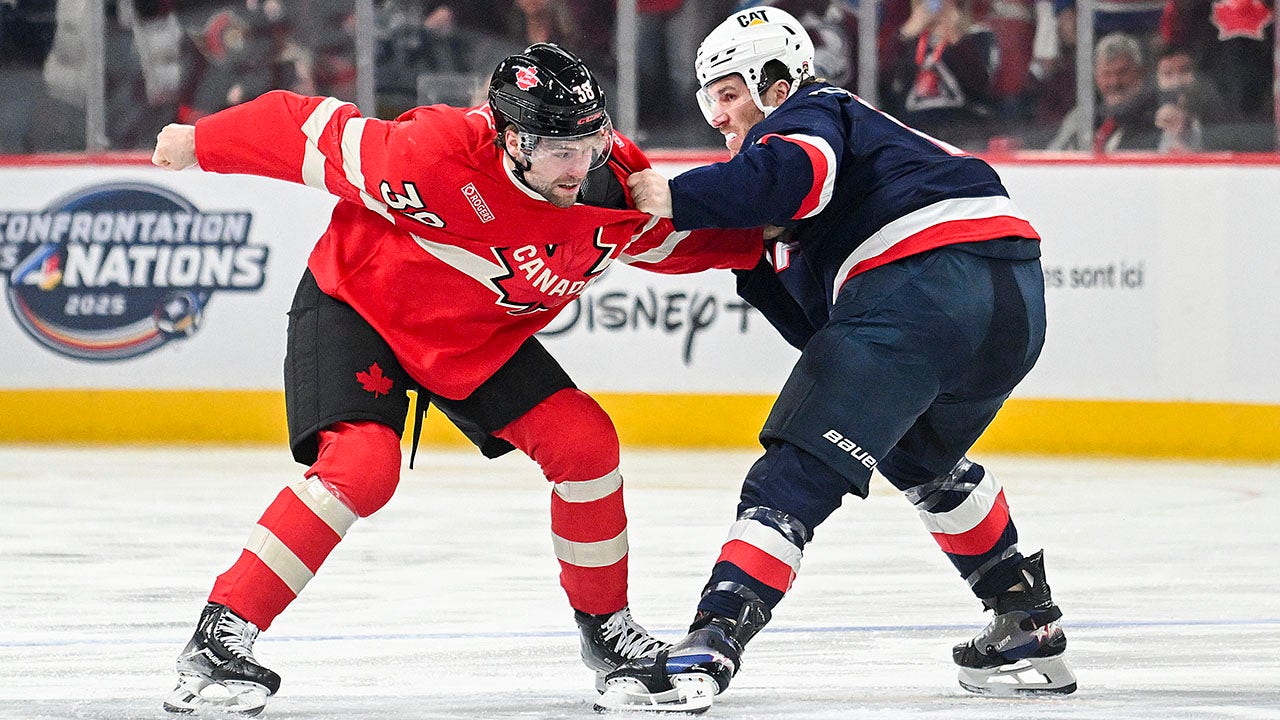
On Sunday, February 18, 2025, the men's hockey Olympic gold medal game will feature a highly anticipated and intense rivalry: the United States versus Canada. This matchup coincides with the 46th anniversary of the legendary "Miracle on Ice," when the U.S. hockey team famously triumphed over the Soviet Union in the 1980 Winter Olympics. Now, decades later, the Americans and Canadians are set to face off once again on one of the biggest stages in international sports, battling for Olympic glory and national pride.
The rivalry between the United States and Canada in men’s hockey is widely regarded as the fiercest in the sport’s history. Both nations have passionate fan bases and rich hockey traditions, but when it comes to head-to-head competition, Canada has largely dominated. The upcoming gold medal game will mark the eighth time these two teams have squared off for Olympic gold, a testament to their consistent excellence on the world stage. The U.S. victory in this particular contest, however, has been elusive; the Americans’ sole Olympic gold win against Canada came way back in 1960.
Historically, the U.S. and Canada have met in Olympic gold medal games in 1920, 1924, 1932, 1952, 1960, 2002, 2010, and now 2025. Despite the long history, Canada has proven to be the stronger force more often than not. In the modern era, particularly in the best-on-best international competitions where the world’s top players participate, the United States’ record against Canada is 5 wins, 15 losses, and 1 tie. Notably, three of those American wins happened during the 1996 World Cup of Hockey, a tournament that showcased the best talent from both countries.
The first true best-on-best tournament meeting between these hockey powerhouses occurred in the 1976 Canada Cup, where Team Canada edged the United States 4-2. Following that, the Americans struggled, failing to secure a victory over Canada for two decades. It was not until 1996 that the U.S. finally broke through and won the World Cup of Hockey, defeating Canada in a hard-fought best-of-three series. Despite this breakthrough, Canadian dominance soon reasserted itself.
Since 1998, Canada has won seven out of nine matchups against the United States in major international tournaments. Several of these victories were particularly painful for the Americans, including the 2002 Olympic gold medal game in Salt Lake City where Canada emerged victorious, and the 2010 Winter Olympics in Vancouver, where Sidney Crosby’s iconic golden goal clinched the gold for Canada right in front of a home crowd. Further disappointments followed in 2014 with a semifinal loss and just last year in the 4 Nations Face-Off tournament, where Canada defeated the U.S. in overtime to claim the title.
The rivalry is more than just a series of games; it carries significant emotional weight for players and fans alike. The teams are often composed of many of the same players who competed in recent tournaments, including last year’s 4 Nations Face-Off, which reignited tensions. That tournament was marked by intense physical play, including three fights in the first nine seconds of the initial game between the two nations. Off the ice, political tensions between the countries also spilled over, fueled by recent comments from then-President Donald Trump and trade disputes, further intensifying the atmosphere surrounding the matchups.
Despite Canada’s dominance, the United States has had moments of success in recent years. Their only victories against Canada since 1998 came during group stage matches at the 2010 Olympics and the 2024 4 Nations Face-Off. However, the Americans have yet to regain true bragging rights by winning a gold medal game against their northern rivals in the best-on-best format. This upcoming Olympic final presents a critical opportunity for the U.S. to change that narrative and claim a historic victory on the sport’s biggest stage.
The gold medal game promises to be an exhilarating contest filled with high stakes, fierce competition, and deep-seated national pride. Both teams are motivated not only by the chance to win Olympic gold but also by the desire to assert dominance in a rivalry that has defined international hockey for decades. Fans around the world will be watching closely as these two hockey giants battle for supremacy.
The game is scheduled to begin on Sunday at 8:10 a.m. Eastern Time