
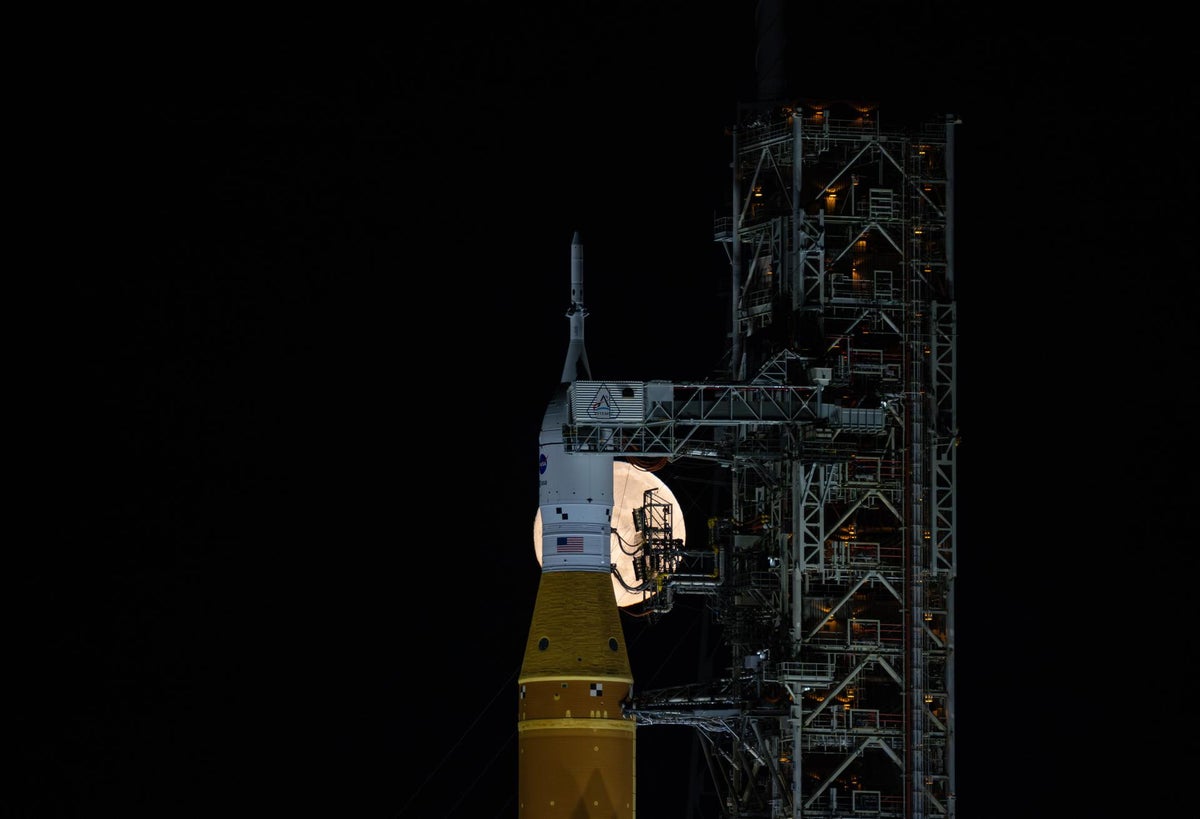
On February 21, 2026, NASA announced a significant new setback for its highly anticipated Artemis II mission to the Moon, further delaying the launch that had been recently slated for March 6. Just a day earlier, the space agency had expressed confidence that the mission was on track for its early March liftoff, but new technical troubles with the Artemis II rocket have now forced NASA to roll back the vehicle from the launch pad entirely. This development means the mission’s launch window in March is effectively canceled, pushing back timelines and raising fresh questions about when the next crewed lunar journey will actually occur.
The issue centers on an interruption in the flow of helium in the upper stage of NASA’s Space Launch System (SLS) rocket, according to a blog post released by the agency on Saturday. Helium flow is a critical component for the rocket’s operation and safety protocols during launch, and without it, the rocket simply cannot proceed. Jared Isaacman, the NASA administrator, confirmed the problem on social media, explaining that engineers will need to return the rocket to the Vehicle Assembly Building (VAB) to conduct repairs. This rollback procedure is a complex and time-consuming process, and it almost certainly rules out any chance of launching Artemis II in March as initially planned.
The helium flow issue is not the first challenge Artemis II has faced. The mission has already endured multiple delays in its development and testing phases. Most notably, the mission’s crucial wet dress rehearsal—a comprehensive pre-launch test that involves fueling the rocket, readying the crew capsule, and simulating a full countdown—encountered setbacks. The first attempt at this test was marred by hydrogen fuel leaks and other technical problems that prevented a smooth rehearsal. However, a second attempt carried out just days ago was successful, bolstering NASA’s confidence that a March 6 launch date was achievable. Unfortunately, the newly discovered helium problem emerged shortly after, dashing those hopes.
NASA has not yet disclosed whether the helium flow issue is related to a similar problem encountered during the Artemis I mission, the uncrewed precursor to Artemis II. Artemis I also experienced difficulties with helium flow, but it remains unclear if the two issues are connected or entirely separate. Engineers are currently investigating the root cause and determining the best course of action to fix the problem. Until those repairs are completed and the rocket can be thoroughly retested, Artemis II’s launch timeline remains uncertain.
When Artemis II finally does take to the skies, it will carry four astronauts on a historic ten-day journey around the Moon and back to Earth. The crew will include NASA astronauts Christina Koch, Reid Wiseman, and Victor Glover, along with Canadian astronaut Jeremy Hansen. This mission is designed not only as a crucial step in NASA’s Artemis lunar program but also as a vital proving ground for the technologies and operations that will underpin Artemis III. The latter mission aims to return humans to the lunar surface by 2028, marking the first time since the Apollo era that astronauts will walk on the Moon.
During their mission, the Artemis II crew will orbit the Moon, including a pass over the Moon’s farside, a region largely unexplored by humans due to its permanent orientation away from Earth. The astronauts will conduct scientific observations and critical system tests to validate spacecraft performance and mission procedures, all of which will lay the groundwork for future lunar landings and extended surface exploration.
The Artemis program represents NASA’s ambitious initiative to reestablish a sustainable human presence on the Moon and eventually pave the way for crewed missions to Mars. Artemis II, as the first crewed flight of the SLS rocket and Orion spacecraft combination, is a vital milestone in this effort. However, the recent technical challenges highlight the complexity and difficulty of space exploration, especially when working with new and unproven technologies.
Claire Cameron, breaking news chief at Scientific American and author of the original report on this development, noted the significance of these ongoing challenges. Having closely followed the Artemis program, Cameron emphasized the perseverance required by NASA and its teams as they navigate unexpected obstacles. The delays, while frustrating, reflect the agency’s commitment to safety and mission success, particularly when human lives are on the line.
Cameron also expressed her personal connection to the mission and the broader importance of science journalism in informing the public about such landmark endeavors. Scientific American, where she works, has a long-standing tradition of supporting science and industry, spanning 180 years. The current moment, with space exploration advancing rapidly and