
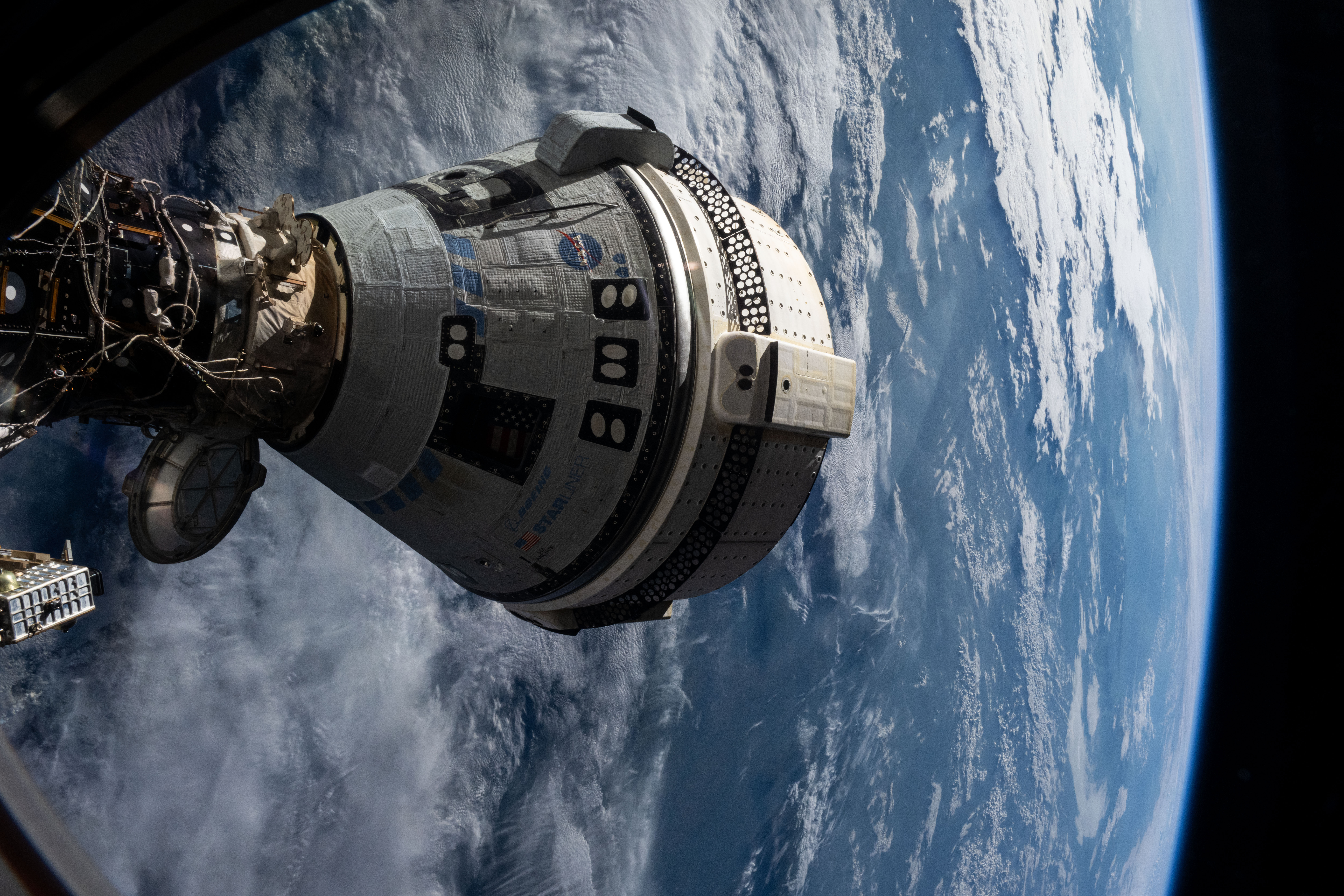
On Thursday, NASA held a news conference to release the findings of an independent investigation into the recent Boeing CST-100 Starliner Crewed Flight Test, a key mission under the agency’s Commercial Crew Program. The investigation was conducted by a Program Investigation Team chartered by NASA to examine the technical, organizational, and cultural issues that affected the mission. This report sheds light on a series of challenges encountered during Starliner’s first crewed test flight to the International Space Station (ISS), and outlines steps NASA is taking to address the problems in order to safeguard future missions.
The Boeing Starliner spacecraft has faced a number of difficulties throughout its development and test flights, both uncrewed and crewed. NASA Administrator Jared Isaacman acknowledged the technical setbacks, particularly those related to the spacecraft’s docking procedures with the ISS, describing them as “very apparent.” He emphasized the importance of transparency in space exploration, stating that NASA must recognize and learn from its mistakes. Isaacman also pointed out that programmatic pressures to maintain two independent providers capable of ferrying astronauts to and from orbit—namely Boeing and SpaceX—had influenced engineering and operational decisions in ways that were ultimately detrimental to the Starliner mission. To prevent similar issues in the future, NASA has formally classified the Starliner test flight as a Type A mishap, the agency’s highest-level accident designation, and is enforcing leadership accountability measures.
The Starliner spacecraft launched on June 5, 2024, embarking on its first crewed mission intended to last between eight and fourteen days. However, shortly after reaching orbit, the spacecraft exhibited anomalies in its propulsion system, which raised concerns about its maneuverability as it approached the ISS. Due to these technical issues, NASA extended the mission duration to 93 days while conducting comprehensive reviews of the flight data and performing ground tests at the White Sands Test Facility in New Mexico. Ultimately, NASA made the decision to return Starliner to Earth without the two assigned astronauts—Commander Butch Wilmore and Pilot Suni Williams—aboard. The spacecraft safely landed at White Sands Space Harbor in September 2024.
Following Starliner’s return, Wilmore and Williams made their way back to Earth aboard SpaceX’s Crew-9 mission in March 2025. Recognizing the seriousness of the technical difficulties encountered, NASA established an independent Program Investigation Team in February 2025 to thoroughly examine the root causes behind the spacecraft’s anomalous behavior during its mission. The team’s mandate included evaluating not only the technical aspects but also the organizational and cultural factors within Boeing and NASA that may have contributed to the mission’s challenges.
The investigation report was finalized in November 2025, after nearly two years of collaborative efforts between NASA and Boeing. Both organizations have been actively working to identify the underlying causes of the problems and to implement corrective actions. The investigation found that the issues stemmed from a complex combination of hardware failures, gaps in qualification procedures, leadership misjudgments, and breakdowns in organizational culture. These factors together created risk conditions that did not meet NASA’s stringent safety standards for human spaceflight.
One of the critical findings was that the spacecraft’s propulsion system lost maneuverability as it neared the ISS, jeopardizing the mission’s success and the safety of the crew. Although the mission ultimately regained control and no injuries occurred, the potential for a significant accident was high enough to warrant the Type A mishap classification. This designation reflects the seriousness of the incident and the substantial financial damages incurred due to the spacecraft’s compromised functionality.
In response to the report’s findings, NASA is moving forward with a series of corrective actions aimed at addressing the identified shortcomings. These measures are designed to strengthen safety protocols and improve both the engineering and operational aspects of future Starliner flights. NASA intends for the lessons learned from this investigation to benefit not only the Starliner program but all of its human spaceflight missions moving forward.
NASA will continue its close collaboration with Boeing to resolve the remaining technical challenges and to incorporate all recommendations from the investigation before authorizing Starliner’s next flight. The agency stresses that Starliner will return to flight status only when it is fully ready to meet NASA’s rigorous safety and performance requirements.
The full investigative report, which includes some redactions to protect proprietary and privacy-sensitive information in coordination with Boeing, is available online. NASA plans to release a 508-compliant version of the report soon, ensuring accessibility for all readers. Updates will be posted on the NASA website, accompanied by an editor’s note when