
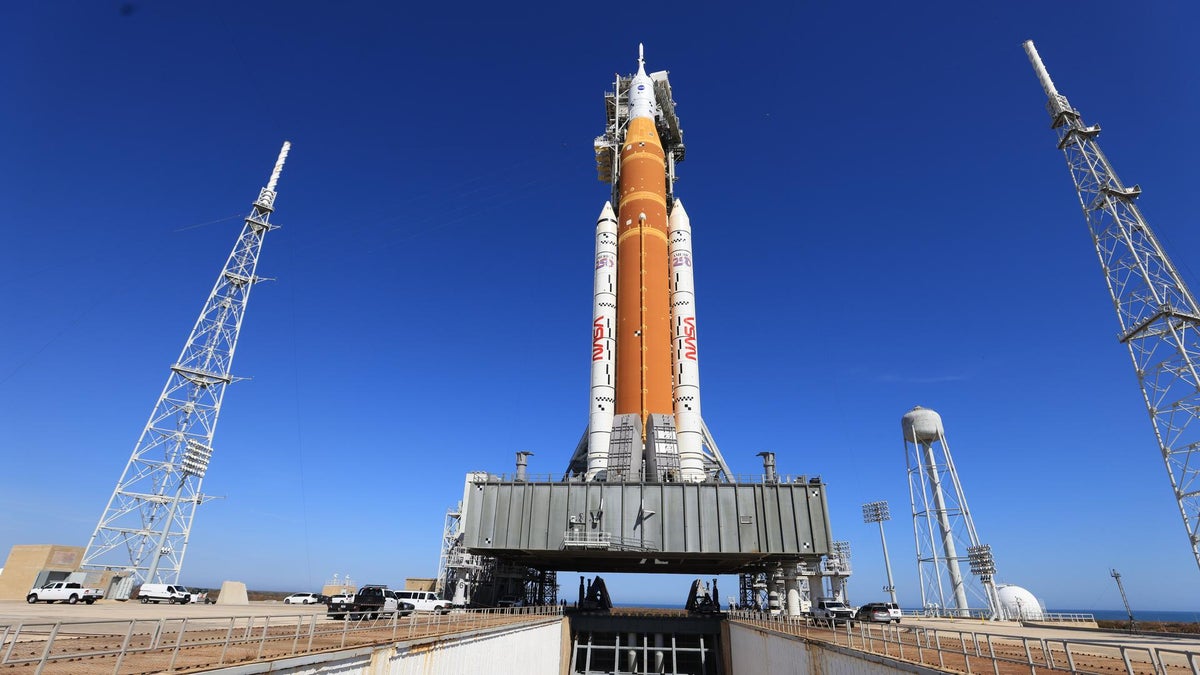
NASA has reached a significant milestone in its ambitious plan to return humans to the moon with its Artemis II mission. On February 19, 2026, the agency successfully completed a critical test known as the “wet dress rehearsal,” which involved fueling the Space Launch System (SLS) rocket, preparing the Orion crew capsule, and conducting a simulated countdown toward launch. This important achievement paves the way for NASA to target a launch date of March 6, 2026, for Artemis II, marking a major step forward in the Artemis program aimed at lunar exploration and eventual human settlement.
The wet dress rehearsal is a comprehensive trial that simulates many aspects of the actual launch without liftoff. It requires the rocket to be fueled with cryogenic propellants—liquid hydrogen and liquid oxygen—testing the vehicle’s ability to handle these volatile fuels safely and reliably. Additionally, the Orion spacecraft systems are checked under launch conditions, and the launch countdown procedures are practiced by the team. The successful completion of this test is crucial because the SLS rocket cannot proceed to launch without it.
NASA’s first attempt at this test on February 2, 2026, was not without issues. The agency encountered several problems, including hydrogen fuel leaks, which were a significant concern as they had also affected Artemis I, the previous uncrewed mission that orbited the moon. Hydrogen leaks pose a serious risk during rocket fueling due to the highly flammable nature of the gas, making their resolution essential for mission safety and success. Following the initial setbacks, NASA engineers worked diligently to identify and fix the causes of these leaks and other technical glitches in both the SLS rocket and the Orion capsule.
At a press conference held on February 20, 2026, NASA officials expressed confidence that these issues have been resolved. Charlie Blackwell-Thompson, NASA’s Artemis launch director, confirmed that no hydrogen leaks were detected during the second wet dress rehearsal and that the fueling and simulated countdown proceeded smoothly. Acting associate administrator Lori Glaze of NASA’s Exploration Systems Development Mission Directorate emphasized that although the test was successful, the agency will still conduct a thorough review of the data collected during the rehearsal. Additionally, some final flight readiness tests remain before Artemis II can officially launch.
The Artemis II mission is poised to be a historic event. It will feature four astronauts aboard the Orion spacecraft, embarking on a 10-day journey around the moon and back to Earth. The crew includes NASA astronauts Christina Koch, Reid Wiseman, and Victor Glover, along with Jeremy Hansen, an astronaut from the Canadian Space Agency. This mission will not only demonstrate the capabilities of the SLS and Orion systems with a human crew aboard but will also conduct important scientific observations and technology tests during the trip.
One of the key objectives of Artemis II is to explore the moon’s far side, which remains relatively uncharted territory due to its permanent orientation away from Earth. Observations and data gathered from this region will provide valuable insights into lunar geology and help inform future missions. More importantly, the mission will serve as a critical stepping stone toward Artemis III, NASA’s planned mission to land astronauts on the lunar surface by 2028. Artemis III aims to return humans to the moon for the first time in over 50 years, opening a new era of lunar exploration and potential colonization.
The Artemis program as a whole represents NASA’s broader vision of sustainable lunar exploration. Beyond the immediate goals of landing astronauts back on the moon, the program seeks to establish a long-term human presence on the lunar surface, develop new technologies for deep space travel, and ultimately prepare for crewed missions to Mars and beyond. Artemis II’s success is therefore not only a technical achievement but also a symbolic and strategic milestone in humanity’s journey to become an interplanetary species.
This latest progress in the Artemis program comes at a time when space exploration is gaining renewed global interest and investment. NASA’s cooperation with international partners, including the Canadian Space Agency, highlights the collaborative nature of modern space endeavors. The inclusion of Canadian astronaut Jeremy Hansen on the Artemis II crew underscores the importance of multinational partnerships in advancing space science and exploration.
As NASA moves closer to the Artemis II launch, the agency continues to emphasize the importance of rigorous testing and safety protocols. The challenges encountered during the first wet dress rehearsal exemplify the complexity of launching humans beyond Earth’s orbit and the need for meticulous preparation. Ensuring the reliability of the SLS rocket and Orion spacecraft is paramount, as any