
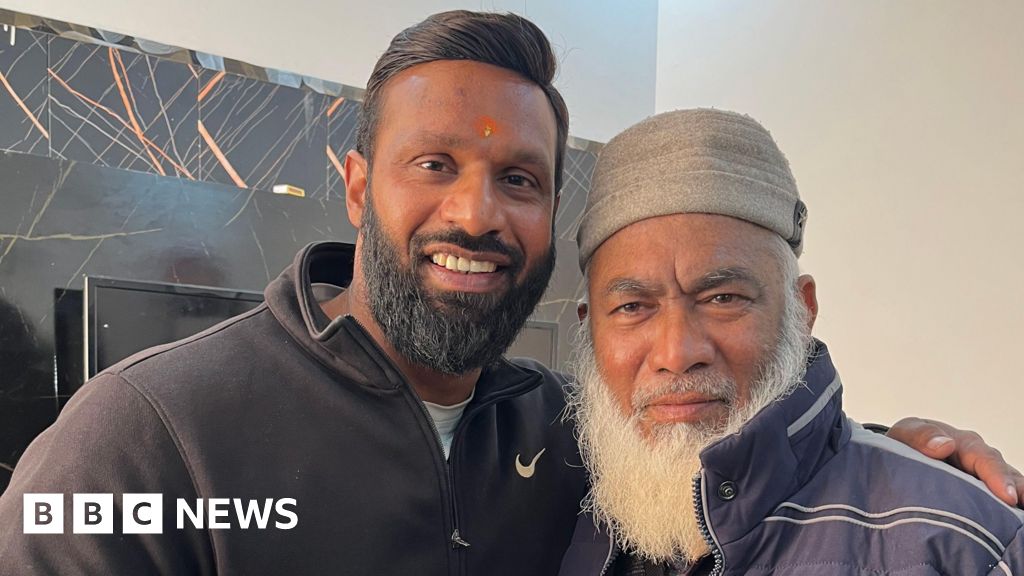
Mohammad Deepak, a 42-year-old gym owner from Kotdwar, a small town in the northern Indian state of Uttarakhand, has unexpectedly become a symbol of secularism and pluralism in India. His rise to prominence stems from a courageous act in defense of a Muslim shopkeeper against the harassment of a hardline Hindu group, the Bajrang Dal. What began as a spontaneous intervention has since ignited widespread debate, drawing praise and condemnation alike, and highlighting the deep-seated religious tensions in contemporary India.
The incident that brought Deepak into the national spotlight occurred on 26 January, India’s Republic Day. Deepak was at a friend’s shop next door when he noticed a crowd gathered outside the clothing store “Baba School Dress and Matching Centre,” owned by Vakeel Ahmed, a 68-year-old Muslim man. A group of about half a dozen Bajrang Dal activists were pressuring Ahmed to remove the word “Baba” from his shop’s name, asserting that the term, which is commonly used in India to refer to mystics, religious gurus, or elders in both Hindu and Muslim communities, could only be associated with Siddhabali Baba, a local Hindu temple dedicated to the god Hanuman. The activists argued that a Muslim shopkeeper had no right to use the name.
Ahmed’s son pleaded with the group to give them more time to comply with their demand, but the activists insisted on a swift response. It was at this tense moment that Deepak stepped in. In a video that quickly went viral, Deepak is seen confronting the Bajrang Dal activists, asking them, “Are Muslims not citizens of India?” His intervention was not premeditated; Deepak later explained that he was disturbed by the rude and aggressive way the young men were treating an elderly man, seemingly because of his religion.
When the activists asked for his name, Deepak identified himself as “Mohammad Deepak,” a combination of Muslim and Hindu names. This declaration was intended to underscore his message that India belongs to all its citizens, regardless of religion, and that religious identity should not divide people. Surprised by this unusual blending of names, the Bajrang Dal activists eventually left. However, the confrontation sparked repercussions: more than 150 Bajrang Dal supporters protested outside Deepak’s gym several days later.
The police registered complaints against “some unknown people” following Ahmed’s report, but they also filed a case against Deepak after complaints from two Hindu activists. The incident and its aftermath have made headlines across India, drawing attention at a time when attacks on Muslims by Hindu mobs have become increasingly common. Deepak’s bold stance is being widely celebrated as a rare and courageous act of resistance against communal intolerance.
Prominent political figures and media outlets have lauded Deepak’s actions. Rahul Gandhi, a Congress party Member of Parliament, called Deepak “a hero of India” who embodies the fight for the constitution and humanity. Gandhi described Deepak’s stand as spreading “love in the marketplace of hate” and urged the nation to follow his example. An editorial in The Indian Express hailed the video as “a shot in the arm” for a society often overshadowed by hatred and intolerance, emphasizing that Deepak’s words remind citizens of the “real India” — a country where everyone has the right to live peacefully and name their businesses freely.
Social media also erupted in support of Deepak, with many users expressing solidarity and admiration for his courage. His phone has been ringing incessantly, and journalists and visitors have flocked to meet him. Deepak’s Instagram following has surged, and a short video he posted on 29 January, in which he stated, “I am not a Hindu, I am not a Muslim, I am not a Sikh, I am not a Christian. First and foremost, I am a human being,” has garnered more than five million likes. Despite the overwhelming attention, Deepak remains humble, stating that he never anticipated that a simple act of standing up for what was right would become a national issue.
However, Deepak’s newfound fame has come at a cost. He has faced harsh backlash, with critics labeling him a traitor to his Hindu faith. Social media has been flooded with abusive messages, and Deepak has received numerous death threats. In one chilling phone call he shared publicly, a caller warned, “Bajrang Dal shouldn’t have spared you… I’ll teach you a lesson soon.” This