
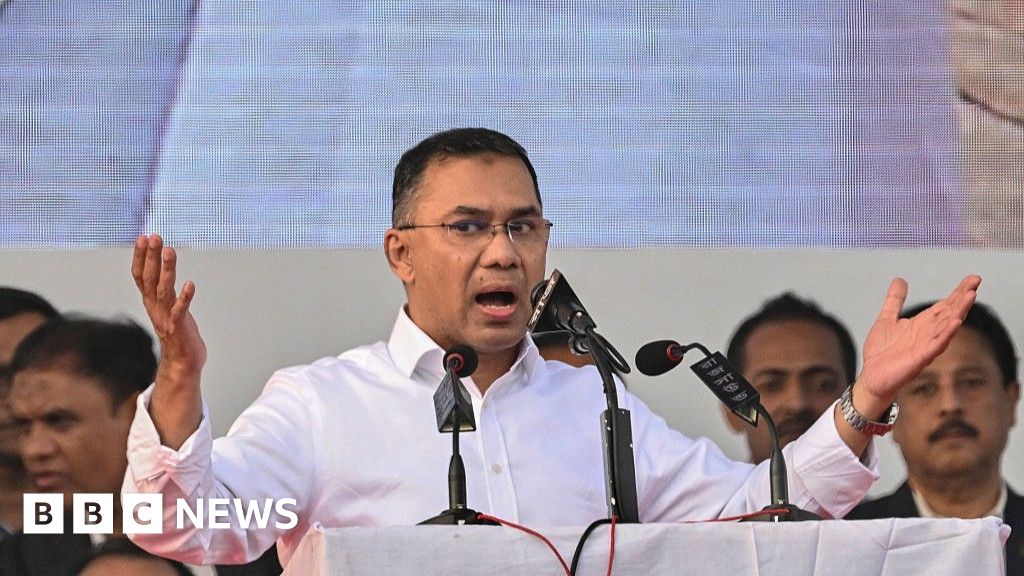
In the aftermath of Bangladesh’s recent general elections, which resulted in a decisive victory for the Bangladesh Nationalist Party (BNP), New Delhi has responded with a carefully measured tone of warmth and cautious optimism. Prime Minister Narendra Modi publicly congratulated BNP leader Tarique Rahman, expressing India’s support for a “democratic, progressive and inclusive” Bangladesh and signaling a willingness to work closely to strengthen bilateral relations. Modi’s message, posted in Bengali, was forward-looking but also deliberately diplomatic, reflecting the complex and often fraught history between the two neighbors.
The backdrop to this election and India’s response is a period of tense relations, marked by deep mistrust and diplomatic strain. Since Sheikh Hasina, the leader of Bangladesh’s long-dominant Awami League, fled to India following a Gen Z-led uprising in July 2024, ties between Dhaka and New Delhi have deteriorated sharply. Hasina’s party was barred from contesting the election entirely, adding fuel to diplomatic tensions. Many Bangladeshis harbor grievances against India for what they see as Delhi’s prior support of Hasina’s increasingly authoritarian regime, which has been accused of human rights abuses and political repression. These resentments are compounded by longstanding issues such as border killings, water resource disputes, trade restrictions, and inflammatory political rhetoric from both sides.
The breakdown of relations has had tangible consequences. Visa services between the two countries are largely suspended, cross-border train and bus services have been halted, and flights between Dhaka and Delhi have been drastically reduced. Against this turbulent backdrop, New Delhi faces a delicate balancing act: it must engage with the new BNP government to protect its strategic interests—particularly in countering insurgency and extremism—while managing domestic political narratives that have increasingly cast Bangladesh as a contentious issue in Indian politics.
Analysts suggest that a reset in India-Bangladesh relations is possible but will require mutual restraint and reciprocity. Tarique Rahman and the BNP are seen as the most politically experienced and moderate option among Bangladesh’s political parties, and many view them as India’s safest bet for stable relations moving forward. However, as Avinash Paliwal, a professor of politics and international studies at SOAS University of London, points out, the real challenge lies in how Rahman will govern and whether he can stabilize ties with India amidst internal and external pressures.
India’s relationship with the BNP is not new and carries a complicated legacy. When the BNP last came to power in 2001 under Khaleda Zia, Tarique Rahman’s mother, the party formed a coalition government with the Islamist Jamaat-e-Islami. During that period, relations with India cooled significantly. Despite early diplomatic courtesies—India’s then-national security adviser Brajesh Mishra was the first foreign dignitary to congratulate Zia—mutual trust was thin. Delhi grew suspicious as Dhaka maintained relations with Washington, Beijing, and Islamabad, fueling concerns about a strategic drift away from India.
Two red lines in particular exacerbated tensions during the BNP-Jamaat years: India’s insistence on curbing support for insurgents operating in its northeast and protecting Hindu minorities in Bangladesh. Post-election violence against Hindus in districts such as Bhola and Jessore alarmed Delhi, and a major weapons seizure in Chittagong in 2004—allegedly destined for Indian rebel groups—deepened concerns. Economic ties also suffered, with significant investment proposals, such as Tata Group’s proposed $3 billion project, stalling over issues like gas pricing before eventually collapsing.
The relationship continued to deteriorate, exemplified by the 2014 incident when Khaleda Zia, then in opposition, canceled a scheduled meeting with India’s president Pranab Mukherjee, citing security concerns—a move widely interpreted as a diplomatic snub. This fraught history partly explains why India later invested heavily in Sheikh Hasina’s leadership. Over her 15 years in power, Hasina delivered what India values most: strong security cooperation against insurgents, improved connectivity, and a government broadly aligned with India rather than China. This partnership, while strategically valuable, was politically costly for Hasina domestically.
Currently, Sheikh Hasina remains in exile in Delhi, facing a death sentence in absentia related to the violent crackdown following the 2024 uprising, during which the UN estimates around 1,400 people were killed, mostly by security forces. India’s refusal to extradite Hasina has further complicated prospects