
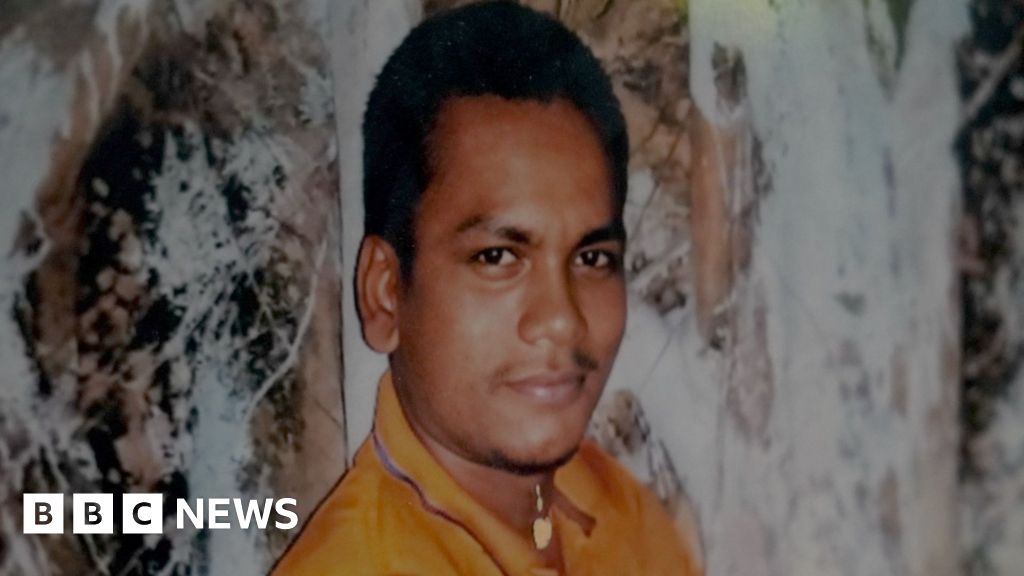
On a quiet morning in Bangladesh’s Mymensingh city, 28-year-old Dipu Chandra Das began his day like any other. Rising at first light from his modest tin-sheet home nestled among narrow lanes just off the highway from Dhaka, Dipu gently woke his father, bid farewell to his wife, and cradled his 18-month-old daughter. With quiet resolve, he boarded a bus for the 60-kilometre journey to the garment factory where he worked as a junior quality inspector, responsible for checking sweaters destined for global brands like H&M and Next. That morning, however, would be the last time his family saw him alive.
Just 24 hours later, on 18 December, Dipu was dead—lynched and set on fire by a mob accusing him of blasphemy. The horrific killing took place in broad daylight, with hundreds of onlookers witnessing as Dipu, a Hindu in a predominantly Muslim country, was dragged from his workplace, beaten brutally, tied to a tree on a busy highway, and burned alive. The atrocity sparked outrage both within Bangladesh and across the border in India, reigniting long-standing fears about the safety of religious minorities in Bangladesh, particularly since the ousting of then-Prime Minister Sheikh Hasina in student-led protests in 2024.
Bangladesh is home to roughly 174 million people, of whom about 9% belong to religious minorities, predominantly Hindus. Relations between these minorities and the Muslim majority have historically been marked by periods of tension and insecurity, with minorities often facing discrimination and violence. Dipu’s brutal death has become a stark reminder of these deep-seated divisions and the vulnerabilities of minority communities.
The grief following Dipu’s death hangs heavily over the modest home he left behind—a single dark room with a beaten-earth floor and a tin roof, where his family has lived for nearly 15 years. Sparse furnishings—a plastic table and chairs, a few beds, sacks of rice, a solitary teddy bear, and clothes hanging from a single rail—tell a story of hardship and modest means. Among these humble possessions, a refrigerator and a small television stand out; both were bought on instalments by Dipu, symbols of his hopes and efforts to build a better future for his family.
His mother, Shefali Rani Das, breaks down whenever visitors come by, overcome with grief. “Oh Dipu, where is my Dipu?” she laments, her cries echoing the family’s profound loss. Dipu was the eldest son of Rabi Das, a 54-year-old laborer who has spent decades hauling sacks of rice, wheat, and vegetables in a nearby market for meager daily wages of 400 to 500 taka (about $3 to $4). Years of hard labor have worn down Rabi’s health, and Dipu had long promised to lighten his father’s burden. “Now I am working,” Dipu would tell him. “You rest.” Every month, Dipu handed over his salary to support the family, dreaming aloud about building a proper house to lift them out of poverty.
Born at home and raised in a mixed Hindu-Muslim neighborhood defined by quiet hardship, Dipu was known as a private man with few friends. The pandemic had forced him to leave college as lockdowns crushed the family’s finances. By 2024, he was employed at a sweater factory, sending money home and returning to his dormitory with chocolates for his daughter. Evenings were spent quietly watching cartoons on television. As the eldest of three sons, his mother said Dipu’s greatest ambition was to see his younger brothers, Apu, 22, and Rithick, 16, settled in life.
Dipu was a small but vital part of Bangladesh’s vast garment export industry. For the previous 14 months, he had worked at Pioneer Knitwear, a factory employing some 8,500 workers and part of a larger group with 47,000 employees. The factory’s sweaters are stitched on long production lines and sold across the US and Europe. Dipu earned 13,500 taka (about $110) monthly, inspecting stitches and seams on one of the factory’s hundred production lines. He was one of 868 Hindu workers there, quietly contributing to the country’s booming garment exports.
His life was ordinary, lived carefully—a young man striving to pull his family out of poverty. But everything changed on