
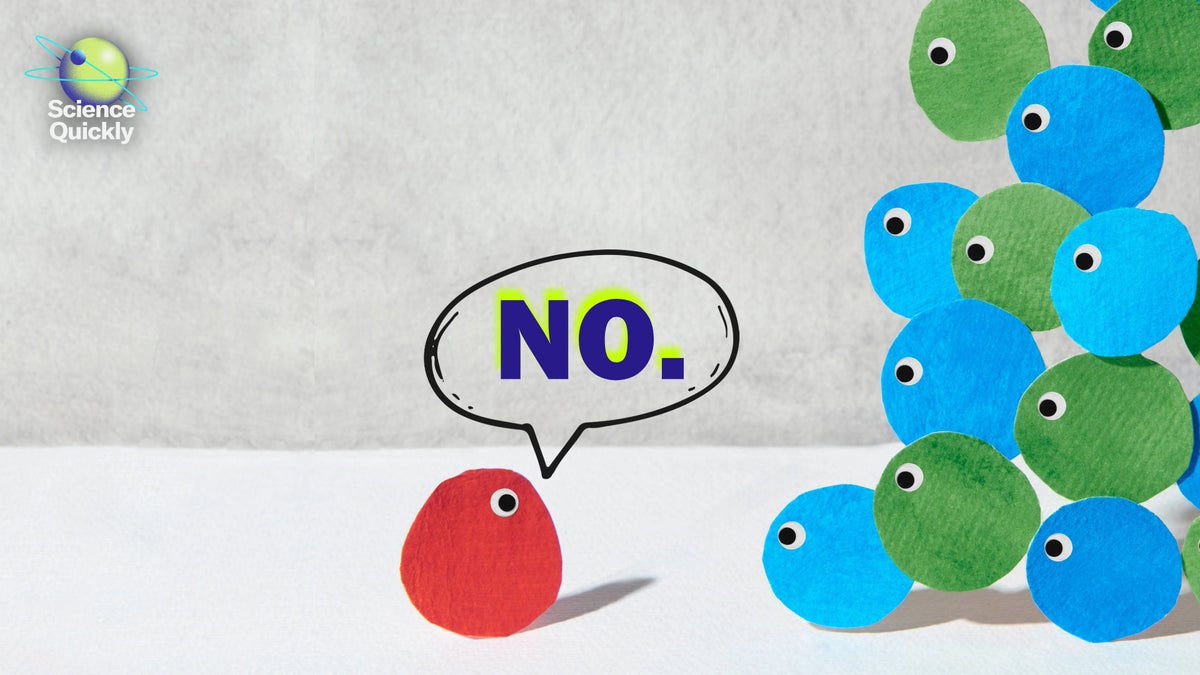
On November 4, 2025, Scientific American published an insightful exploration into the psychological and social dynamics behind why people often find it difficult to say “no,” even when it is crucial to do so. The article, featuring an interview with Sunita Sah, a professor of management and organizations at Cornell University and author of the book *Defy: The Power of No in a World That Demands Yes*, delves into the roots of human obedience and compliance, the challenges of defiance, and practical ways individuals and society can cultivate the skill of saying no.
From an early age, many of us are conditioned to equate being “good” with obedience — following instructions from parents, teachers, and authority figures without question. Sunita Sah recalls her own upbringing as a model of this conditioning. Named “Sunita,” which means “good” in Sanskrit, she internalized the message that being good meant being compliant and agreeable, whether at home or in school. This early socialization to obey authority shaped much of her understanding of human behavior.
Sah’s academic journey reflects her curiosity about obedience and defiance. After studying medicine at the University of Edinburgh and working as a junior doctor, she became fascinated by Stanley Milgram’s famous experiments on obedience to authority. Milgram’s studies, conducted in the early 1960s, sought to investigate the psychological validity of the excuse “I was just following orders,” famously used by Nazi perpetrators during World War II. In these experiments, participants were instructed to administer increasingly severe electric shocks to a “learner” (actually an actor) whenever errors were made on a memory test. Despite hearing the learner’s protests and pleas to stop, many participants continued to administer shocks up to the highest, potentially lethal levels — 450 volts — simply because an authority figure told them to.
Milgram’s findings were shocking: about 66 percent of participants administered the highest shock, demonstrating how powerful obedience to authority can be, even when it causes harm. Sah highlights that the participants were not uncaring or callous; rather, they experienced anxiety, nervous laughter, and hesitation — they wanted to say no but didn’t know how. This inability to defy authority, despite internal conflict, is a key insight into why saying no is so difficult.
Sah expands this understanding by describing how compliance pervades many aspects of life beyond such extreme experiments. For example, in everyday decisions—such as choosing between two lotteries where one is clearly better—people often defer to advice from strangers, even when it leads them to make worse choices. In workplaces, especially healthcare, the issue is acute: surveys show that nine out of ten healthcare workers feel uncomfortable speaking up when they witness errors by colleagues or physicians, despite the potential consequences for patient safety.
Why is defiance so difficult? Sah identifies three main reasons. First, there is tremendous social pressure to conform. People worry about damaging relationships, losing jobs, or being ostracized. A psychological phenomenon she terms “insinuation anxiety” describes the fear that saying no or rejecting a suggestion signals distrust or disrespect to another person, which can be deeply uncomfortable. For example, telling a boss, a family member, or an authority figure that they are wrong can feel like a betrayal or insult, even when necessary.
Second, many people do not fully understand the difference between compliance, consent, and defiance. Compliance is often seen as positive, and defiance as negative or confrontational. People conflate consent—which implies willing agreement—with mere compliance, which can be passive or reluctant. This misunderstanding makes it harder to embrace defiance as a healthy, necessary behavior.
Third, even when people recognize the need to say no or resist, they often lack the skills to do so effectively. From a young age, many are trained to be obedient and polite rather than assertive, meaning they do not have the language or confidence to express dissent without feeling confrontational or aggressive.
Given these challenges, Sah offers a way forward by redefining defiance in a more positive and accessible light. Instead of viewing defiance as rebellious, loud, or aggressive behavior, she proposes a definition centered on authenticity: defiance is acting in alignment with one’s true values, especially when there is pressure to do otherwise. This reframing makes defiance a proactive, positive force that anyone can practice, not just something reserved for the brave or extraordinary.
Building the skill of defiance starts with small acts in everyday life. Sah suggests