
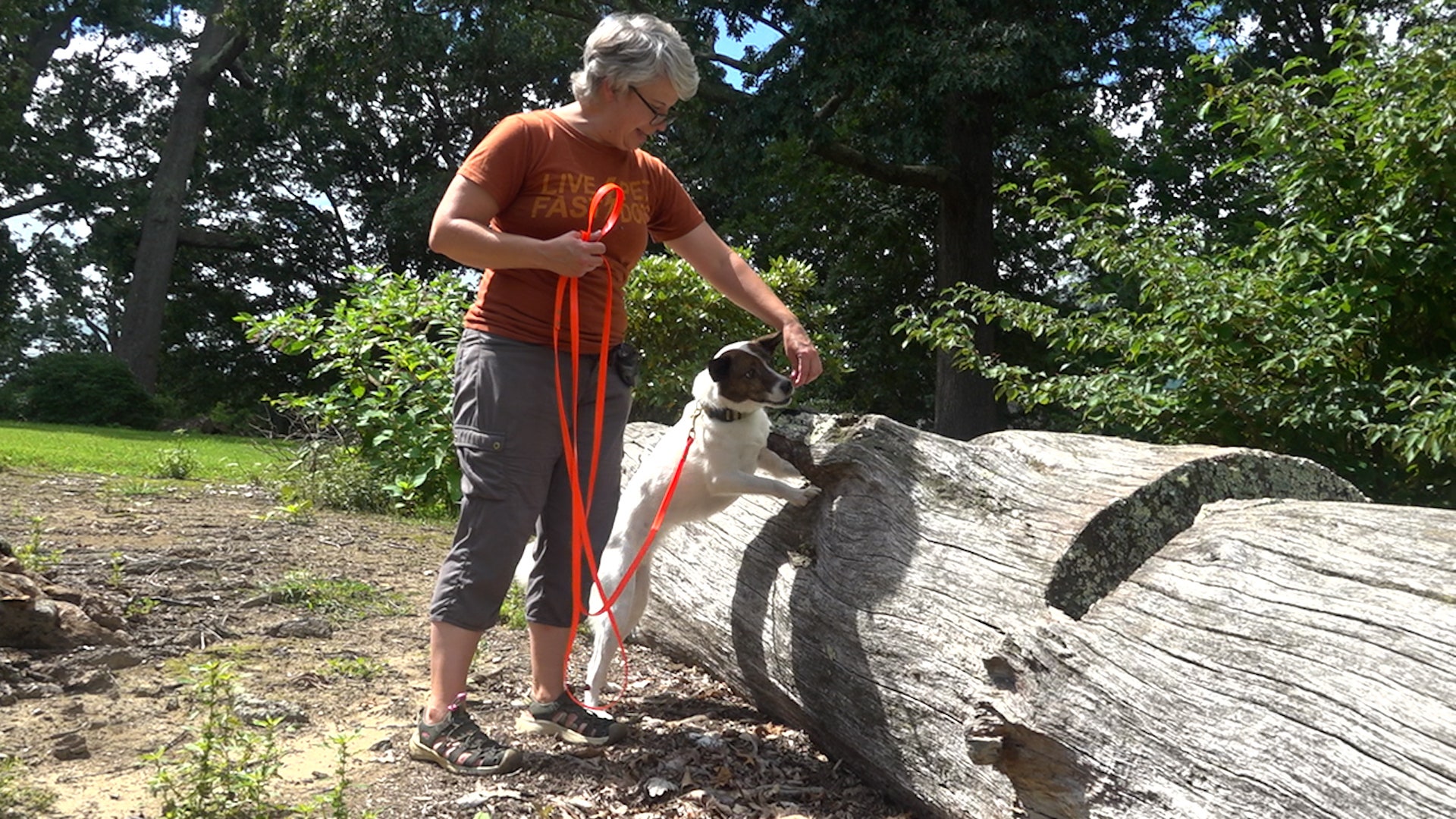
Conservationists and researchers have discovered an innovative new method to detect and control the spread of the invasive spotted lanternfly, a destructive pest threatening ecosystems and agriculture in multiple U.S. states. At the heart of this promising approach are pet dogs, whose extraordinary sense of smell can be harnessed to locate spotted lanternfly egg masses early, helping to limit the insect’s rapid expansion.
The spotted lanternfly, native to Asia, was first identified in the United States over a decade ago in Pennsylvania. Since then, this invasive insect has spread across 19 states, primarily affecting regions in the Midwest and Northeast. The pest poses a significant threat to agriculture and local plant life. It feeds on a wide variety of plants, excreting a sugary substance known as honeydew. This honeydew encourages mold growth, which can further damage crops and vegetation. Due to their destructive nature, some states have launched public awareness campaigns encouraging residents to kill spotted lanternflies on sight in an effort to reduce their numbers.
However, experts agree that the real key to controlling the spread lies in eliminating the lanternflies’ egg masses before the insects hatch. These egg masses are notoriously hard to find because they closely resemble dried mud and blend seamlessly into their surroundings. This camouflage makes early detection challenging but crucial to preventing new infestations.
Recognizing the difficulty in locating these eggs, researchers at Virginia Tech looked to dogs for assistance. Dogs have an extraordinary sense of smell — their dominant sense — which they rely on far more than vision. “Dogs have one dominant sense. It’s their nose. We use our eyes. Dogs use their nose like their eyes,” explained Katie Thomas, a participant in the study.
Katie Thomas, along with her nine-year-old pitbull mix named Finch, volunteered in the study, bringing years of experience in recreational scent detection to the effort. During the study, Thomas and Finch underwent both indoor and outdoor trials, where Finch was trained and tested on his ability to sniff out spotted lanternfly egg masses. Each time Finch successfully found a target scent, he was rewarded, reinforcing his detection skills.
Thomas expressed enthusiasm about the project, emphasizing the satisfaction of combining a fun activity with an important ecological cause. “To be able to do things that we already do, that we are having a lot of fun with… Train our dogs to sniff stuff, being able to apply that to something like a real problem that affects our community is really fulfilling,” she said.
Another key participant was Carolyn Shelburne, who worked with her nine-year-old border collie, Hermes. Carolyn and Hermes were among the first five K9 and handler teams to successfully pass field tests designed to evaluate their ability to detect lanternfly egg masses in real-world conditions. Ultimately, the study involved 182 volunteer dog-handler teams from across the United States, demonstrating broad interest and engagement in this novel approach.
The results of the study were encouraging. In controlled indoor environments, dogs correctly identified the lanternfly scent more than 80% of the time. In outdoor tests, reflecting more realistic search conditions, dogs successfully located the scent over 60% of the time. While outdoor accuracy was lower than indoors, it still surpassed the effectiveness of most human-led searches, highlighting dogs’ valuable role in early detection efforts.
Shelburne expressed hope that the study would inspire more dog owners to train their pets in scent detection for spotted lanternflies and other invasive species. “Hopefully, more people will see that you can train any dog to do this, and it gives you something fun to do with your dog,” she said.
Beyond spotted lanternflies, researchers envision a future where trained dogs could serve as frontline defenders against a variety of invasive pests and species that threaten local ecosystems. Even in regions not yet affected by spotted lanternflies, dogs could be trained to sniff out other invasive insects or plants, enhancing early detection and rapid response capabilities.
This innovative approach highlights the potential for partnerships between humans and animals to address pressing environmental challenges. By leveraging dogs’ natural abilities, conservationists gain a powerful new tool to protect agriculture, preserve native ecosystems, and limit the spread of destructive invasive species like the spotted lanternfly.
As spotted lanternflies continue to pose a significant threat to U.S. agriculture and natural habitats, the integration of trained scent-detection dogs represents a hopeful advancement in the ongoing battle against invasive pests. Through continued research, training, and community involvement, this canine-assisted detection method could become a critical component of broader conservation and pest management strategies nationwide.