
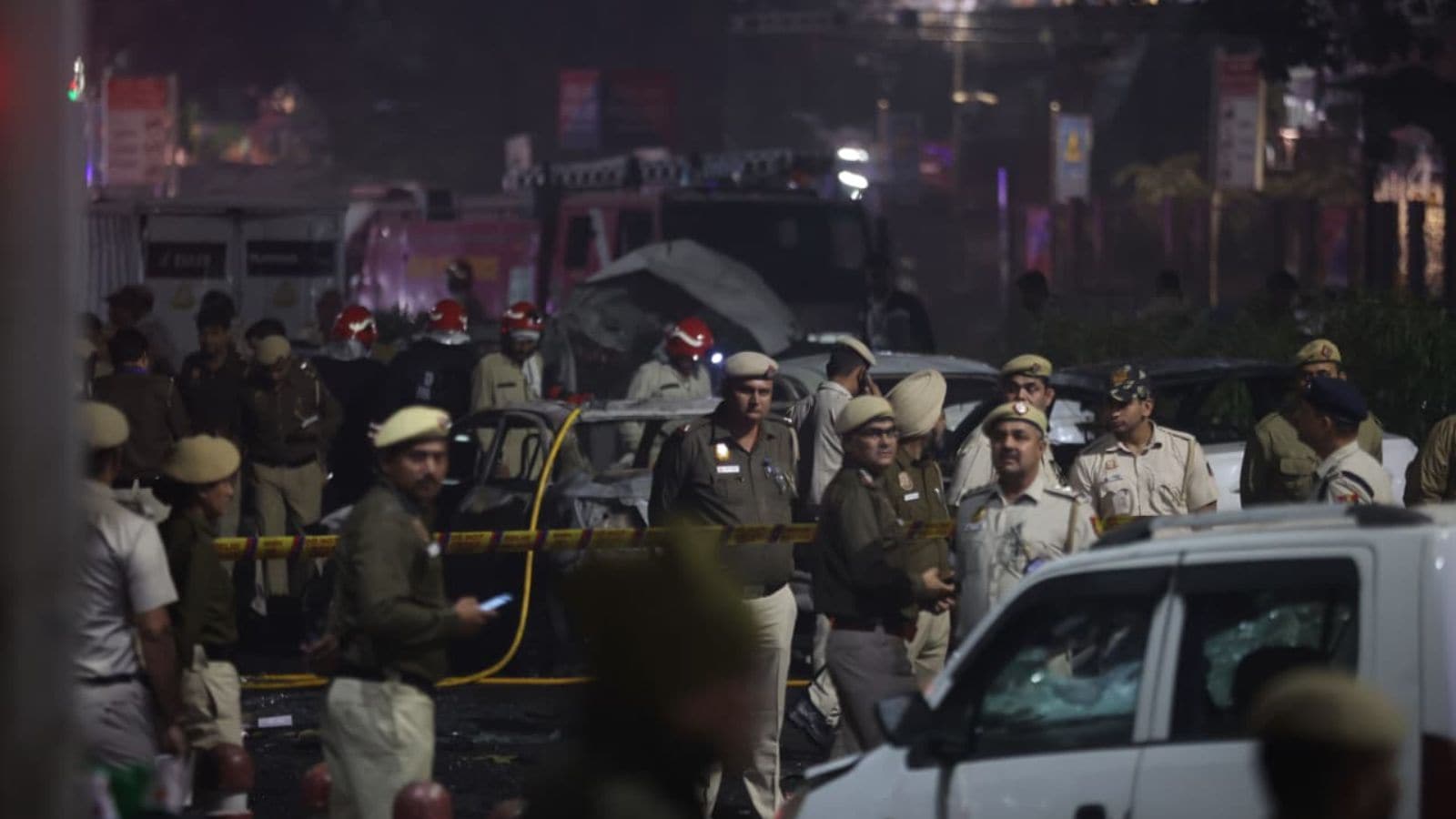
On the evening of Monday, 2025, a devastating explosion shook the area outside Gate No. 1 of the Red Fort Metro Station in Delhi, resulting in the deaths of at least eight people and injuring several others. The blast reportedly originated from a car parked near the Lal Quila metro station, a bustling area that is frequently visited by locals and tourists alike. The exact nature of the explosion remains unclear as investigations continue, but the immediate aftermath saw a swift response from emergency services and security agencies.
Following the blast, around seven fire tenders were deployed to the scene to control the fires and prevent further damage. The Delhi Police, along with the Anti-Terror Squad and the Special Cell, quickly arrived at the site to assess the situation and secure the area. Given the location’s significance and the potential threat to public safety, a high alert was promptly sounded across the capital city, with increased vigilance at various sensitive points.
This tragic event is the latest in a series of bomb blasts that have occurred across India over the past two decades, many of which have targeted crowded public places or transportation hubs, causing loss of life and widespread panic. To understand the gravity of the situation in Delhi, it is important to reflect on some of the major blast incidents India has witnessed in recent years.
One of the more recent bombings took place on March 1, 2024, at Rameshwaram Cafe in Bengaluru’s Brookfield area. This blast injured ten people and was later confirmed to have been caused by an Improvised Explosive Device (IED). The incident raised concerns about the increasing use of IEDs in urban areas and prompted tighter security measures in Bangalore and other metropolitan cities.
Going further back, in March 2017, an explosion occurred inside a passenger train traveling between Bhopal and Ujjain in Madhya Pradesh’s Shajapur district. The blast took place in a general coach of the train near Jabdi station, damaging glass panes and creating widespread chaos among commuters. Passengers rushed out in panic as smoke filled the coach, halting the train and prompting an immediate investigation by railway authorities and security forces.
One of the more symbolic attacks occurred on July 7, 2013, at the Mahabodhi Temple complex in Bodhgaya, Bihar. This UNESCO World Heritage Site, revered as one of the holiest Buddhist shrines, was targeted in a series of blasts that injured two monks. The attack sent shockwaves through the country, highlighting the vulnerability of religious and cultural landmarks. The accused in this case were linked to the terror group Indian Mujahideen, underscoring the persistent threat posed by extremist organizations in India.
Another significant incident took place on February 21, 2013, in Hyderabad’s Dilsukhnagar area, where two explosions within seconds killed 18 people and injured 131 others. The blasts caused widespread terror and led the Ministry of Home Affairs to transfer the investigation to the National Investigation Agency (NIA), reflecting the seriousness with which such attacks are treated by Indian authorities.
Mumbai, India’s financial capital, has also witnessed several deadly bombings over the years. On July 13, 2011, three blasts rocked areas including Dadar, Zaveri Bazaar, and Opera House, killing 27 people and injuring over 100. The investigation revealed the involvement of members of the banned Indian Mujahideen terror group. These attacks, targeting dense urban centers, significantly impacted public life and underscored the ongoing challenges in combating terrorism in India’s metropolitan regions.
One of the deadliest series of attacks in recent history occurred on September 13, 2008, when serial bomb blasts exploded at multiple locations in Delhi, including Karol Bagh, Connaught Place, and Greater Kailash. These coordinated explosions resulted in 26 deaths and injured 135 others, also causing extensive property damage. Authorities managed to detect and defuse three live bombs, averting further casualties. This incident remains a stark reminder of the threat posed by coordinated terrorist activities in the national capital.
Perhaps the most notorious blast in India’s recent past is the 2006 Mumbai train bombings, which took place on July 11. Seven bomb blasts ripped through Western Suburban Railway train coaches during the evening rush hour, killing 189 people and injuring over 800. These bombs, placed inside pressure cookers, targeted the overcrowded trains and caused one of the deadliest terror attacks in the country’s