
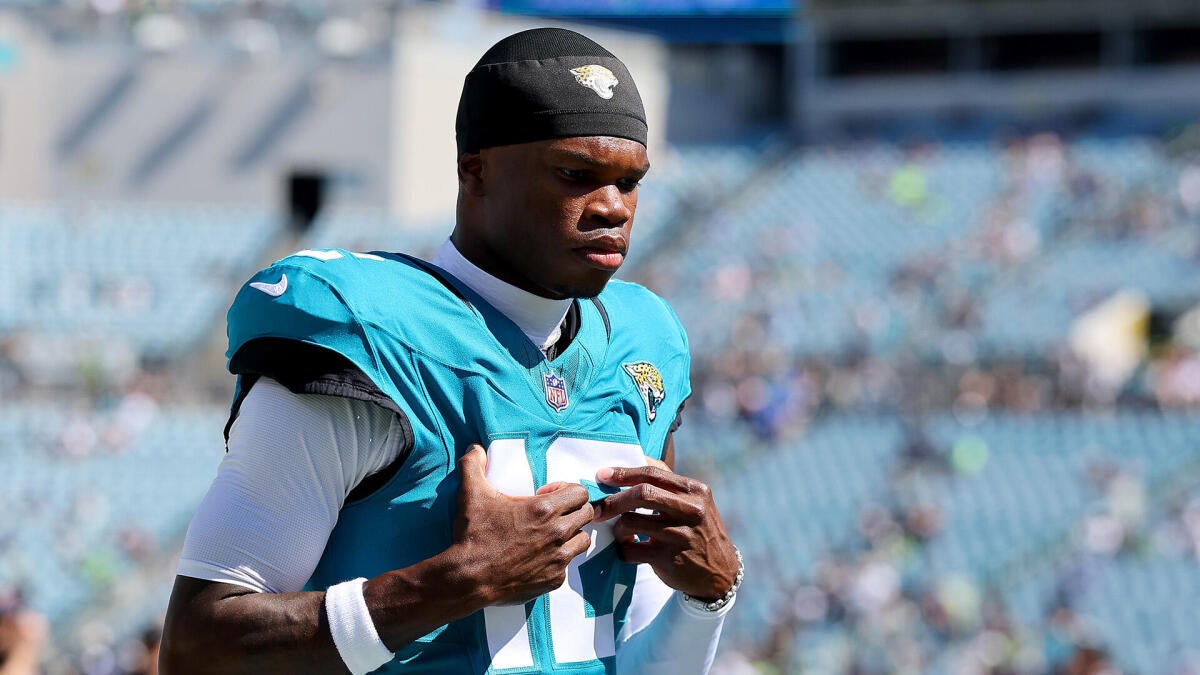
The excitement surrounding Travis Hunter ahead of the 2025 NFL Draft was extraordinary, to the extent that it overshadowed discussions about Cam Ward, the clear-cut quarterback prospect widely expected to be selected first overall. In an NFL landscape dominated by the quarterback position, Hunter’s unique appeal as a two-way player—a wide receiver and cornerback—captivated fans and analysts alike. His rare ability to excel on both offense and defense created a buzz that few rookies generate, making his eventual landing spot one of the most intriguing storylines in the draft.
The Jacksonville Jaguars dramatically intensified that intrigue by executing a blockbuster trade to move up to the No. 2 overall pick and select Hunter. This move stunned the league, as it involved giving up significant draft capital to secure a player who intended to continue playing both ways at the professional level, a near unprecedented commitment. The Jaguars were not only supportive of Hunter’s dual-role ambitions but were a driving force behind the trade, fully expecting him to contribute at an elite level on both sides of the ball.
Hunter’s collegiate career at Colorado had been nothing short of stellar, showcasing his exceptional athleticism and versatility. However, the transition to the NFL proved far more challenging than anticipated. While there were flashes of brilliance, the overall trajectory for Hunter and the Jaguars has been disappointing. His season was abruptly cut short after he underwent surgery to repair a lateral collateral ligament (LCL) injury in his right knee, effectively ending his rookie campaign.
Concerns about Hunter’s durability and whether playing both ways was sustainable at the NFL level had been among the few criticisms during his draft evaluation. Unfortunately, those concerns have now been realized, leaving Jacksonville with difficult questions regarding the future of their high-profile No. 2 overall pick.
Statistically, Hunter’s rookie season was remarkable in some respects. He became just the second player in the past 20 years to log at least 150 snaps on both offense and defense in a single season. Additionally, he was the first player since 2000 to record at least 200 receiving yards and 10 or more defensive tackles in one year. Heading into Week 11, Hunter ranked third among rookie wide receivers in receptions and fourth in receiving yards, underscoring his impact despite the challenges.
In the wake of Hunter’s injury, Jaguars head coach Liam Coen was asked about the player’s future as a two-way talent. Coen emphasized that it was “very premature” to make any definitive statements on whether Hunter would continue playing both offense and defense. He reiterated that Hunter, like every player on the roster, would be evaluated thoroughly at the end of the season to identify his strengths, areas for improvement, and the best path forward. Coen expressed confidence in Hunter’s recovery, noting the strong support system around the young player.
Despite Hunter’s clear capability to contribute on both sides of the ball, the Jaguars face a crucial decision: whether to continue pursuing the ambitious two-way experiment or to focus his development primarily on one position. The risk of spreading Hunter too thin and making him a “master of none” could hinder his growth during these formative years. Early in the season, Jacksonville attempted to deploy Hunter as a true two-way player. For example, in Weeks 2 and 3, Hunter played over half of the offensive snaps and more than 60% of the defensive snaps. During this period, his production was mixed—he caught four of eight targets for 43 yards and made eight tackles with a pass breakup, but also allowed five receptions on seven targets for 64 yards as a defender.
Following a Week 3 game against Houston, where Hunter logged a season-high 68.3% of defensive snaps, the Jaguars appeared to dial back his defensive workload. His offensive snaps increased steadily in subsequent weeks, indicating the team’s shift towards utilizing him more as a receiver. Here’s a snapshot of his snap distribution after Week 3:
- Week 4: 55.9% offensive snaps, 13.6% defensive snaps - Week 5: 67.2% offensive, 39.1% defensive - Week 6: 77.6% offensive, 40% defensive - Week 7: 87% offensive, 20% defensive
This shift paid dividends in Hunter’s receiving numbers. From Week 4 onward, he caught 18 of 29 targets for 222 yards and a touchdown. If projected over a full 17-game season