
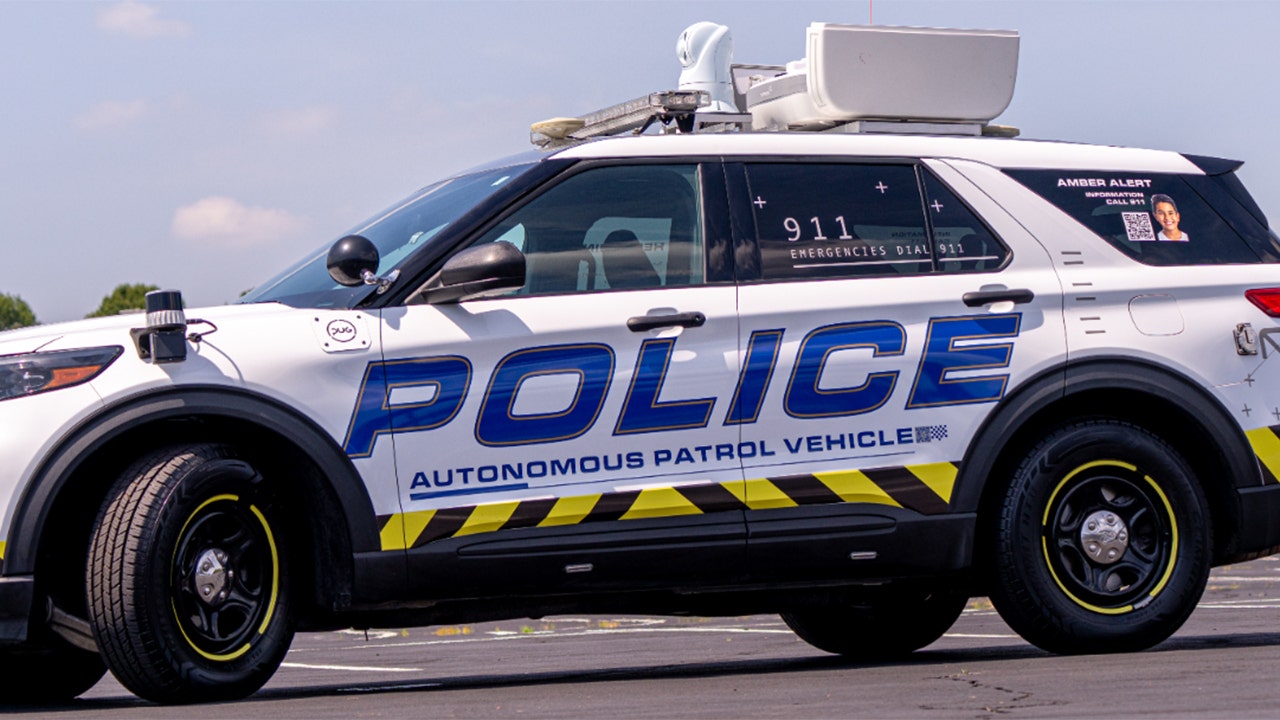
The Miami-Dade Sheriff's Office has recently unveiled a groundbreaking initiative that could transform the landscape of law enforcement in the United States. Introducing the Police Unmanned Ground Vehicle Patrol Partner, or PUG, this innovative project marks the debut of what is being hailed as America’s first fully autonomous patrol vehicle. Developed through a collaboration between the Miami-Dade Sheriff's Office, the nonprofit Policing Lab, and Perrone Robotics, the PUG is a self-driving SUV equipped with advanced technology designed to enhance public safety, optimize law enforcement resources, and increase operational efficiency.
The PUG vehicle integrates a suite of cutting-edge features that set it apart from traditional patrol cars. It is capable of driving itself along predetermined routes, utilizing artificial intelligence-powered cameras to detect suspicious behaviors or activities. One of the vehicle’s standout capabilities is its ability to deploy drones for aerial surveillance, extending its reach and providing law enforcement with real-time, comprehensive situational awareness. The system’s sensors include 360-degree cameras and thermal imaging tools, enabling it to identify people or vehicles in restricted areas, even under low-light conditions. Moreover, it is connected to police databases, license plate readers, and crime analytics software, allowing it to process and analyze data in real time to inform law enforcement decisions.
Currently, the PUG is part of a year-long pilot program aimed at assessing how autonomous technology can assist in routine patrol duties. During this initial phase, the vehicle operates on fixed patrol routes with a deputy seated in the front to oversee its performance and intervene if necessary. Miami-Dade Sheriff Rosie Cordero Stutz described the project as a pioneering effort to “set the standard for what will be the future of law enforcement in this country,” highlighting the department’s commitment to embracing innovation while maintaining a human presence.
Beyond its technical prowess, the PUG also incorporates tools designed to foster community engagement and transparency. It features an interactive community tablet mounted on the vehicle, allowing residents to interact with the system during public events, provide feedback, and better understand how this new technology works. This aspect of the project aims to bridge the gap between law enforcement technology and public trust—an essential consideration as police departments nationwide explore integrating AI and robotics into their operations.
Proponents of the PUG emphasize its potential to act as a “force multiplier” for law enforcement. By automating routine patrols and enhancing situational awareness, the vehicle can free up deputies to focus on more complex, human-centered tasks that require judgment and empathy. The Miami-Dade Sheriff's Office stresses that the PUG is intended to complement, not replace, human officers, serving as a partner that extends their capabilities rather than diminishes their roles.
However, the introduction of autonomous patrol vehicles also raises important questions and concerns. Privacy advocates and community members have expressed unease about data collection, surveillance overreach, and the long-term costs associated with such technology. While the first PUG unit was donated to the department, future vehicles are expected to cost between $150,000 and $200,000 each, which could pose budgetary challenges for widespread adoption. The pilot program will closely evaluate the vehicle’s impact on metrics such as response times, crime deterrence, officer safety, and public confidence in law enforcement.
The deployment of the PUG in Miami-Dade County represents more than just a local experiment; it could serve as a model for autonomous policing nationwide. If successful, similar vehicles may soon appear in major cities across the country, prompting communities everywhere to engage in vital discussions about the balance between technological innovation, public safety, and civil liberties. Miami-Dade’s experience will be closely watched by law enforcement agencies, policymakers, and the public, as it could signal the beginning of a new era in how safety and surveillance intersect.
For residents of Miami-Dade, the presence of the PUG may soon become a familiar part of the neighborhood landscape. The self-driving patrol vehicle will be tasked with routine monitoring of neighborhoods, public events, and potentially high-risk situations, all while collecting and processing data through its interconnected network of cameras and sensors. This efficiency in data processing and rapid response capability, powered by AI, introduces new considerations regarding transparency and accountability. Questions about how data gathered in public spaces is stored, used, and protected will be paramount as the technology becomes more integrated into everyday policing.
The implications of autonomous patrol technology extend far beyond Miami-Dade. Other law enforcement agencies across the country are closely monitoring the pilot’s progress to determine whether this approach can be replicated elsewhere. Communities nationwide