
)
A recently surfaced classified document has sent shockwaves through Beijing and Islamabad by exposing a significant failure in China's air defense technology, particularly in its dealings with Pakistan. This revelation comes from an 87-page report published by Australia’s National Security College titled "Air and Missile Warfare in the 2025 Subcontinental Conflict: Observations and Consequences." The report has been described by military experts as "the biggest defense fraud of the decade," highlighting how India’s missile technology not only weakened but completely overwhelmed the Chinese air defense systems sold to Pakistan.
The core of this revelation lies in the performance of China’s so-called “world-class” air defense systems during Operation Sindoor, a brief but intense conflict that took place over four days starting May 7, 2025. China had marketed advanced radar and missile defense systems such as the YL-8E counter-stealth radar, and missile systems HQ-16FE and HQ-9BE, as the most capable and reliable technology available on the global market. Pakistan invested billions of dollars between 2021 and 2024 to acquire these systems, believing they would effectively detect and neutralize Indian Rafale jets and BrahMos-A cruise missiles, thus securing its critical airbases.
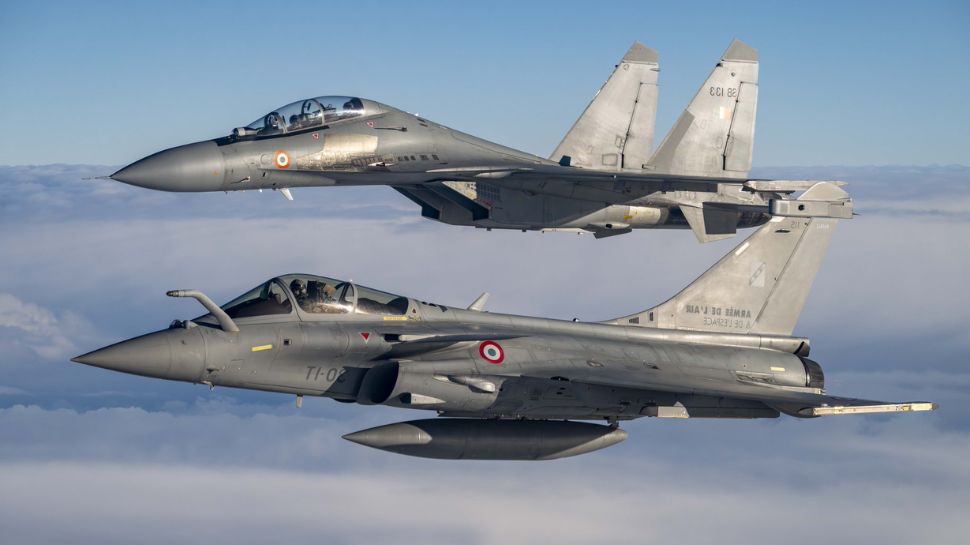
However, the Australian report starkly contradicts these claims. It reveals that during Operation Sindoor, Indian Air Force and Navy Rafale jets armed with SCALP cruise missiles, alongside Su-30MKIs equipped with BrahMos-A missiles, penetrated Pakistani airspace with ease. Despite the deployment of Chinese-made surface-to-air missile (SAM) systems at key Pakistani airbases such as Noor Khan, Sargodha, and Jacobabad, not a single Indian cruise missile was intercepted. The much-touted “impenetrable shield” sold by China turned out to be ineffective, failing to provide any real defense.
One of the most damning findings concerns the YL-8E radar system. The report details how the radar produced numerous false signals amid the complex mountainous and maritime terrain of the conflict zone. Pakistani operators ended up firing missiles at phantom targets and decoys rather than real Indian weapons. In fact, the Chinese radar technology could not distinguish between a BrahMos missile and a mere shadow. This critical flaw led to wasted missile launches and left Pakistani air defenses virtually blind to genuine threats.
The shortcomings extended beyond radar to China’s missile technology itself. Pakistan’s JF-17 Block-III fighters, armed with Chinese CM-400 air-to-surface missiles, failed to inflict any significant damage. These missiles either missed their intended targets entirely or were neutralized by Indian electronic warfare measures and Barak-8 interceptor missiles. The report highlights that the Chinese CM-400 missiles could not reach their targets effectively, rendering them practically useless in combat.
Indian forces also employed Harop loitering munitions—essentially kamikaze drones—that successfully destroyed at least two HQ-9BE missile launchers stationed on the ground. These launchers could not be relocated quickly enough to avoid destruction, exposing a critical vulnerability in the deployment and mobility capabilities of the Chinese air defense systems.
Overall, the Australian National Security College’s report paints a grim picture for China’s military technology reputation. It confirms what India had already demonstrated during the conflict: Chinese air defense systems are overhyped and underperforming. Despite billions of dollars spent by Pakistan on these systems, they failed to provide the promised protection and were rendered ineffective when tested under actual combat conditions.
This revelation is not only a blow to China’s international arms sales credibility but also a significant strategic embarrassment. For years, China has positioned itself as a leading global supplier of advanced military technology, particularly to allied nations like Pakistan. The report’s findings undermine this narrative, showing that Indian missile technology has decisively outmatched Chinese air defense capabilities on the battlefield.
For India, this is a moment of pride and validation. The success of Indian missile systems such as BrahMos-A and the effective use of Rafale jets equipped with SCALP missiles showcase India’s growing technological edge and strategic prowess. The inability of Chinese systems to counter these threats highlights the gap in capability that India has managed to create against its adversaries.
In conclusion, the 87-page classified Australian report reveals that China’s air defense systems, heavily marketed and sold to Pakistan as cutting-edge and impenetrable, failed spectacularly during the 2025 conflict with India. Pakistan’s reliance on these systems resulted in a costly defensive failure, as Indian missile