
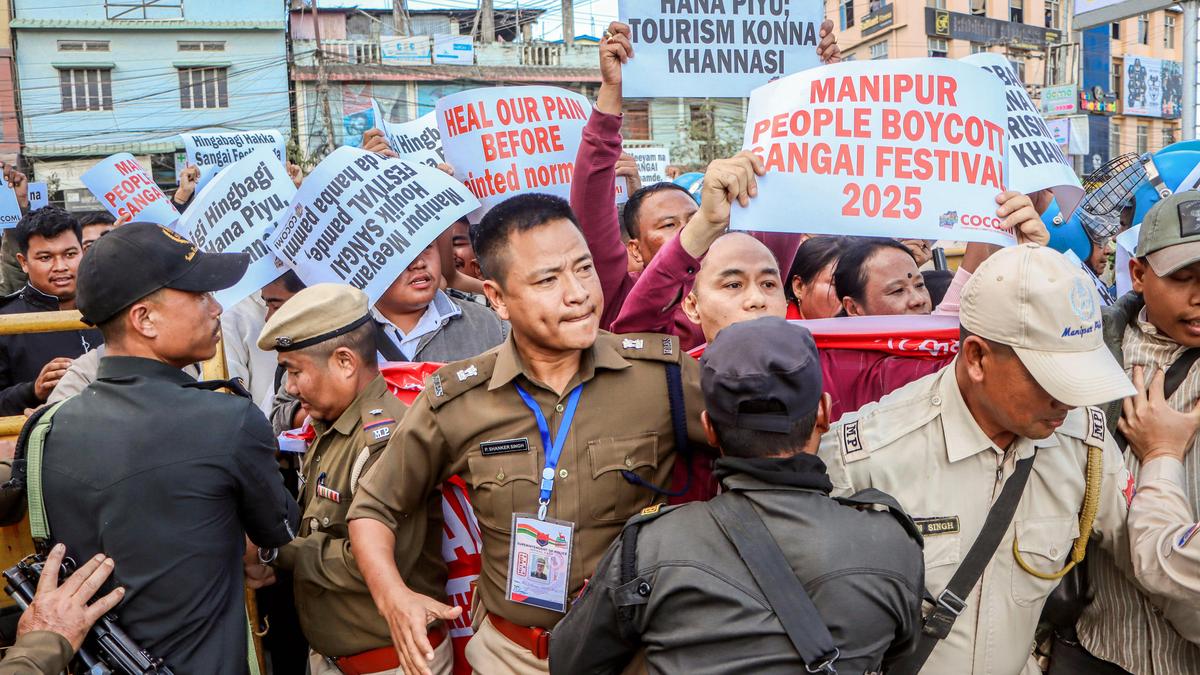
On November 20, 2025, significant unrest unfolded in Imphal, the capital of Manipur, as scores of protesters clashed with police outside the venue of the much-anticipated Sangai Festival. The festival, a major tourism event in the region, was scheduled to begin the following day. However, the demonstrations highlighted deep-seated tensions and unresolved issues stemming from a violent ethnic conflict that has left the state grappling with trauma and displacement.
The protesters, including internally displaced persons (IDPs) and members of various non-profit organizations, attempted to storm the festival grounds, expressing strong opposition to the government’s decision to proceed with the event. Their core grievance was that the state had not yet healed from the devastating ethnic violence that erupted on May 3, 2023. This conflict, primarily between the tribal Kuki-Zo community and the non-tribal Meitei population, resulted in over 260 deaths and displaced approximately 62,000 individuals. The scars of this violence remain fresh, and many displaced people have yet to return to their homes or find lasting peace.
Security forces responded to the protesters’ attempt to enter the festival venue with tear gas and batons, restoring order but also escalating tensions. The use of force has drawn criticism from several quarters, particularly from the Coordinating Committee on Manipur Integrity (COCOMI), an organization based in the Imphal valley that represents the Meitei community. COCOMI condemned what it described as “brutal and unprovoked actions” by security personnel against peaceful protesters. They reported that several individuals were injured during the confrontation, and that one of their leaders was allegedly arrested by the police.
In a strongly worded statement, COCOMI accused the Governor-led administration, which is currently functioning under President’s Rule, of making a “unilateral decision” to move ahead with the Sangai Festival despite widespread opposition. They argued that the festival was “anti-people” and lacked the consent, cooperation, or confidence of Manipur’s residents. According to the organization, holding an extravagant festival while thousands remain displaced and the state has yet to return to normalcy is not only insensitive but also disregards the wishes of the people who continue to suffer from the aftermath of ethnic violence.
COCOMI’s demands are clear and urgent. They call for the restoration of fundamental rights and freedom of movement for all citizens, the safe return of internally displaced persons to their homes, and the re-establishment of peace and normalcy throughout Manipur. Furthermore, they insist the government must halt all forms of coercion and suppression directed at civilian voices before considering any celebration or festival. The organization also urged all residents to participate in a mass demonstration planned for November 21, 2025, to protest against the Sangai Festival.
The situation in Manipur remains fragile. The ethnic conflict that began in 2023 has left deep divisions and ongoing challenges related to security, displacement, and reconciliation. The government’s decision to proceed with the Sangai Festival, a symbol of cultural pride and tourism promotion, has become controversial in this context. While the festival aims to showcase Manipur’s rich cultural heritage and boost economic activity, many argue that it is premature and inappropriate given the unresolved humanitarian and political issues.
The protests and the government’s response underscore the complex dynamics at play. On one hand, there is a desire to move forward and restore a sense of normal life through cultural events like the Sangai Festival. On the other hand, the voices of those still affected by the conflict—especially displaced communities—demand recognition, justice, and tangible steps toward peace before celebrations resume.
This episode in Manipur serves as a poignant reminder of the challenges faced by regions recovering from ethnic violence. The balance between healing, justice, and development is delicate and requires careful handling by all stakeholders. The government’s approach, the actions of security forces, and the responses of civil society organizations like COCOMI will be closely watched in the coming days as Manipur navigates this difficult transition.
In conclusion, the protests outside the Sangai Festival venue highlight ongoing unrest in Manipur, rooted in ethnic conflict and displacement issues that remain unresolved. The call by protesters and organizations such as COCOMI for the government to prioritize peace, resettlement, and fundamental rights before organizing major events reflects the complex realities on the ground. As Manipur faces this crossroads, how the authorities address these concerns will significantly influence the state’s path toward