
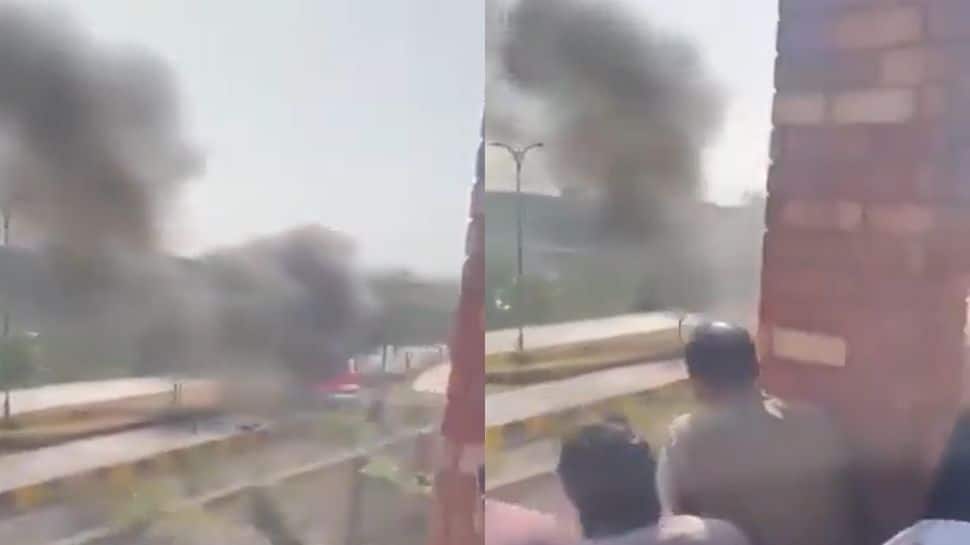
On a tense day marked by violence and security challenges in South Asia, a powerful explosion rocked the judicial complex in Islamabad, Pakistan’s capital, resulting in the deaths of five people and injuring over twenty others. The blast, which originated from a parked car near a court in Islamabad’s G-11 sector, sent shockwaves through the city and heightened concerns nationwide about the rising threat of militant attacks and urban violence.
The explosion occurred in the vicinity of the Islamabad judicial complex, a location usually bustling with visitors attending court hearings and legal proceedings. Eyewitnesses described scenes of chaos and panic as people scrambled to safety amid the confusion. Emergency services rushed to the site, and the area was swiftly cordoned off by authorities to prevent further harm and to facilitate investigations. While initial reports confirmed at least five fatalities and more than twenty injuries, other sources suggested that at least eight people had sustained injuries, highlighting the severity of the blast.
The exact cause of the explosion has not yet been definitively established. Early media speculation pointed to a gas cylinder within the vehicle as a possible source of the blast, though Pakistani officials have refrained from issuing any formal statements confirming this theory. As investigations continue, security agencies are meticulously combing through evidence to determine whether the incident was accidental or a deliberate act of terrorism.
This deadly incident in Islamabad comes amidst heightened regional tensions and a string of recent violent events. Notably, it occurred just one day after a similar car explosion near the Red Fort in Delhi, India, claimed the lives of 13 people and injured many others. The Delhi blast, which involved a parked vehicle detonating in a historically and politically sensitive area, has prompted Indian authorities to launch a rigorous investigation under the stringent Unlawful Activities (Prevention) Act (UAPA) and the Explosives Act. These laws are designed to address terrorism-related offenses with harsh penalties, reflecting the seriousness with which Indian officials are treating the case.
The proximity in timing and similarity in method between the two blasts in Islamabad and Delhi have raised concerns among security experts and governments in both countries about possible coordinated militant activities or a surge in extremist violence targeting urban centers. However, as investigations remain underway, definitive links between the two incidents have yet to be established.
Adding another layer of complexity to the security landscape in Pakistan is a recent militant attack thwarted by Pakistani forces in the city of Wana, located in the Khyber Pakhtunkhwa province near the Afghan border. Wana has long been recognized as a hotspot for insurgent groups such as the Pakistani Taliban and al-Qaida, making it a focal point for counterterrorism operations.
According to reports, Pakistani security forces successfully repelled a brazen overnight assault on an army-run college in Wana, where militants attempted to take cadets hostage. The attack involved a suicide car bomber and five other Pakistani Taliban fighters. The clash resulted in injuries to at least six individuals, underscoring the deadly nature of the confrontation. Pakistani troops managed to kill two militants during the operation, while the remaining three who breached the compound were quickly surrounded and contained within one of the college’s buildings.
This foiled attack highlights the ongoing challenges faced by Pakistan’s security apparatus in combating entrenched militant groups within its borders. The Pakistani Taliban, in particular, continues to pose a significant threat, utilizing guerrilla tactics and terror attacks in attempts to destabilize the region and challenge state authority. The fact that such an attack took place shortly before the Islamabad judicial complex blast suggests a period of intensified militant activity and a potential escalation in violence.
The Islamabad explosion has reverberated beyond Pakistan’s borders, drawing international attention to the fragile security environment in the region. It has also prompted renewed calls for vigilance and cooperation between neighboring countries to address the shared threat of terrorism. Given the recent incidents in both Pakistan and India, there is a clear imperative for enhanced intelligence sharing and coordinated counterterrorism measures to prevent further loss of life and maintain stability.
In summary, the car blast near Islamabad’s judicial complex marks a grim chapter in the ongoing struggle against militant violence in South Asia. The attack resulted in multiple deaths and numerous injuries, throwing a busy court area into disarray and sparking fears of further unrest. With the cause of the explosion still under investigation, authorities are working to piece together the circumstances that led to this tragic event.
Simultaneously, the thwarted hostage attempt in Wana underscores the persistent threat posed by extremist groups within Pakistan’s tribal areas, reminding observers that the