
**Moscow Uncovers Espionage Attempt by Pakistan’s ISI to Steal Russian Military Technology**
In a significant development shaking international intelligence circles, Russian authorities have reportedly uncovered a covert espionage operation linked to Pakistan’s Inter-Services Intelligence (ISI) agency. The operation allegedly aimed at stealing sensitive Russian military technology, specifically related to advanced air defence systems and military helicopters, marking what could be the first known instance of the ISI conducting such an operation within Russian territory.
**Arrest in St. Petersburg: A Major Counter-Espionage Breakthrough**
According to sources involved in the investigation, Russian security agencies conducted a major counter-espionage operation in St. Petersburg, leading to the arrest of a Russian national caught red-handed with classified documents. These confidential materials contained highly sensitive information about Russia’s military helicopter programs, notably the Mi8AMTShV and MI8 AMTShV (VA) models, which are sophisticated machines designed for combat and strategic mobility.
The accused individual was allegedly attempting to smuggle out detailed blueprints and technical data concerning these helicopters, as well as critical components related to Russian air defence systems. Officials emphasize the gravity of the breach, noting that the stolen information could have compromised key technologies that underpin Russia’s defence aviation capabilities, including systems that protect helicopters in hostile combat environments.
**Contextual Timing: Aftermath of Operation Sindoor**
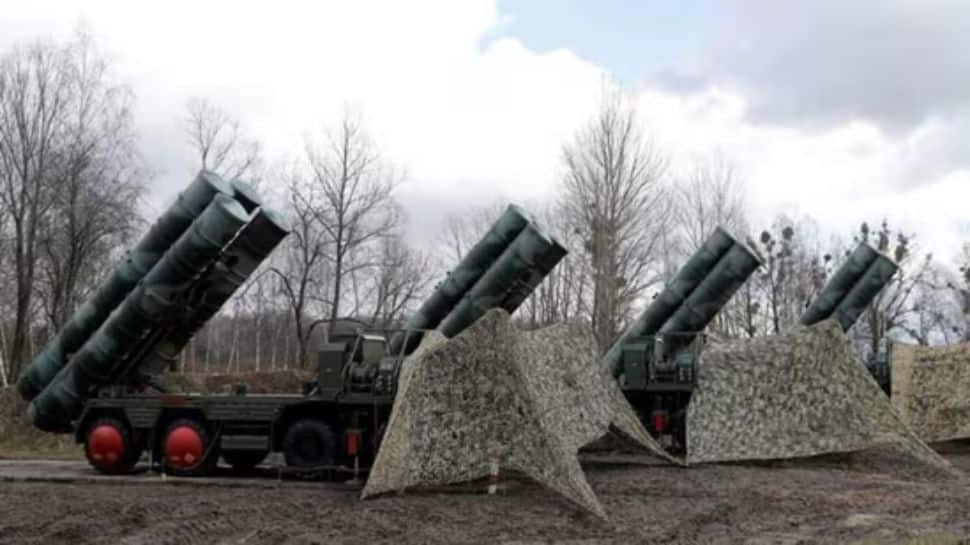
Investigators highlight the timing of this espionage attempt as particularly noteworthy. The operation came to light only months after India successfully conducted Operation Sindoor, a military offensive that dismantled significant Jaish-e-Mohammad terrorist training facilities in Pakistan. This offensive relied heavily on the Indian Air Force’s precision and air power, supported by the Russian-made S-400 air defence missile systems.
The ISI’s alleged eagerness to acquire and replicate technology linked to Russia’s advanced air defence capabilities suggests a strategic motive aimed at neutralizing India’s growing aerial superiority. India currently operates several S-400 batteries and has plans to procure five additional units, bolstering its air defence posture significantly. Experts argue that these systems have transformed India’s strategic military landscape by enabling it to counter multiple airborne threats across different domains effectively.
**Significance of Targeted Technologies: Mi8AMTShV Helicopters and S-400 Air Defence Systems**
The Mi8AMTShV helicopter, one of the key technologies reportedly targeted by the ISI, is an upgraded military transport and assault variant of the Mi8AMTSh “Terminator.” It is renowned for its capacity to carry heavy payloads and execute complex operations on the battlefield. The MI8 AMTShV (VA) variant is specifically designed for Arctic missions, equipped with reinforced insulation, specialized heating systems, and extended-range fuel tanks to operate efficiently in extreme climates.
The focus on stealing details about such advanced helicopters, alongside Russia’s S-400 air defence missile systems, underscores a calculated attempt by Pakistan’s spy agency to infiltrate Russia’s defence industry. Access to this technology could potentially alter the balance of power in the region, enhancing Pakistan’s military capabilities and enabling it to challenge India’s air defence advantages.
**Diplomatic Fallout: Moscow’s Growing Suspicion Towards Islamabad**
The espionage revelation has already contributed to rising tensions between Russia and Pakistan. Recently, the Russian Embassy in Islamabad publicly criticized an article published by the English-language daily The Frontier Post, accusing it of propagating a narrative inimical to Russia’s interests. This diplomatic rebuke signals Moscow’s increasing wariness of Pakistan’s activities, both in overt media channels and covert operations.
As Russian authorities continue to interrogate the arrested suspect and probe deeper into the espionage network, diplomatic observers warn that this incident may significantly strain Moscow’s perception of Islamabad’s intelligence services. The episode could lead to unprecedented scrutiny of Pakistan’s covert ambitions and intelligence operations, potentially impacting bilateral relations.
**Broader Implications for Regional Security**
This espionage attempt is emblematic of the complex and often covert contest for military and technological supremacy in South Asia. With India enhancing its air defence infrastructure through Russian technology, and Pakistan seeking to acquire or replicate these capabilities clandestinely, the region faces a heightened risk of escalation driven by intelligence and counter-intelligence dynamics.
Experts note that the acquisition of technologies like the S-400 air defence system and advanced military helicopters not only strengthens a nation’s defensive posture but also provides strategic leverage in broader geopolitical contests. Consequently, the intelligence breach uncovered in Russia is not merely about stolen data but