
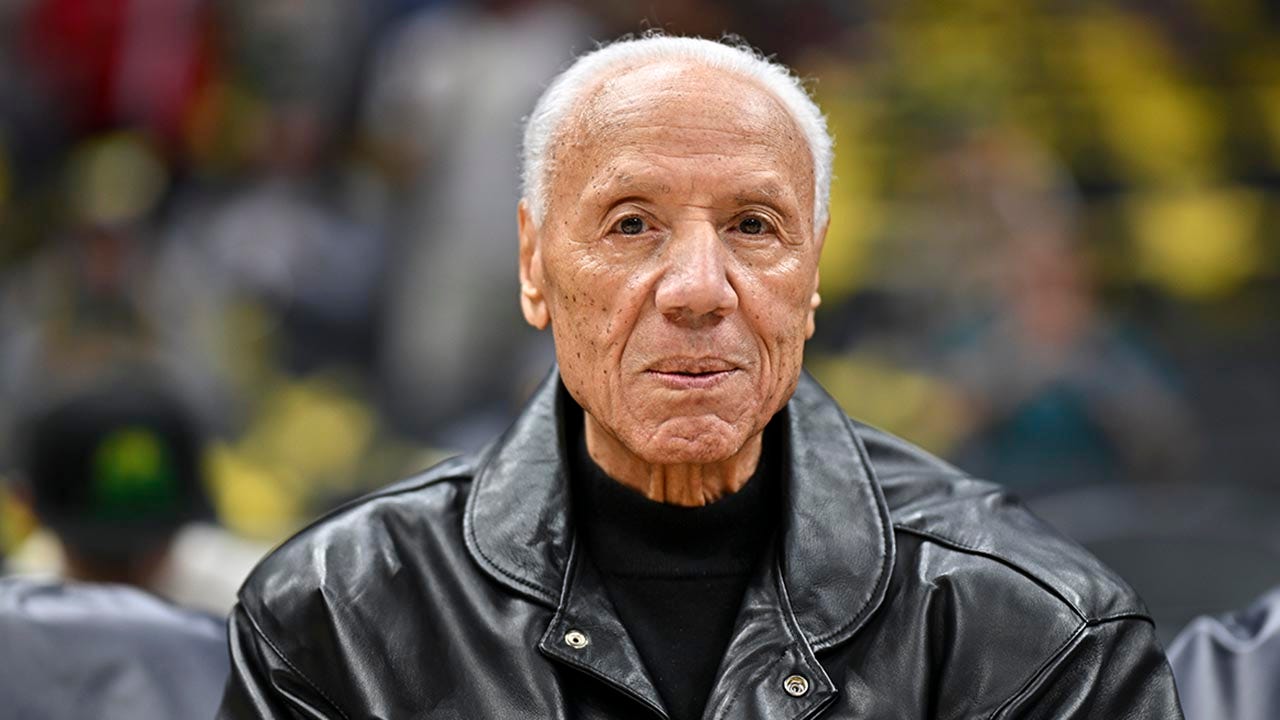
Lenny Wilkens, a legendary figure in the world of basketball and a Naismith Basketball Hall of Fame inductee both as a player and a coach, passed away on Sunday at the age of 88. His remarkable career spanned over several decades, during which he left an indelible mark on the NBA as a player, coach, and ambassador of the game.
Wilkens’ basketball journey was distinguished by his rare achievement of being enshrined in the Hall of Fame in two roles—player and coach—a feat accomplished by only a select few in the sport’s history. Alongside Wilkens, other basketball icons such as John Wooden, Bill Sharman, Tom Heinsohn, and Bill Russell share this prestigious honor. NBA Commissioner Adam Silver commemorated Wilkens by highlighting his exemplary contributions, describing him as one of the NBA’s most respected figures and noting that Wilkens was honored as one of the league’s 75 greatest players and 15 greatest coaches in 2021, underscoring his dual legacy.
Born in Brooklyn, Wilkens’ path to basketball stardom was unconventional. He did not play basketball seriously until his senior year of high school, yet his talent quickly blossomed. He went on to shine at Providence College, where he was a two-time All-American and played a pivotal role in leading the Friars to their first National Invitation Tournament (NIT) appearance in 1959 and to the finals in 1960. His college achievements were so impactful that Providence retired his jersey in 1996, making him the first player in school history to receive that honor.
Wilkens entered the NBA when he was selected in the first round of the 1960 NBA Draft by the St. Louis Hawks. After a brief interruption for military service early in his career, he returned to the Hawks and quickly became a cornerstone of the team. Over eight seasons and 555 games with St. Louis, he was a consistent performer, averaging 15.5 points, 5.5 assists, and 4.9 rebounds per game. He earned five NBA All-Star selections during that period and helped the Hawks reach the playoffs six consecutive seasons.
In 1968, Wilkens was traded to the expansion Seattle SuperSonics, where his career took on a new dimension. He not only elevated his performance—averaging 22.4 points, 8.2 assists, and 6.2 rebounds in his first season with Seattle—but he also took on a pioneering role as a player-coach starting in the 1969-70 season. This dual responsibility was demanding, but Wilkens excelled, leading the SuperSonics to their first winning season in his third year as player-coach. His leadership on and off the court was instrumental in shaping the young franchise’s identity. During his time in Seattle, he continued to set high standards, leading the league in assists with 9.1 per game in his second season there.
Wilkens’ playing career extended beyond Seattle, including stints with the Cleveland Cavaliers and the Portland Trail Blazers, where he also served as a player-coach before retiring as a player in 1975. Across 1,077 NBA games, Wilkens amassed 7,211 assists, ranking him 17th on the league’s all-time assists list—a testament to his skill, vision, and unselfish playmaking ability.
Transitioning fully into coaching after his playing days, Wilkens’ impact on the sidelines was equally profound. He returned to the Seattle SuperSonics as head coach in the 1977-78 season and led the team to its first and only NBA championship by defeating the Washington Bullets in the NBA Finals. This victory marked a historic achievement for the franchise and solidified Wilkens’ reputation as an elite coach.
Over the course of his coaching career, Wilkens helmed several NBA teams, including the Cleveland Cavaliers, Atlanta Hawks, Toronto Raptors, and New York Knicks. His coaching record is one of the most prolific in NBA history, with 1,332 wins against 1,155 losses over 2,487 regular-season games. Though his playoff record stood at 80-98, the sheer volume of games coached and his ability to guide multiple teams over decades underscore his durability and expertise.
Beyond statistics and championships, Wilkens was revered for his character and contributions to basketball culture. Commissioner Silver described him as an ambassador of the game, reflecting Wilkens