
Two years after devastating ethnic clashes tore through the north-eastern Indian state of Manipur, thousands of displaced people face an uncertain and precarious future as the government moves to close all temporary relief camps by December 2025. The violence that erupted in May 2023 between the majority Meitei community and the indigenous Kuki population was the worst the region had seen in decades, resulting in at least 260 deaths and displacing around 60,000 people. Despite repeated government promises of rehabilitation and resettlement, many displaced individuals remain effectively homeless, living in temporary shelters without stable livelihoods, caught in a limbo that threatens to become permanent.
The roots of the 2023 conflict lie in the long-standing tensions between the Meiteis, who are predominantly Hindu and inhabit the Imphal Valley, and the Kukis, a largely Christian indigenous community residing in the surrounding hill districts. The immediate trigger was a protest by the Kuki community against the Meiteis’ demand for official tribal status, which would grant them access to government benefits and job quotas similar to those enjoyed by other recognized tribes, including the Kukis themselves. This demand inflamed ethnic sensitivities and ultimately sparked violent clashes that devastated communities and shattered social cohesion in the state.
In the aftermath, tens of thousands fled their homes and sought refuge in makeshift relief camps scattered across Manipur’s hill districts. Over the past two years, the state government has intermittently pledged to rehabilitate the displaced and restore normalcy, but progress has been slow and piecemeal. Many of those living in camps report a lack of adequate facilities and limited access to healthcare, education, and employment opportunities. The precariousness of their situation is compounded by the government’s recent announcement that all relief camps will be shut down by December 2025, prompting fears about where displaced families will be resettled and whether they will ever be able to return to their original homes.
In July 2025, the then Chief Secretary of Manipur, Prashant Singh, announced plans to close all relief camps by the end of the year. He stated that residents who could not return home would be relocated to pre-fabricated housing units, but crucial details about the locations of these units were not disclosed. This lack of clarity has deepened the anxieties of displaced people, who worry about being permanently uprooted from their ancestral lands and communities. The uncertainty was further heightened in September when Prime Minister Narendra Modi, during his first visit to Manipur since the violence, announced a plan to build 7,000 new homes to resettle displaced families in “appropriate locations.” However, no specific information was provided about where these homes would be constructed or how the resettlement process would be managed.
On the ground, Manipur remains sharply divided along ethnic lines. The Meiteis continue to dominate the Imphal Valley, while the Kukis predominantly occupy the surrounding hills. Security forces maintain a presence in buffer zones that separate the two communities, with a mandate to prevent intermingling and potential flare-ups of violence. A security official told BBC Hindi that their role was explicitly to ensure that the Meiteis and Kukis remain in their respective territories, underscoring the deep mistrust and segregation that now define social relations in the state.
Experts and community leaders have underscored the importance of resettling displaced people in their original neighborhoods to prevent the conflict from permanently altering Manipur’s social and demographic landscape. RK Nimai Singh, a former secretary to the Manipur governor, emphasized that allowing displaced populations to return to their homes is vital for preserving the secular and democratic fabric of India. Many displaced Kukis, however, fear that leaving the camps and moving into temporary housing could result in losing their homes forever, as demographic shifts during the conflict have left some villages surrounded by rival ethnic groups.
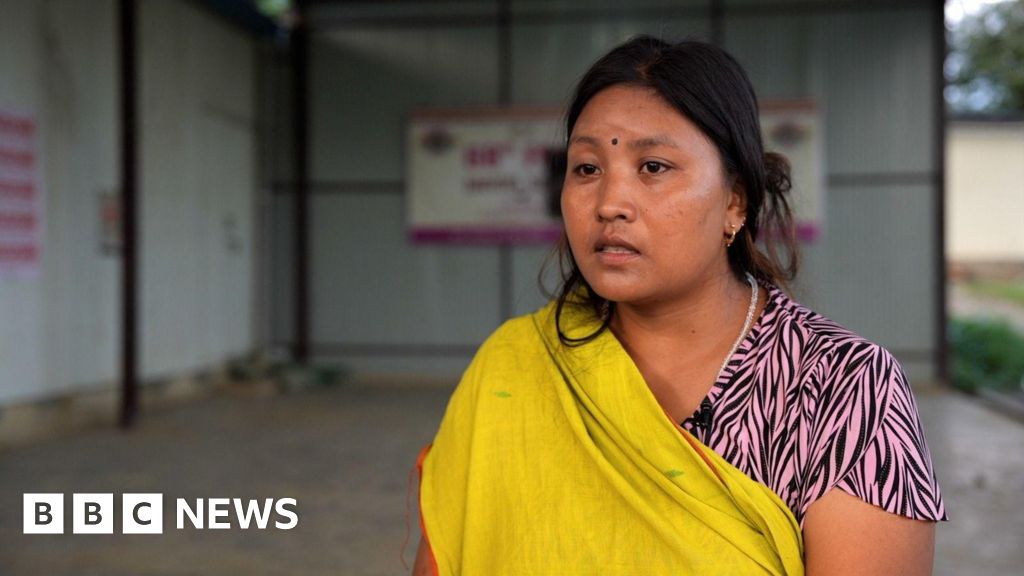
This fear is vividly expressed by Hatnu Haokip, a 22-year-old woman currently living in a relief camp in the hilly Churachandpur region. For her, home is only the Imphal Valley, but returning there seems impossible because her village is now encircled by Meitei settlements. Ms. Haokip and several other Kukis have voiced support for greater autonomy, including the establishment of a federally administered territory for their community, as a way to ensure safety and preserve their identity. Such demands highlight the deep ethnic divisions and the challenges of fostering reconciliation in the post-conflict period.
On the other