
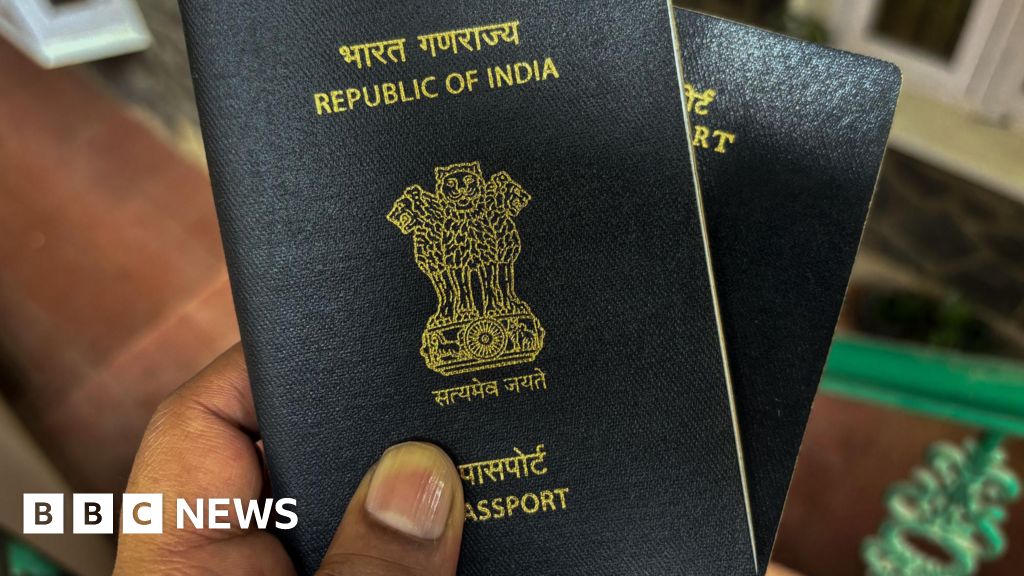
Earlier this year, a video posted by an Indian travel influencer sparked widespread discussion on social media about the challenges faced by Indian passport holders when traveling abroad. The influencer expressed frustration over India’s comparatively weak passport, particularly highlighting how neighboring countries like Bhutan and Sri Lanka were far more welcoming to Indian tourists, while obtaining visas for many Western and European countries remained a complicated and often discouraging process. This dissatisfaction resonated with findings from the latest Henley Passport Index, a globally recognized ranking system that assesses passports based on the number of countries their holders can visit visa-free or with visa-on-arrival access.
According to the 2025 Henley Passport Index, India’s passport ranked 85th out of 199 countries, marking a drop of five places from the previous year. This ranking is notably low for a country with India’s growing economic stature — it is currently the world’s fifth-largest economy. The Indian government has yet to respond officially to the report, and inquiries made by the BBC to India’s Ministry of External Affairs remain unanswered.
What makes India’s ranking particularly striking is the fact that several countries with far smaller economies have secured better positions on the index. Rwanda, Ghana, and Azerbaijan, for example, are placed considerably higher at 78th, 74th, and 72nd, respectively. This comparison underscores the disconnect between India’s economic power and the global mobility afforded to its citizens. Over the past decade, India’s passport ranking has largely stagnated in the low 80s and even slipped to the 90th spot in 2021, a period during which several Asian neighbors have surged ahead in the rankings.
Countries like Japan, South Korea, and Singapore consistently top the Henley Passport Index. In the 2025 ranking, Singapore led the list with visa-free or visa-on-arrival access to 193 countries, followed closely by South Korea with 190, and Japan with 189. In stark contrast, Indian passport holders currently enjoy visa-free access to just 57 countries—a figure that is almost identical to Mauritania, an African nation sharing the 85th rank with India. This disparity highlights how passport strength serves as an indicator of a nation’s global influence and soft power.
A strong passport not only facilitates easier international travel but also enhances business prospects, educational opportunities, and cultural exchanges for its citizens. Conversely, a weaker passport necessitates more paperwork, higher visa fees, longer wait times, and generally restricted travel freedom. Despite this, the number of countries offering visa-free access to Indians has actually increased over the past decade, even as India’s overall ranking has fluctuated.
In 2014, the year Prime Minister Narendra Modi’s Bharatiya Janata Party (BJP) came to power, the Indian passport ranked 76th, with visa-free access to 52 countries. The ranking dipped to 85th in 2015, improved slightly to 80th in 2023 and 2024, before falling back to 85th in 2025. Meanwhile, visa-free travel destinations for Indians increased from 52 in 2015 to 60 in 2023 and 62 in 2024. Interestingly, the 2025 number fell slightly to 57, yet the rank remained the same as in 2015. This paradox raises questions about the factors influencing passport rankings beyond just the number of visa-free destinations.
Experts explain that the global landscape of travel mobility has become increasingly competitive. Countries worldwide are actively forging travel partnerships and bilateral agreements to expand visa-free access for their citizens, thereby enhancing their passports’ strength. The Henley & Partners 2025 report reveals that the global average number of visa-free destinations accessible to travelers has nearly doubled over the past two decades—from 58 in 2006 to 109 in 2025. This rapid expansion has raised the bar for all countries, making it more challenging for nations like India to climb the rankings despite incremental gains.
For instance, China has significantly improved its passport strength over the past decade by increasing the number of visa-free destinations from 50 to 82. This progress has elevated China’s ranking from 94th to 60th. India, on the other hand, has remained relatively stagnant. In July 2024, India was ranked 77th, enjoying visa-free access to 59 countries. However, by October 2024, the ranking slipped to 85th after the country lost visa-free access to two destinations.
According to