
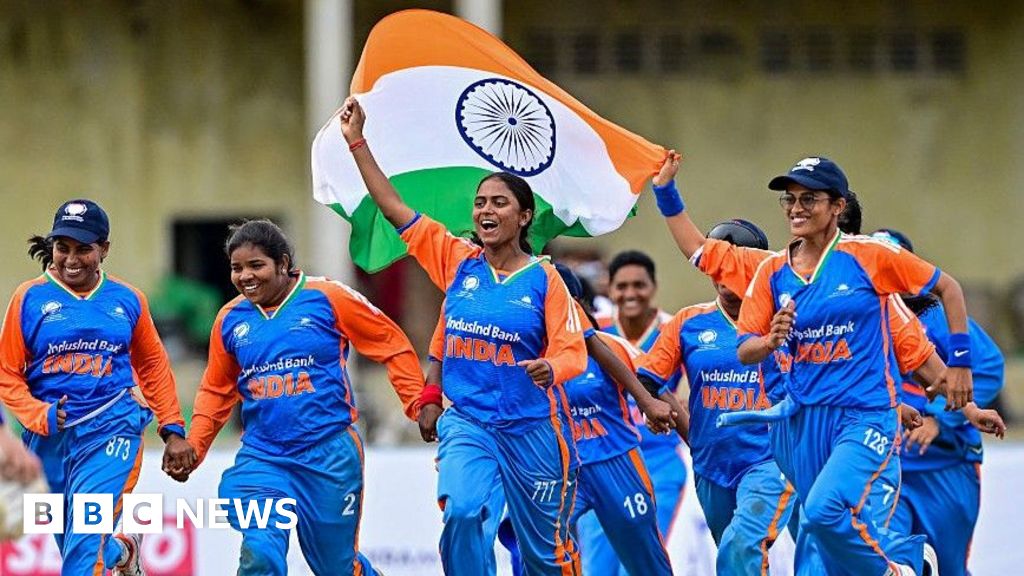
The inaugural Blind Women’s T20 Cricket World Cup, currently underway, is shining a much-needed spotlight on the visually impaired women athletes of India who have surmounted extraordinary obstacles to compete on the international stage. This landmark tournament celebrates not only their sporting talents but also their inspiring journeys from diverse and often challenging backgrounds.
The tournament, a six-team T20 cricket event featuring India, Nepal, Pakistan, Sri Lanka, Australia, and the USA, began on November 11 in Delhi. After initial matches in Bengaluru, the knockout stages have now shifted to Colombo, Sri Lanka. This historic competition is the first-ever women’s Blind Cricket World Cup, marking a significant milestone in the development of blind cricket globally.
India’s team, comprising 16 players representing nine states—including Karnataka, Maharashtra, Rajasthan, Madhya Pradesh, Andhra Pradesh, Odisha, Delhi, Assam, and Bihar—reflects the nation’s geographic and cultural diversity. Many of these women come from rural villages, farming families, and small-town hostels, and have only taken up the sport within the last few years. Their introduction to blind cricket often came through schoolteachers, disability organizations, or community sports camps.
“Most of the players come from rural backgrounds,” explains Shika Shetty, the team manager. “There were many barriers—language, cultural differences, and even family and teacher opposition to girls participating in sport. Understanding the rules of blind cricket itself took time. But now, these women are competing with immense pride and determination.”
Blind cricket is specially adapted for visually impaired players. The game uses a plastic ball embedded with metal bearings that produce a jingling sound to help players track it. Players are classified by their level of sight into three categories: B1 (completely blind), B2, and B3 (partially sighted), and teams must field a mix of all three classifications. The ball is bowled underarm along the ground to ensure safety, and B1 batters use runners to assist them. Notably, each run scored by a B1 batter counts as two runs, accounting for the added challenge of complete blindness.
The World Cup format involves a single round-robin stage where all teams face each other once. India has dominated the group stage, winning all five matches and securing the first semi-final spot. This strong performance underscores the rapid progress Indian women’s blind cricket has made in a short time.
Leading the team as captain is Deepika TC from Karnataka, a woman whose own story echoes the resilience of her teammates. Deepika lost her sight as a baby due to an accident. Raised in a farming family, she was initially unaware that sport would play a pivotal role in her life. It was only through specialized schools for the visually impaired that she encountered cricket, encouraged by teachers who saw her potential despite her initial hesitation. Over time, cricket gave Deepika direction, confidence, and a sense of purpose.
Captaining India in this World Cup holds special significance for Deepika. “This is the biggest moment of my and my team’s life,” she says with pride. “Earlier this month, the sighted Indian women’s cricket team won the World Cup in Navi Mumbai, and we want to make it a double this month.” She also highlights the encouragement she and her team have received from prominent Indian cricketers, including Jemimah Rodrigues, a member of the sighted women’s World Cup-winning team, and Shubman Gill, captain of the men’s Test team. Their support has helped boost morale and visibility for the sport.
Deepika’s vice-captain, Ganga Kadam from Maharashtra, also embodies the power of perseverance. Coming from a family of nine siblings, she was enrolled in a school for the blind by her father, a farmer, with hopes of securing a stable future for her. Ganga initially played cricket casually but was urged by a mentor to take the sport seriously. She recalls how challenging it was to learn to rely on sound, timing, and spatial orientation rather than sight. At 26, Ganga now serves as a role model in her village, inspiring visually impaired girls to pursue sports despite societal and familial pressures.
Another rising star is Anekha Devi, a 20-year-old top-order batter from Jammu and Kashmir. Born partially blind, Anekha’s uncle—also visually impaired—encouraged her to attend a blind cricket camp in Delhi after finishing school. She vividly remembers the early days as overwhelming due to unfamiliar voices