
Armenia is poised to finalize a substantial arms deal with India worth between $3.5 and $4 billion, marking a significant development in the military and strategic landscape of the South Caucasus region. The agreement comes amid ongoing tensions between Armenia and its neighbor Azerbaijan, underscoring Armenia’s urgent need to modernize and strengthen its defense capabilities. For India, this deal not only boosts its defense export ambitions but also signals its expanding geopolitical influence beyond South Asia, particularly in a strategically sensitive corridor connecting Europe and Asia.
The proposed arms package is expected to include advanced Indian weaponry such as the Akash-NG air defense missile system, the supersonic BrahMos cruise missile, and various artillery and missile systems. The Akash-NG (New Generation) missile system has attracted considerable attention due to its improved interception capabilities and extended range compared to earlier versions. Its impressive performance during India’s military Operation Sindoor has earned it recognition as a highly effective component in layered air defense networks. Armenia aims to incorporate this system into its own multi-tiered air defense infrastructure, enhancing its ability to counter aerial threats in a volatile regional environment.
In addition to the Akash-NG, Armenia has shown strong interest in the BrahMos cruise missile, which is known for its supersonic speed and precision strike capabilities. The BrahMos missile has been a game-changer for India’s military, notably during its offensive operations against Pakistan, where it reportedly neutralized 11 Pakistani airbases. Armenia’s acquisition of such a weapon would represent a significant upgrade in its offensive and deterrence capabilities, potentially shifting the military balance in the South Caucasus.
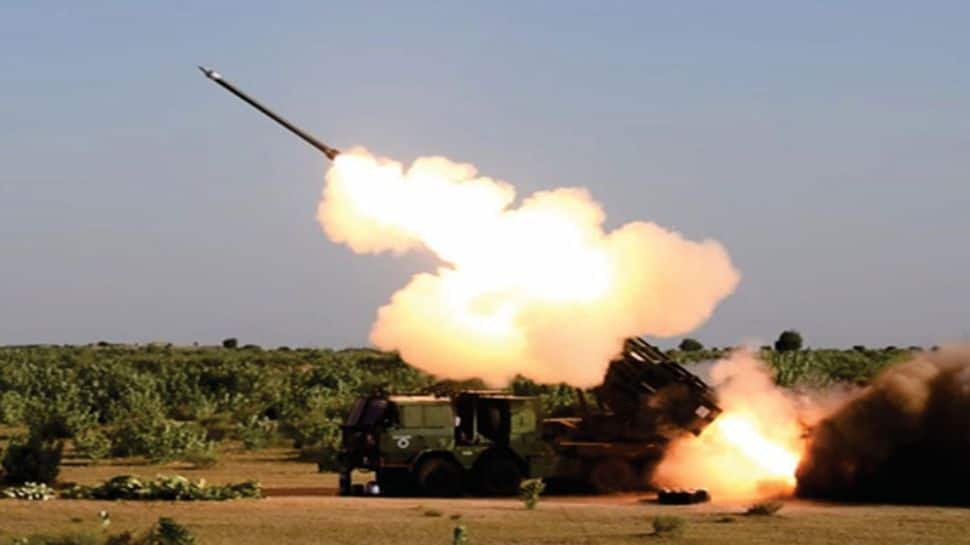
Since 2022, India has been steadily supplying advanced weapons to Armenia, signaling a deepening defense partnership. According to the Manohar Parrikar Institute for Defence Studies and Analysis (MP-IDSA), these supplies have included a range of systems such as the Pinaka multi-barrel rocket launcher, Konkurs anti-tank guided missiles, 155mm howitzer artillery guns, the Advanced Towed Artillery Gun System (ATAGS), and both Akash and Akash-NG air defense batteries. Additionally, India has provided anti-drone systems and small arms ammunition, contributing to a comprehensive modernization of Armenia’s military arsenal.
An important aspect of the deal under negotiation is the co-production of BrahMos missile components within Armenia itself. This prospective arrangement would not only facilitate technology transfer but also empower Armenia to locally manufacture critical elements of the missile system. Such co-production agreements enhance strategic autonomy for Armenia while further cementing long-term defense cooperation with India. This move aligns with India’s broader ‘Make in India’ initiative, which aims to boost indigenous defense manufacturing and encourage international partnerships for technology sharing.
Armenia’s emergence as a major buyer of Indian defense equipment is a relatively recent phenomenon. The partnership gained momentum in the early 2020s, beginning with a $40 million deal for the Swathi weapon-locating radar system. This radar proved highly effective during Armenia’s military operations against Azerbaijan, outperforming comparable systems like those produced in Poland. The success of the Swathi radar established trust in Indian defense technology and laid the foundation for expanded cooperation.
The growing defense ties between India and Armenia are also reflected in diplomatic and military exchanges. India appointed its first defense attaché to Armenia in 2023, a move reciprocated by Armenia stationing its own defense attaché in New Delhi in April 2024. Notably, this was India’s first defense attaché posting in the Caucasus region, highlighting the strategic importance New Delhi places on this partnership and the broader South Caucasus area. These diplomatic initiatives facilitate better coordination, joint training, and smoother execution of defense contracts.
Historically, Armenia’s military has relied heavily on older Soviet-era weaponry, which has become increasingly outdated in the face of modern warfare challenges. The infusion of Indian technology represents a significant step toward modernization, providing Armenia with cutting-edge systems that can enhance its defensive and offensive capabilities. Defense analysts view this collaboration as ushering in a new era of regional security cooperation, where Armenia’s strategic requirements align with India’s technological offerings.
From a geopolitical perspective, this burgeoning India-Armenia defense relationship signals India’s expanding footprint in a region traditionally influenced by Russia, Turkey, and Iran. The South Caucasus is a critical crossroads for energy routes, trade corridors, and military alliances. By strengthening ties with Armenia, India is positioning itself as a key player in regional security dynamics, thereby increasing