
In today’s interconnected world, the devices we use daily—whether smartphones, laptops, or electric vehicles—rely on a complex supply chain rooted in critical minerals and metals. These raw materials, such as lithium, rare earth elements, cobalt, and tungsten, are essential not only for personal technology but also for broader applications like artificial intelligence data centers and advanced weaponry. Yet, few consumers consider the geopolitical significance behind sourcing these minerals. At the heart of this issue lies an escalating strategic competition between the world’s two largest economies, the United States and China, with Africa playing a pivotal role in the unfolding story.
Africa is endowed with abundant reserves of these critical minerals and metals, making it a focal point in the global supply chain. For decades, China has dominated the market for these resources. Its dominance stems from both significant domestic reserves and extensive investments in foreign mining operations, particularly across African countries. This strategic positioning has allowed Beijing to control not only the mining and extraction of these minerals but also their processing, which is a crucial step before the materials can be integrated into high-tech manufacturing. China’s control over processing facilities worldwide has given it leverage in global markets, including the ability to threaten export restrictions—a move that has unsettled the United States and heightened the urgency to diversify sources.
Recognizing the strategic necessity of securing access to critical minerals, the United States has ramped up its engagement with Africa. Recent data from the China Africa Research Initiative at Johns Hopkins University reveal a significant shift: in 2023, the US quietly became the largest foreign direct investor in Africa, investing $7.8 billion compared to China’s $4 billion. This marked the first time since 2012 that America regained the lead in foreign direct investment on the continent. At the heart of this surge is the US International Development Finance Corporation (DFC), a government agency established in 2019 during President Trump’s administration. The DFC openly acknowledges its mission to counter China’s influence in strategically vital regions, including Africa.
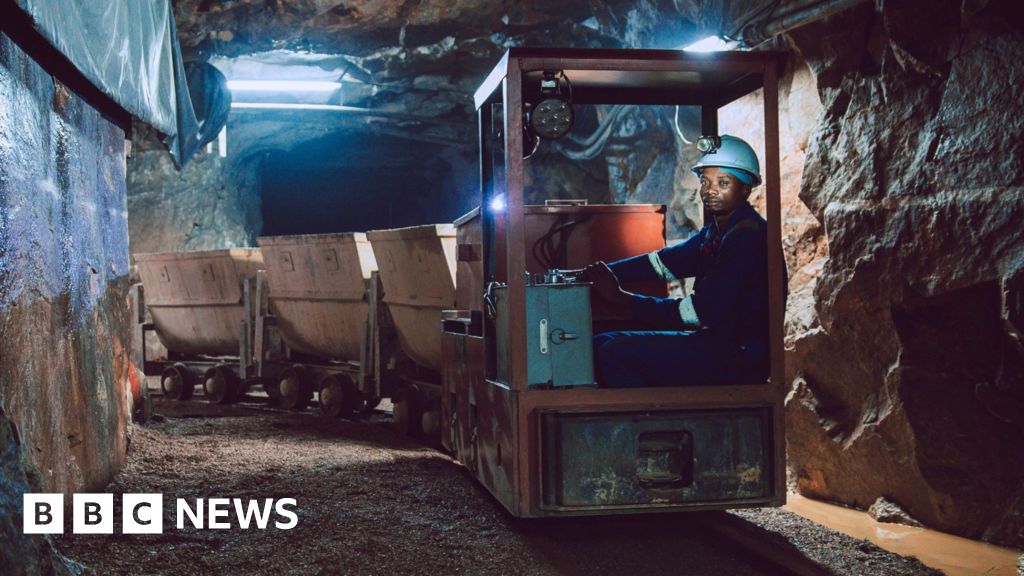
The impact of American investment can be seen in the experiences of African firms benefitting from this new influx of capital. For example, Trinity Metals, a Rwandan mining company, received a $3.9 million grant from the DFC last year to develop three mines producing tin, tantalum, and tungsten. Shawn McCormick, chairman of Trinity Metals, notes that US government support has been instrumental in bringing the mineral supply chain directly to the United States. The company now ships tungsten and tin to processing plants in Pennsylvania, cementing commercial ties between African mining operations and American industry. Importantly, McCormick insists that these supply decisions are driven by commercial considerations rather than government directives.
Trinity Metals also highlights a critical point in the debate over mining practices in Africa. While some mining operations on the continent have been criticized for poor labor conditions and environmental harm, Trinity emphasizes its commitment to ethical standards. The company operates free from child labor, respects local communities, pays taxes, and adheres to high environmental standards. This approach challenges the narrative that African mining is inherently exploitative and suggests a possible path toward responsible resource development that benefits both local populations and international partners.
However, economists and experts caution that African nations must be clear-eyed and assertive when engaging with foreign investors, including the United States. Sepo Haihambo, an economist and former banking executive from Namibia, stresses that African countries cannot expect American companies or agencies to automatically prioritize African interests. Instead, African governments need to prepare thoroughly for negotiations and articulate clear objectives. She advocates moving beyond simple “cash for minerals” deals toward more sophisticated frameworks such as production-sharing agreements, joint ventures, and local equity participation. These models could help African countries retain greater control over their resources and revenues, potentially enabling the creation of sovereign wealth funds that invest in long-term development priorities like education and healthcare.
Another critical aspect of this conversation is the need for Africa to move up the value chain by processing minerals and metals domestically rather than exporting raw ores. This would allow African countries to capture more economic value and create jobs within their borders. Some American companies are beginning to support this vision. For instance, ReElement Africa, a subsidiary of US firm American Resources, is building a critical minerals refinery in South Africa’s Gauteng province. According to Ben Kincaid, CEO of ReElement Africa, this project aims to establish refining capabilities alongside mining operations, thus promoting local economic development, workforce upskilling, and the foundation for broader industrial