
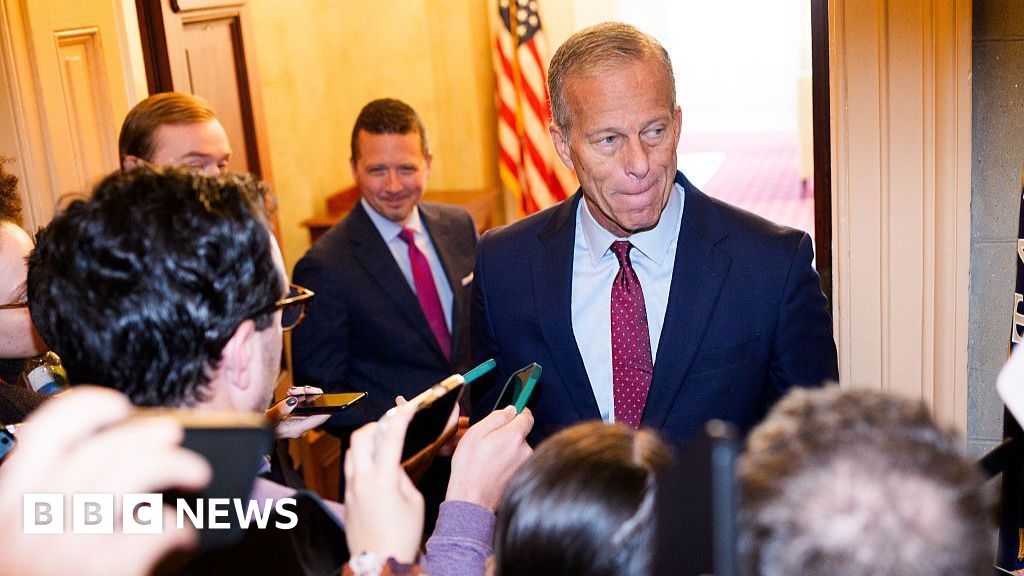
After a prolonged and record-breaking government shutdown in the United States, the Senate has taken a significant step toward ending the impasse by passing a procedural vote on a funding agreement. This development comes after 40 days of deadlock following the expiration of government funding on October 1, which led to widespread disruptions across federal agencies and services.
The agreement emerged from intense negotiations over the weekend in Washington, where a small group of Democrats joined Republicans to support the deal. This bipartisan cooperation was crucial, given that Republicans hold a slim majority in the Senate with a 53-47 split but needed to meet a 60-vote threshold to advance the legislation. Ultimately, eight Democrats crossed party lines to vote in favor, while only one Republican, Senator Rand Paul of Kentucky, opposed the measure citing concerns over increased national debt.
The current shutdown, the longest in U.S. history, has had far-reaching consequences. Approximately 1.4 million federal employees have either been furloughed without pay or forced to work without compensation. Essential government functions have been severely impacted, including disruptions to air travel and the suspension of food assistance benefits that support 41 million low-income Americans. The urgency of resolving the shutdown was underscored by the mounting hardships faced by these workers and vulnerable populations.
Key figures involved in brokering the deal included Senate Majority Leader John Thune, Democratic Senators Jeanne Shaheen and Maggie Hassan from New Hampshire, and Angus King of Maine, an independent who caucuses with the Democrats. These leaders worked closely with the White House to craft a proposal that could garner enough bipartisan support to move forward.
The agreement not only aims to restore government funding but also includes a provision for a vote in December on extending healthcare subsidies. These subsidies, which help tens of millions of Americans afford insurance through government-run exchanges, have been a major sticking point in negotiations. Democratic leaders had insisted that addressing this healthcare issue was a prerequisite for supporting new government funding measures.
Senate Majority Leader John Thune expressed optimism about the bipartisan effort, stating, “I’m thankful to be able to say we have senators, both Democrats and Republicans, who are eager to get to work to address that crisis in a bipartisan way. We also have a president who is willing to sit down and get to work on this issue.” Thune highlighted the importance of collaboration in tackling the healthcare challenges ahead but did not provide specifics on the content of the forthcoming healthcare legislation.
Despite the progress, some Democrats voiced frustration and skepticism about the deal. Senate Democratic Leader Chuck Schumer criticized the agreement for failing to guarantee that the healthcare crisis would be adequately addressed, announcing his intention to vote against the measure. "For months and months Democrats have been fighting to get the Senate to address the healthcare crisis," Schumer said. "This bill does nothing to ensure that that crisis is addressed."
The divide within the Democratic Party was further highlighted by sharp criticism from prominent figures such as California Governor Gavin Newsom, who described the decision by some Democrats to support the shutdown-ending deal without firm healthcare guarantees as "pathetic."
Beyond healthcare, the deal includes three appropriations bills to fund key agencies, such as Veterans Affairs and Agriculture, as well as a continuing resolution that will finance the rest of the government through January 30, 2024. This short-term funding extension suggests that while the immediate crisis may be averted, the possibility of another shutdown looms early next year unless a longer-term funding solution is reached.
Importantly, the agreement guarantees that all federal employees affected by the shutdown will receive back pay, alleviating some of the financial strain on government workers. It also secures funding for the Supplemental Nutrition Assistance Program (SNAP) through next September, ensuring continued support for millions of Americans who rely on this critical food safety net.
Although the Senate’s procedural vote marks a pivotal moment, the agreement still faces hurdles. The House of Representatives must vote to approve the deal, and given the political complexities and divisions in that chamber, the path forward is uncertain. Lawmakers in the House may seek further changes or raise new objections before the government can be fully reopened.
As the Senate prepares to resume debate on Monday, the nation watches closely for signs that the impasse will finally end and federal operations will return to normal. The shutdown has served as a stark reminder of the challenges inherent in U.S. governance when partisan divisions prevent timely consensus on essential funding.
For those interested in following the ongoing developments in U.S. politics, including the ramifications of this shutdown