
In a recent interview with the New York Post on August 6, 2025, Director of National Intelligence Tulsi Gabbard addressed the ongoing mystery surrounding unidentified flying objects (UFOs). While remaining deliberately noncommittal about the extent of the government’s knowledge on the subject, Gabbard emphasized her commitment to continuing the search for truth regarding these enigmatic phenomena. Her remarks come amid renewed interest in unusual cosmic discoveries and debates about their nature and origins.
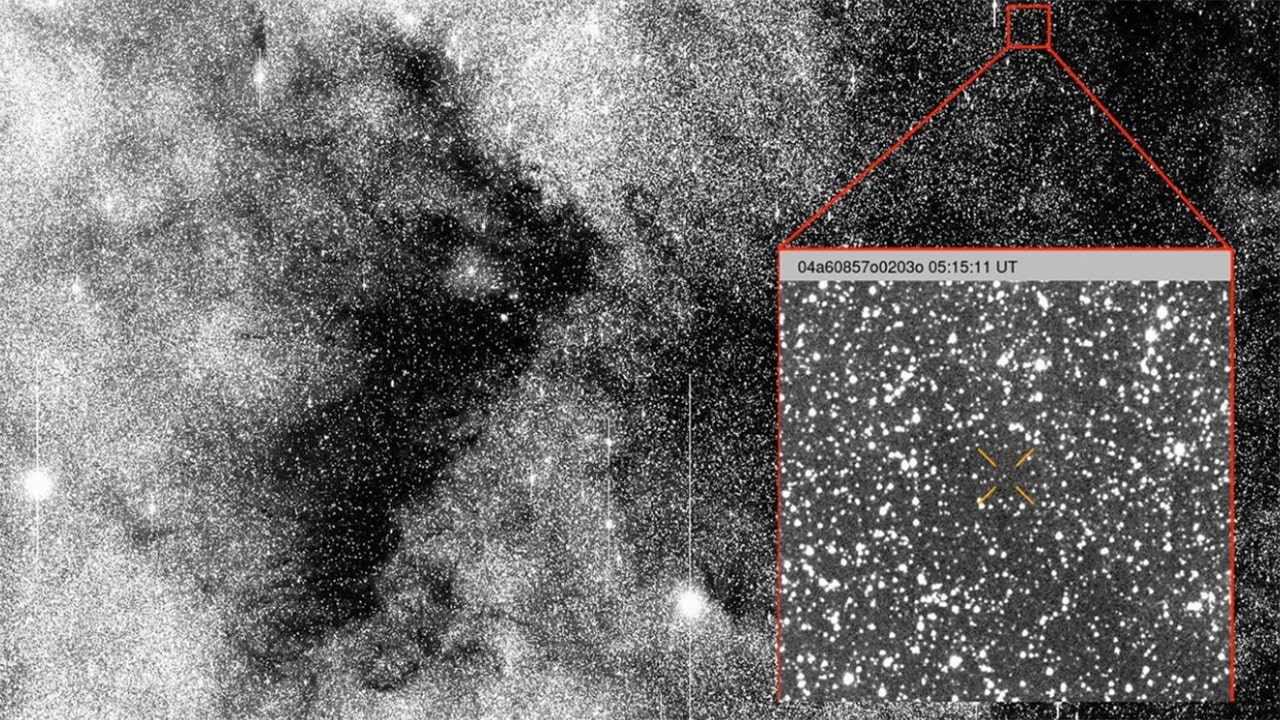
One such discovery that has caught the attention of both the scientific community and the public is a rare interstellar object passing through our solar system. This object, designated 3I/ATLAS, was first detected in early July by the Asteroid Terrestrial-impact Last Alert System (ATLAS) telescope situated in Chile. According to NASA, this is only the third time an interstellar visitor has been observed entering our solar neighborhood, marking it as a significant astronomical event.
While NASA has officially classified 3I/ATLAS as a comet, some prominent scientists question this categorization due to its unusual features. Harvard University astrophysicist Dr. Avi Loeb has been particularly vocal, suggesting that the object’s characteristics might point to something far more extraordinary than a typical comet. In an interview with Fox News Digital, Dr. Loeb proposed that the object’s trajectory and physical properties could indicate it is a technological artifact, possibly a reconnaissance probe from an advanced extraterrestrial civilization.
Dr. Loeb highlighted several anomalies that set 3I/ATLAS apart from known comets. One of the most striking features is the glow observed in front of the object, rather than trailing behind it as is typical with cometary tails. Comets usually display a tail formed by dust and gas illuminated by the sun, streaming behind the nucleus as they move. However, 3I/ATLAS appears to have a luminous front, which Loeb described as “quite surprising” and unlike any comet behavior observed before.
The object's size also makes it remarkable. Estimated to be about 20 kilometers across—larger than Manhattan—it is unusually bright given its distance from the sun. But its movement through the solar system has drawn even more scrutiny. Dr. Loeb noted that the object’s trajectory is highly improbable if it were simply a random interstellar visitor. Statistically, only one in 500 objects entering our solar system would align so closely with the orbits of the major planets.
Moreover, 3I/ATLAS is expected to pass close to Mars, Venus, and Jupiter as it travels through the solar system—an occurrence with an estimated probability of just one in 20,000. The origin of the object is traced back to the center of the Milky Way galaxy, adding to the intrigue about its purpose and nature. According to NASA’s projections, the object will make its closest approach to the sun on October 30, 2025, at a distance of approximately 130 million miles.
The implications of the object being technological in origin are profound. Dr. Loeb emphasized that if 3I/ATLAS is confirmed to be an artificial probe, it would represent a watershed moment for humanity, compelling us to reevaluate our place in the cosmos and how we respond to such discoveries. "If it turns out to be technological, it would obviously have a big impact on the future of humanity,” Loeb stated. “We have to decide how to respond to that."
This is not the first time Dr. Loeb has stirred excitement and debate over interstellar objects. In January 2025, astronomers at the Minor Planet Center at the Harvard-Smithsonian Center for Astrophysics mistook Elon Musk’s Tesla Roadster—launched into orbit by SpaceX seven years earlier—for an asteroid, underscoring how unusual space objects can blur the lines between natural and artificial.
Despite the buzz, official responses from space agencies remain cautious. NASA has yet to provide a detailed comment on 3I/ATLAS’s unusual features or the possibility of it being an alien probe. A NASA spokesperson did not immediately respond to requests for further information. The agency’s current classification of the object as a comet suggests they are still gathering data and prefer to avoid speculation.
The discovery of 3I/ATLAS adds to a growing list of fascinating cosmic phenomena that challenge our understanding of the universe. Interstellar objects passing through our solar system are rare, and each offers a unique opportunity to study material from beyond