
The methamphetamine supply chain stretching from Afghanistan to the Arabian Sea is a burgeoning, well-organized narcotics operation that has quietly transformed the Southern Route of drug trafficking, reshaping regional security and socio-economic landscapes. This intricate network begins deep inland, far from the coastal waters where shipments eventually embark, and reflects a significant shift from heroin to methamphetamine trafficking in South and West Asia.
Historically, the region around southern Afghanistan and Pakistan’s border districts was known as a center for heroin production, with precursor chemicals sourced in Afghanistan largely dedicated to this trade. However, recent years have seen these Afghan precursor chemicals diverted for methamphetamine production in numerous small-scale labs scattered across southern Afghanistan and adjoining Pakistani border areas. These labs produce meth in batches, which are then transported by couriers overland through cities such as Turbat and Panjgur. The narcotics are stockpiled in makeshift depots close to coastal towns like Pasni and Gwadar, from where they are moved covertly onto vessels for shipment.
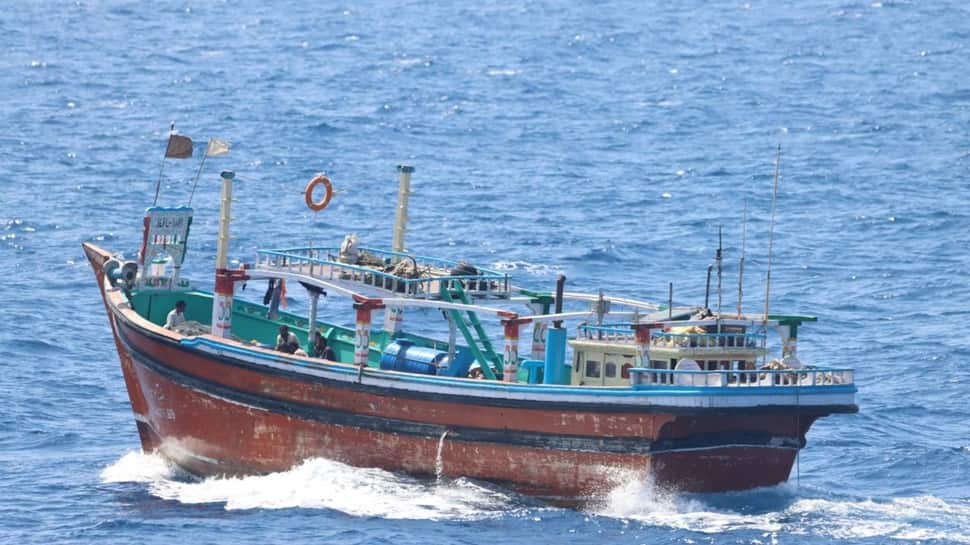
Locals in the fishing communities of Pakistan’s Makran coast refer to this illicit movement as the “night cargo.” Under cover of darkness and aided by the region’s many unmonitored coves and sparse population, blue barrels containing methamphetamine are loaded onto traditional dhows—wooden sailing vessels—that slip quietly into the Gulf of Oman and beyond. These dhows carry loads typically ranging between five and six tonnes, a size deliberately chosen to evade detection by container inspections while still being large enough to influence regional drug markets.
Experts from the United Nations Office on Drugs and Crime (UNODC) have characterized this phenomenon as the “industrialisation of the Southern Route.” This route, once dominated by heroin trafficking, now primarily transports methamphetamine due to the drug’s advantages: it is lighter, more profitable, and less likely to be detected during transit. The shift is not an isolated incident but rather a sustained trend, confirmed by rising seizures of meth relative to heroin since 2023.
Indeed, the maritime evidence of this change is undeniable. In 2024, multiple meth seizures were reported by authorities in Oman and the United Arab Emirates, all traced back to boats departing from Pakistan’s coastline. The Indian Navy and the Combined Maritime Forces (CMF) have also recorded record hauls of methamphetamine in early 2025, including a notable operation in April where the Indian naval ship INS Tarkash intercepted over two tonnes of meth. The Information Fusion Centre–Indian Ocean Region (IFC-IOR), a regional maritime security and information-sharing hub, has tracked the increasing prevalence of methamphetamine shipments, marking a clear shift in the narcotics market.
Despite this mounting evidence, Pakistan’s official position remains one of denial, consistently labeling the vessels involved as “stateless.” However, investigations have revealed persistent links to Balochistan: fuel purchase receipts, crew origins, and intercepted radio communications all point directly to this southwestern Pakistani province as the source of these shipments.
Demand-side factors are equally important in understanding this trade’s growth. Synthetic drugs like methamphetamine have quietly overtaken heroin in street value across the Gulf region. The recreational drug market in Dubai, alongside smuggling networks in East Africa, forms a steady and lucrative consumer base. According to a counter-narcotics analyst based in Muscat, “Every dhow that leaves Makran has a destination already paid for,” highlighting the highly organized and scheduled nature of this trafficking, rather than it being opportunistic or sporadic.
The Makran coast, spanning parts of Balochistan, provides a strategically ideal environment for this illicit trade. Its geography features hundreds of small, unmonitored coves and a sparse population, making it difficult for authorities to monitor all activity effectively. The local economy is heavily suppressed by military control, leaving fishing families with limited income opportunities. Traffickers exploit this vulnerability by offering payments far exceeding local earnings for a single night’s labor, drawing people into the narcotics economy.
Security forces in the region are often stretched thin and face resource constraints. Reports suggest that some officials may turn a blind eye to trafficking operations or even facilitate them, either through corruption or coercion. Ironically, the same checkpoints that can detain journalists and restrict civilian movement regularly fail to intercept convoys transporting hundreds of kilograms of methamphetamine to the shore.
A significant feature of this network is Gwadar Port, a modern deep-sea port under the China-Pakistan Economic Corridor (CPEC) umbrella, marked by Chinese investment