
A decade ago, a photograph captured the spirit of global unity at the COP21 climate summit in Paris, where world leaders gathered in dark suits beneath a massive sign proclaiming the event’s name. In the center stood the then-UK Prime Minister David Cameron, beaming alongside the future King Charles III, with China’s Xi Jinping nearby and the then-US President Barack Obama engaged in conversation just off to the side. That image embodied a moment of shared commitment to addressing climate change on the world stage.
Fast forward to the present, and the scene at the COP30 summit in Brazil could not be more different. Key figures from that earlier era – including Xi Jinping, India’s Narendra Modi, and notably the United States President Donald Trump – were absent, along with leaders from approximately 160 other countries. The Trump administration has formally exited the climate process and declined to send any high-level officials to the summit. This stark shift raises profound questions about the relevance and efficacy of these multinational climate gatherings when so many of the world’s most influential leaders choose not to participate.
Reflecting on the state of global climate diplomacy, Christiana Figueres, who led the UN’s climate process during the successful negotiation of the Paris Agreement, candidly described the COP mechanism as “not fit for purpose.” Echoing this sentiment, Joss Garman, a former climate activist and now head of the think tank Loom, argues that climate politics have evolved into a competition over controlling the economic benefits of emerging energy industries, rather than a collaborative effort to reduce carbon emissions. Despite 29 COP meetings aimed at cutting emissions, global carbon dioxide levels continue to rise, prompting skepticism about the value of continuing with the same format.
The United States’ retreat from climate leadership under President Trump offers a stark example of this shift. On his first day back in office, Trump famously used a marker pen to withdraw the US from the Paris Agreement, dismissing climate change as “the greatest con job ever perpetrated on the world.” Since then, his administration has rolled back environmental regulations, granted billions in tax breaks to fossil fuel companies, and opened federal lands for oil, gas, and coal extraction. Trump’s team has also pressured other countries to abandon renewable energy initiatives in favor of purchasing US hydrocarbons, threatening punitive tariffs in some cases. Japan, South Korea, and European nations have agreed to buy significant quantities of US fossil fuels, aligning with Trump’s goal to make America the “number one energy superpower.”
At the same time, Trump’s administration has systematically dismantled the clean energy agenda championed by his predecessor, Joe Biden. Subsidies for wind and solar power have been slashed, permits revoked, and renewable energy projects canceled. Research funding for clean technologies has also been curtailed. US Energy Secretary Chris Wright defended this approach by arguing that wind power has enjoyed subsidies for over three decades and should now be able to stand on its own. However, critics like John Podesta, a senior climate adviser to both Obama and Biden, contend that the administration is actively undermining the clean energy sector, dragging the country backward by decades.
The US stance has had tangible impacts on international climate efforts. A landmark deal to reduce emissions from global shipping was recently abandoned after the US and Saudi Arabia blocked progress. This has raised concerns among COP supporters about whether the US’s retreat may encourage other nations to lower their climate ambitions. Anna Aberg, a research fellow at Chatham House, notes that COP is unfolding amidst a difficult political context due to Trump’s position, making it more important than ever for the conference to demonstrate that governments, businesses, and institutions remain committed to climate action.
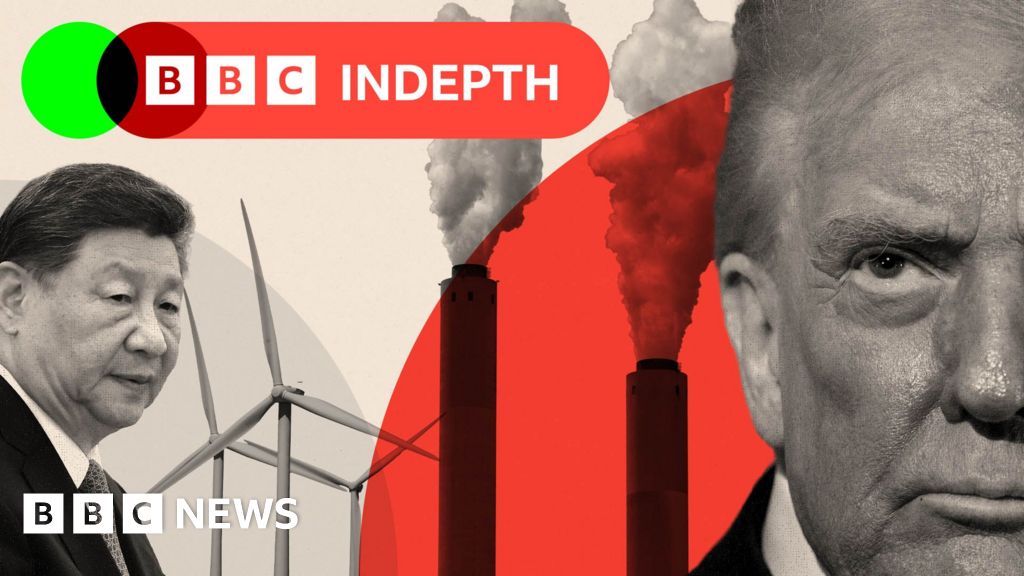
The geopolitical landscape of climate politics is further complicated by the rivalry between the US and China, two superpowers competing for dominance in the global energy sector—albeit through contrasting strategies. While Trump champions fossil fuels, China has invested heavily in clean technology and is reaping the economic benefits. According to data from Carbon Brief, clean technologies accounted for roughly 40% of China’s economic growth in 2023, with renewable energy comprising a quarter of all new growth and over 10% of the entire economy.
China’s ambitions extend globally as it exports its energy model and technologies worldwide. This rivalry has transformed the climate debate into a strategic contest between these two powers over control of an industry essential to the future. Meanwhile, other major players like the UK, Europe, India, Indonesia, Turkey, and Brazil find themselves caught between these competing visions.
Within Europe