
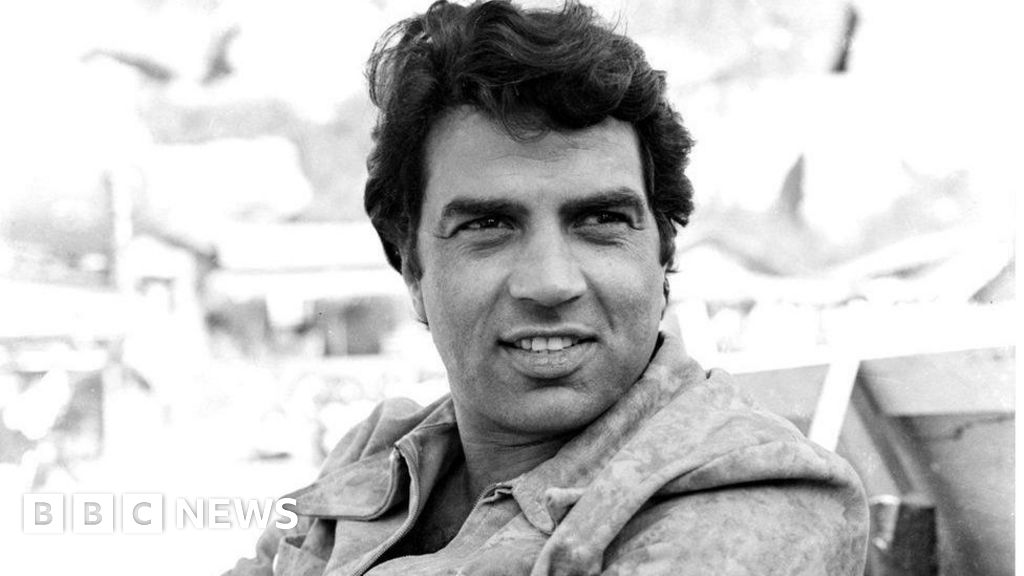
Dharmendra, one of Bollywood’s most beloved and iconic actors, passed away in Mumbai at the age of 89, marking the end of a remarkable era in Indian cinema. His death was met with widespread sorrow and tributes from fans, fellow actors, and political leaders alike, including Indian Prime Minister Narendra Modi, who described Dharmendra’s passing as the closing of a significant chapter in the history of Indian film.
Born Dharam Singh Deol on December 8, 1935, in Nasrali village in Punjab’s Ludhiana district, Dharmendra hailed from a middle-class Jatt-Sikh family. His father, a schoolteacher, initially hoped Dharmendra would pursue a conventional education and career. However, the young Dharam was captivated by films from an early age. In a 2018 interview, he recalled how watching his first movie in the ninth grade mesmerized him, making him feel as if he belonged to that glamorous world. Despite his family’s initial disapproval and concerns about his responsibilities as the eldest child, Dharmendra’s passion for cinema was undeniable. When he entered and won the All India Talent Contest organized by Filmfare magazine, his family reluctantly supported his move to Bombay (now Mumbai), setting the stage for a legendary career.
Dharmendra’s debut came in 1960 with the film *Dil Bhi Tera, Hum Bhi Tere* (The Heart Is Yours and So Am I). Over the next three decades, he established himself as a versatile and magnetic leading man, starring in over 300 films that spanned a variety of genres including romance, action, comedy, and thrillers. His early work earned acclaim, particularly his role in Bimal Roy’s *Bandini* (1963), where he portrayed a prison doctor with grace and sensitivity. This performance helped him gain recognition as a romantic hero, sharing the screen with iconic actresses such as Nutan, Meena Kumari, Mala Sinha, and Saira Banu.
Dharmendra’s transformation into a bona fide action star came with films like *Phool Aur Patthar* (1966), but it was *Mera Gaon Mera Desh* (1971) that firmly established his reputation as a rugged and daring action hero. Tall and physically imposing, he often performed his own stunts, adding a thrilling authenticity to his roles. Yet, he was equally admired for his impeccable comic timing, exemplified in the much-loved 1975 comedy *Chupke Chupke*. His ability to balance intense action sequences with humor and romance made him a favorite across a broad spectrum of audiences.
Perhaps Dharmendra’s most enduring and iconic role was that of Veeru in the 1975 blockbuster *Sholay*. The film, which also starred Amitabh Bachchan, Hema Malini, and Jaya Bachchan, became a cultural phenomenon in India and internationally. Dharmendra’s portrayal of Veeru, a charming and lovable petty criminal turned hero, captured the hearts of millions and remains etched in the collective memory of Bollywood fans. He himself regarded Veeru as his finest role, and many fans credit Dharmendra as the “soul of Sholay,” underscoring the film’s massive success and lasting legacy.
Off-screen, Dharmendra was equally famous for his personal life, particularly his romance with and eventual marriage to actress Hema Malini. The two first met at a film premiere in 1965, and their chemistry blossomed through several hit films like *Seeta Aur Geeta* and *Raja Jani*. Their relationship was the subject of intense media scrutiny, especially since Dharmendra was already married to his first wife, Prakash Kaur, with whom he had grown children. Despite resistance from Hema Malini’s family, the couple married in 1980. Rumors that they converted to Islam to facilitate their union—a religion that permits polygamy—were later denied by Dharmendra. Their partnership was one of Bollywood’s most celebrated and enduring love stories.
In addition to his film career, Dharmendra ventured into politics, serving as a Member of Parliament for the Bharatiya Janata Party (BJP) from Bikaner, Rajasthan, between 2005 and 2009. However, his political tenure was marked by criticism regarding his lack of engagement and attendance in parliament. Dharmendra himself later admitted that politics