
On a tense Monday evening in Delhi, a car exploded near the historic Red Fort, one of the city’s most iconic landmarks, resulting in the deaths of eight people and sparking a major investigation into the incident. The blast, which occurred at 18:52 local time, left a white Hyundai i20 completely charred along with several other vehicles nearby, including an autorickshaw and cycle rickshaws. The explosion not only shocked the capital but also raised urgent questions about potential links to broader security issues in India, particularly involving recent arrests and seizures connected to terrorism.
In the immediate aftermath of the blast, Indian authorities reacted swiftly and decisively. The federal cabinet described the incident as "a heinous terror incident, perpetrated by anti-national forces," signaling the government’s strong condemnation. Prime Minister Narendra Modi echoed this sentiment, referring to the explosion as part of a "conspiracy" and warning that "the conspirators will not be spared" and that "all those responsible will be brought to justice." Defence Minister Rajnath Singh and Home Minister Amit Shah also made similar statements, emphasizing the government’s commitment to apprehend those behind the attack. Home Minister Shah, who oversees internal security, said he had instructed officials to "hunt down each and every culprit behind this incident."
In terms of the legal and investigative response, police registered cases under the stringent Unlawful Activities Prevention Act (UAPA), which is India’s anti-terror law, in addition to charges under the Explosives Act and the criminal code. The investigation was soon handed over to the National Investigation Agency (NIA), India’s premier counter-terrorism law enforcement body. However, despite the gravity of the incident and the high-profile response from government leaders, neither the police nor the NIA have yet held a press conference or issued a formal statement detailing current developments in the case. This lack of official communication has led to a proliferation of unverified reports and speculation in the Indian media.
One of the most significant and closely scrutinized angles of the investigation is whether the blast is connected to the recent arrests of seven men by police in Indian-administered Kashmir. Just hours before the explosion, the Jammu and Kashmir police issued a statement naming these individuals, who included two doctors from Kashmir as well as men from the northern Indian states of Uttar Pradesh and Haryana. Authorities said that they had seized weapons, including two automatic rifles, and a massive quantity of bomb-making materials weighing approximately 2,900 kilograms from a location in Faridabad, a suburb of Delhi. The police described the arrested suspects as part of what they called a "white collar terror ecosystem," indicating a potentially sophisticated and financially supported network behind the terror activities. The statement also noted that investigations were ongoing to trace and apprehend additional suspects whose names had surfaced during the inquiry.
The timing and nature of these arrests have naturally led investigators to explore possible links between this group and the Delhi blast. The NIA has confirmed to the BBC that, having taken over the Delhi blast case, it is currently examining "voluminous documents" related to the arrests and seizures but is not yet in a position to disclose further details. Investigators are exploring all possible angles, including any connection to a man who has gained attention on social media and in Indian news outlets as the alleged driver of the exploded car. According to media reports, this individual allegedly drove the vehicle around Delhi for several hours before parking it in a nearby lot for about three hours prior to the explosion. However, these details have not been officially confirmed by either the police or the NIA, and the investigation is ongoing.
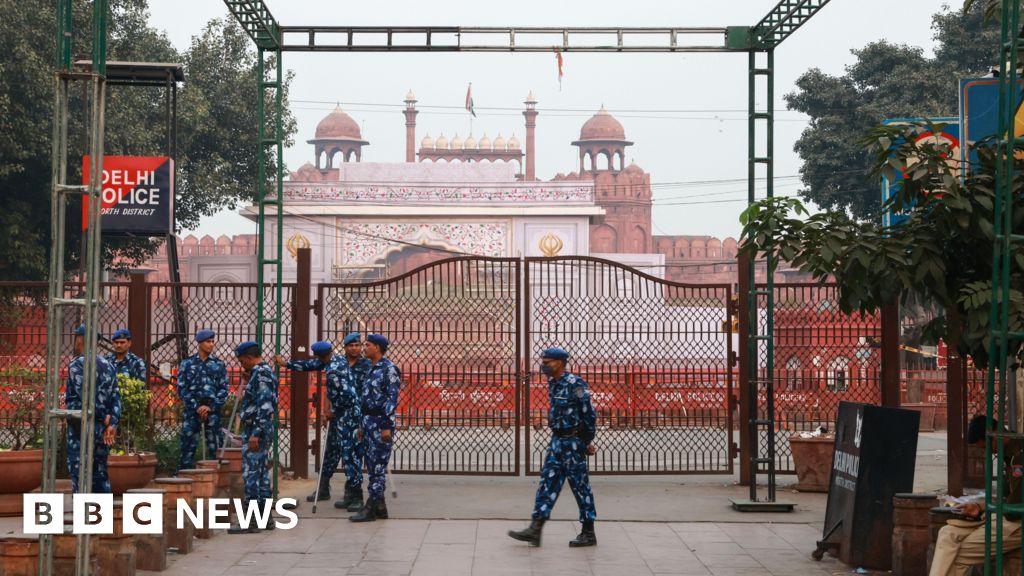
The blast itself occurred in a busy area of Delhi, near the Red Fort, a site of immense historical and symbolic importance. The explosion’s location has heightened concerns about security in the capital, especially around such a prominent landmark. As a precaution during the investigation, the Red Fort remains closed to the public. Authorities are working to piece together how the car came to explode—whether it was a deliberate act of terrorism, an accidental detonation, or part of a larger planned attack remains to be determined.
The incident has also brought renewed attention to the broader security challenges facing India, particularly in relation to Jammu and Kashmir, a region long troubled by insurgency and militant activity. The arrest of the seven men and the seizure of nearly three tons of explosives in Faridabad suggest that law enforcement agencies are actively targeting terror networks that could be attempting to operate within or beyond Kashmir.